
You can watch all the documentaries you want, nod sagely, and say “yes, the Arctic, very far, very cold.”
Nonsense! Unless you get your own boots on the ground — or boots on the ice — you have no idea.
In July 2025 I was cruising the Arctic with a few good people, reveling in geology, geography, marine zoology and good old fashioned fun. I did not plan for how small this semi-skilled Plannosaurus from Maryland would feel at 78 degrees north — and then, gloriously, to 82 degrees.
82 degrees, folks. Let that sink in. My ears certainly did.
First, some general information — where on Earth is this place?
Before the funny stuff, the geography lesson I actually paid attention to — because with Svalbard, the geography is the story.
Svalbard is a Norwegian archipelago in the Arctic Ocean, about midway between mainland Norway and the North Pole. The name means “cold coasts” in Old Norse, which is honest branding if ever I heard it.
Quick facts, in my blog style:
- Where: 74° to 81° north latitude, 10° to 35° east. The largest island is Spitsbergen.
- Main town: Longyearbyen, on Spitsbergen — the world’s northernmost town of its size, home to about 2,400–2,500 people from around 50 countries.
- Status: The Svalbard Treaty of 1920 recognises Norwegian sovereignty, and the Svalbard Act of 1925 made it part of the Kingdom of Norway. Unusually, citizens of treaty countries can live and work there — a free economic and demilitarised zone, right up at the top of the world.
- Getting there: Fly into Svalbard Airport, Longyearbyen (LYR) from Oslo — about 3 hours — or from Tromsø. No roads connect the settlements; it’s boats in summer, snowmobiles in winter, and aircraft otherwise.
- Land and light: About 60% is covered by glaciers, with mountains, fjords and permafrost for most of the rest. Midnight sun runs from late April to late August; polar night, when the sun never rises, from late October to mid-February.
- Practical basics: Currency is the Norwegian krone (NOK), the language is Norwegian with English widely spoken, and Longyearbyen started as a coal-mining town, named for American John Munro Longyear.
Now, the proximity point — the one that stopped me in my tracks. Longyearbyen sits at 78.22°N, only about 1,300 km (800 miles) from the North Pole. Read that again. It is closer to the Pole than it is to Oslo, and roughly 950–1,000 km north of mainland Norway itself. You are not in Gaithersburg anymore.
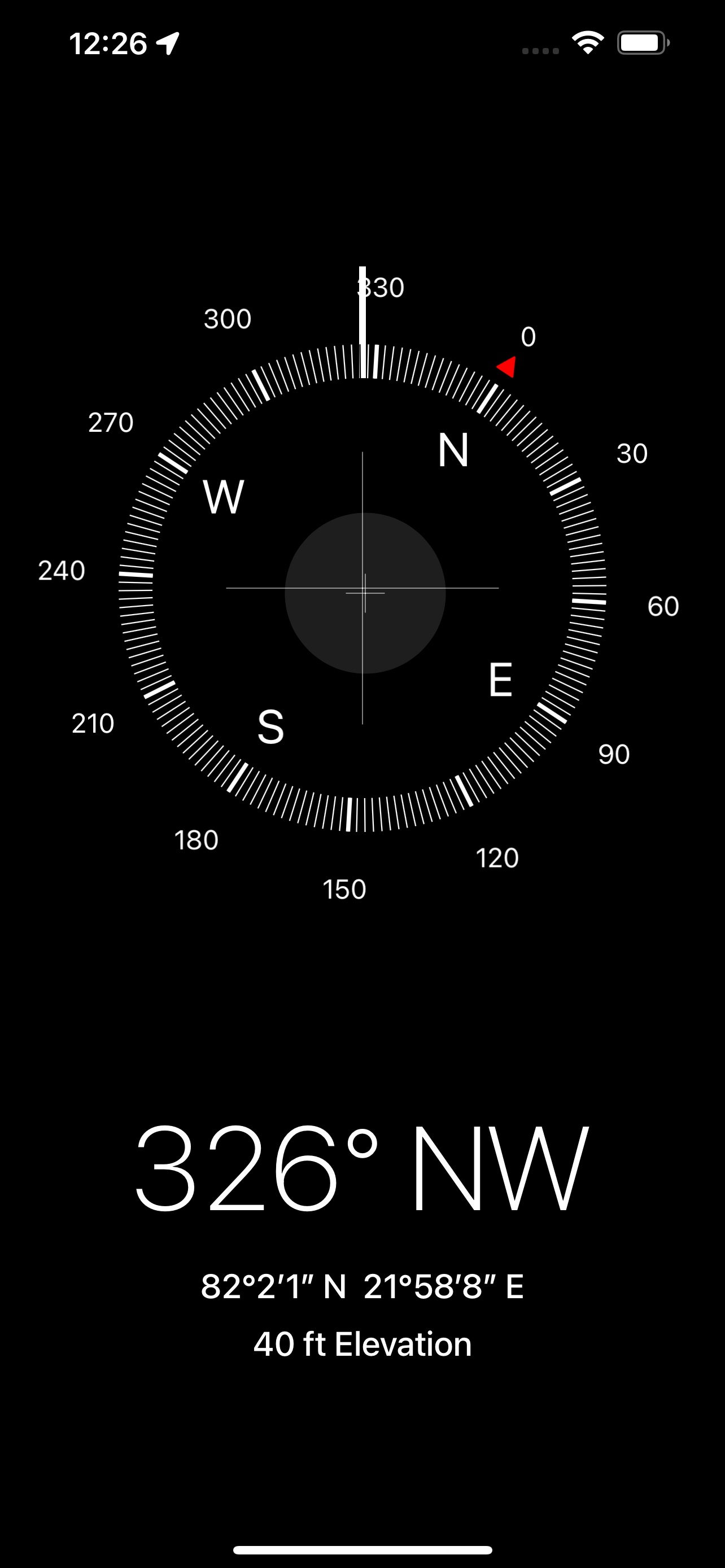
And our cruise went beyond even that: from 78° to 82° latitude, pushing toward the pack ice — into the white silence where the only schedule that matters is the ice. I have the screenshot to prove it: 82°2’1″ N, 21°58’8″ E, at 40 ft elevation. Eighty-two degrees, folks. I checked it three times, in case my frozen fingers had invented it.
The cruise — not a race, and thank God for that
Our home was the World Voyager with Atlas Ocean Voyages — a proper expedition ship, not a floating shopping mall.
Days fell into a rhythm I wish life followed. Wake up. Look out. Gasp a little. Layer up like an onion that has read too many safety briefings. Get in the Zodiac. Listen to people who know what a moraine is.
Layering up deserves its own paragraph. Base layer, fleece, insulation, windproof outer, hat, gloves, boots — by the end I looked like the Michelin Man had mated with a walking duvet. I tried to look cool, expedition-leader cool. I failed comprehensively. Wrestling with zips, gloves eating my gloves, and I — a man legendary for gluing his own knees to the floor while tiling and for heroic ineptitude with an impact wrench — was now entrusted with four zips and a life jacket. Nothing exploded. Growth.
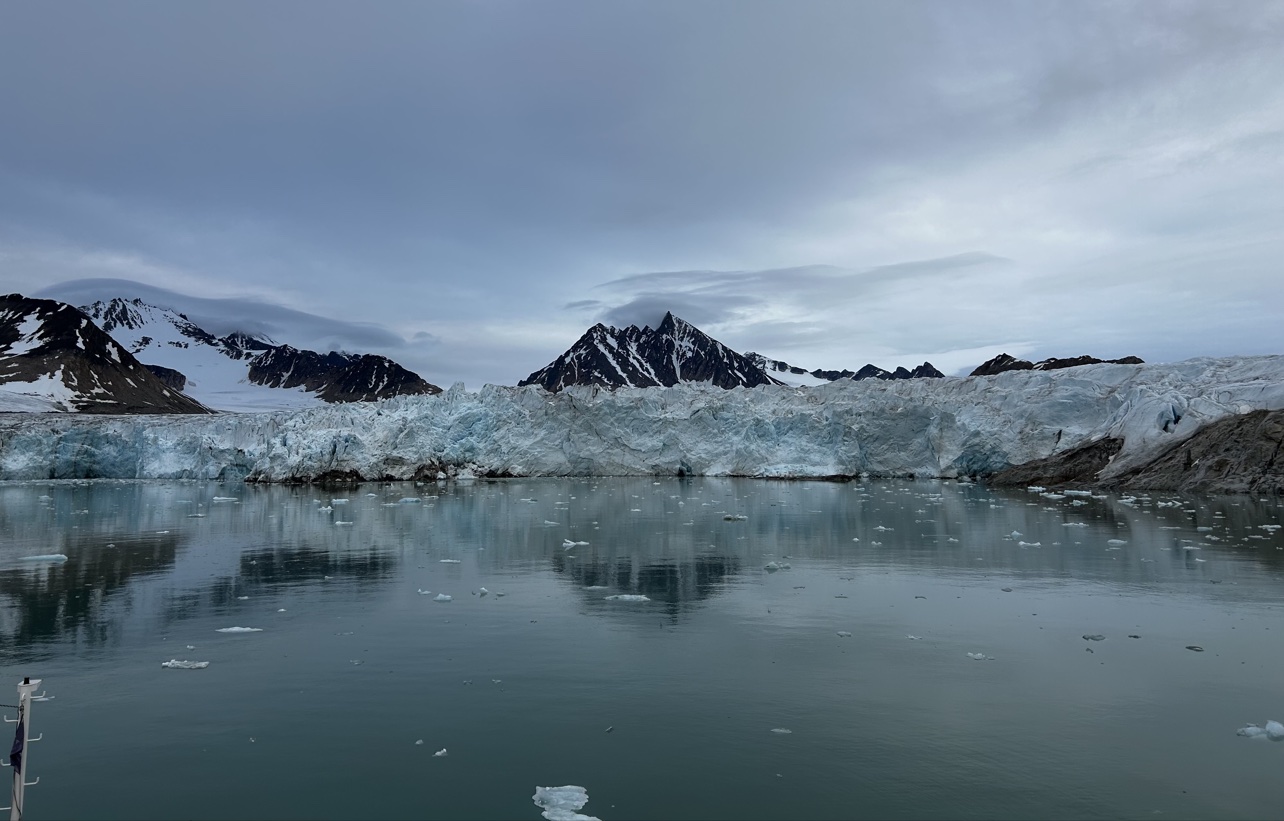
Geology, geography, marine zoology — on paper, a syllabus. Out there, theatre. Glaciers in steel-grey water, fjords so still you feel rude talking too loudly.
I learned this on the Tour de Mont Blanc and in the Grand Canyon: by day three you realise this is not a race. Slow down. Actually see it. Svalbard taught it again, colder.
Wildlife has the right of way here — as it should
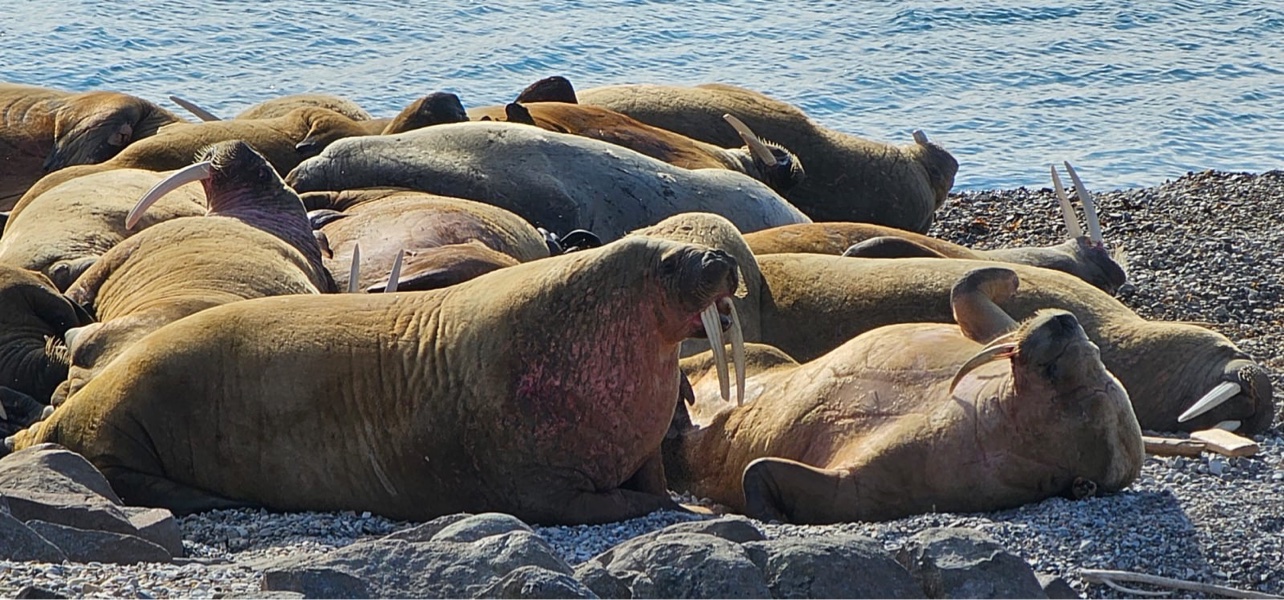
Start with the walruses — they started my camera roll and stole the show.
A large group hauled out together on a rocky shore — a heaving, whiskered, utterly unbothered pile of blubber and tusks. Think snoring uncles after a very big lunch, all piled onto one sofa, all convinced the other fellow is taking up too much room. Snorting, shuffling, giving each other a look that said “move over, you are on my flipper.” Magnificent and ridiculous, and I mean that with love. You do not rush a walrus. You sit, you watch, you grin like a child.
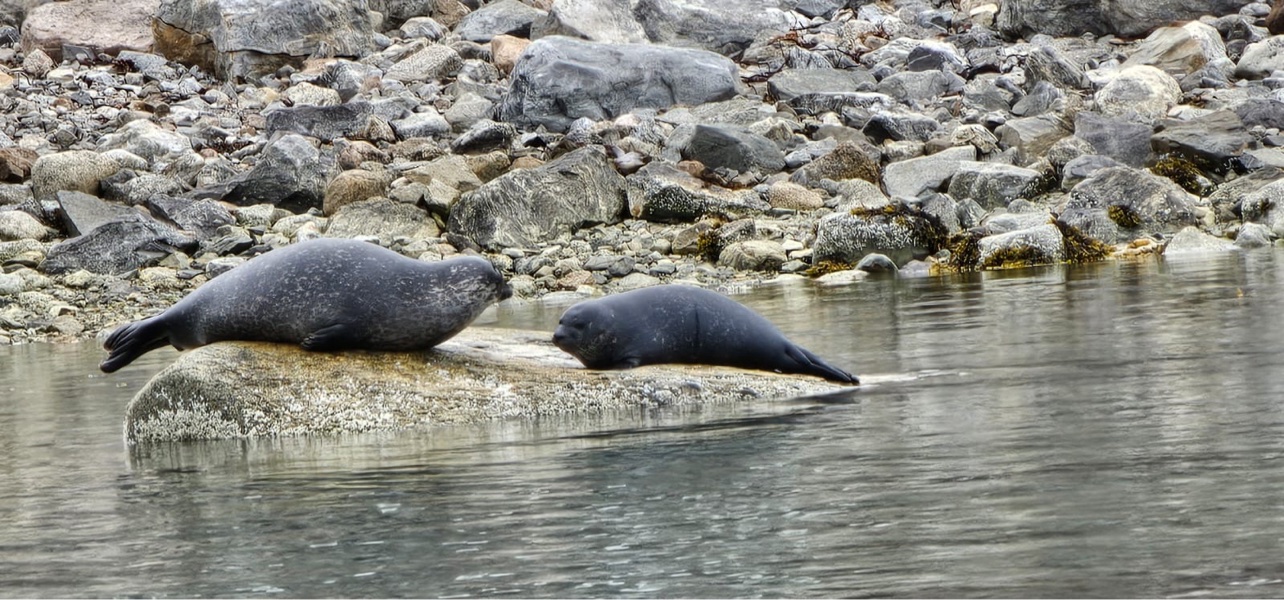
Seals too — and not a fleeting glimpse, either. Two of them, hauled out and resting on a flat rock at the water’s edge, nose to nose, like they were in deep conversation and we were very much not invited. I know that look. Serious matters were being discussed. Fish, probably. Or us.
And then — the polar bears. And yes, we saw them. Really saw them.
Two bears, out on the sea ice. Both of them looking straight at us. Straight at the camera. No binocular squinting, no white-on-white guessing game, no “was that a rock?” — just two magnificent, utterly unbothered bears giving us the full stare. I stopped joking. I stopped fiddling with zips. Awe does that. For a minute, this Plannosaurus just stood there and took it in, properly grateful and properly small.
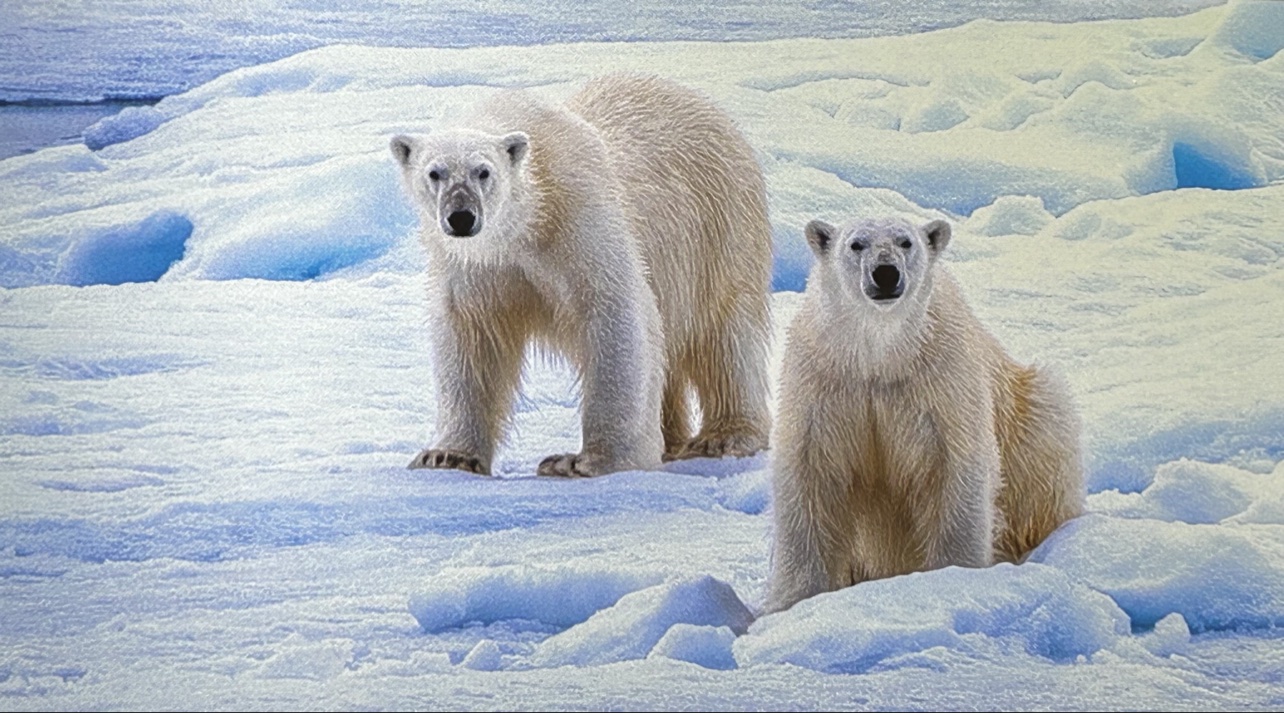
That stare is exactly why every landing is shaped the way it is. You scan the shore. Your guides scan the shore. The warning signs at the edge of Longyearbyen say it plainly: this applies to all of Svalbard. You do not wander out of town alone, or without a guide and proper protection. Not bravado. Not optional. The bear was here long before our ship.
We are the visitors. They have the right of way.
Longyearbyen — ordinary people, extraordinary address
Reindeer wander through Longyearbyen like they own the place, because they were here first. Smaller, stockier, completely unfazed by yet another photo. Traffic stops. Nobody honks. Frankly, a reindeer has more right of way, more local respect, and a better sense of direction in town than I do. I accepted this demotion gracefully.
Up the valley sits the Svalbard Global Seed Vault, carved into the permafrost. Over 1.4 million seed samples are stored there — a backup for the world’s food crops, humanity’s spare hard drive in case we mess up the original. Visitors do not go inside — you see the iconic entrance, that wedge of concrete and light in the mountain — and that makes it more powerful. Some vaults are not meant for tourists.
Small customs matter, too. You take your shoes off indoors — homes, hotels, many public places. Partly practical, partly respect. I managed this without gluing anything to the floor, which, given my domestic record, is practically a qualification.
In July, the midnight sun. It circles, dips, thinks about setting, and changes its mind. At 2 a.m. it is light. Is it dinner? Bedtime? A second morning? I lost the argument about sleep every night, happily, with the sun outside doing laps like it had nowhere better to be.
Some fun facts & FAQs
Can you adopt a polar bear?
No. You cannot adopt one, take one home, or pose next to one for a selfie. I checked — homeowners association, airline baggage allowance, explaining a polar bear in the garden to the neighbours — it fails at every stage. Admire from a respectful distance, with a guide, and be grateful it stayed respectful.
Is a walrus an emotional support animal?
No. I know. I was disappointed too. A walrus needs its rocky shore, its fellow snoring uncles, and about two tonnes of personal space. Take the photo, leave the walrus exactly where it was — on someone else’s flipper.
Is it cold in July?
Yes. The Arctic in July, not the Algarve. Layers, windproof outer, boots, hat, gloves. Brown skin burns in the sun — as I have said on hotter hikes — and it also gets wind-whipped and frozen at 80°N. My ears filed a grievance on day one. Gear is not vanity, it is planning. And planning still happens between the ears — preferably ears that are still attached and warm.
Can you just walk out of Longyearbyen for a stroll?
No. Past those warning signs is polar bear territory. Go with a guide with protection, or do not go. Full stop.
Do people actually live there all year?
Yes — scientists, miners, teachers, kids. Ordinary people, extraordinary life. Respect.
Can you go inside the Seed Vault?
No. See the entrance, learn the story, and leave the seeds waiting for a day we hope never comes.
What surprised you most?
The silence. And walrus breath at close-ish quarters. Both stay with you.
Travel tips — from a man who learned them the hard way
- Go in summer if wildlife is the point. July gave us 24-hour light, open water, walruses hauled out, seals and birds — and a ship that could push to the pack ice.
- Dress in layers, then add one more. Base, insulation, windproof outer. Comfortable standing still on deck for an hour? You are dressed right. Look ridiculous? You are definitely dressed right.
- Listen to the expedition team. Every briefing. The talk you think you can skip makes the next landing make sense.
- Respect the boundaries. Stay with the group, behind the guide, quiet near wildlife. The best photo did not disturb the animal.
- Give Longyearbyen proper time. Walk the town, see the reindeer, stand under that polar bear sign — and stop there.
- Pack patience. Ice and wind write the itinerary, not the brochure. Float is not a luxury in the Arctic; it is survival. Build contingency, smile, carry on.
- Take your shoes off indoors. Small thing, big respect.
And now, in the interests of full disclosure: the man who has just preached layers at you for several paragraphs was photographed on deck in shorts, trainers and a yellow hoodie, holding a glass, with pack ice stretching out behind the ship. Do as I say, not as I do. On deck. Briefly. Very briefly. My ears filed their grievance all over again, and they were right to.

Svalbard felt like being let in, briefly and on strict terms, to a world that does not need us at all — and is more beautiful for it.
If you get the chance, go. Go slowly, go prepared, go humble. And go with a decent hat. Your ears will thank you.
Ha det bra, Svalbard — thank you, and goodbye for now. You have not seen the last of me.


