The Journey of an immigrant- Part II

The Saudi feeling is starting to sink in; well you can never really get that feeling in you entirely. True to belief it felt like I had been sentenced to a one year rigorous imprisonment in a minimum security prison. The camp was a compound by the Red Sea, a set of box modular structures and I could imagine this to be another Gulag with less security. Have you ever been kicked in the mouth by a rampant horse?

The inner conditions do not get too better as days transition into weeks and weeks transition into months. I could never really come to grips with that life especially in those surroundings. I would actually thrive in these conditions decades later but in 1995 I left myself for dead. A few thing to write about would be the weekend trips to the port city of Jeddah which was trying its best to look like fast food America and the air conditioned malls I had not been in before. Jeddah is also the home to the infamous “Chop Chop Square” where convicted rapists and petty criminals have their heads or hands cut off.

Mecca the holy city for Moslems was not too far from the camp I was in, where the signs to the checkpost proclaiming “For Moslems Only” still stirs an ominous feeling inside me. The tranquility in midst of this temptest was the lucid turquoise waters of the Red Sea and I was even blessed to catch a few views of Flying Fish, which I had only seen in one of my favorite TinTin publication, “The Red Sea Sharks”. After all these years when I stop long enough to delve on my Saudi experience I am convinced it wasn’t Saudi, it was me that kicked myself into this baleful whirlpool of darkness.

And just as I reckoned, it was rock bottom and the only way after this episode was to lift myself and at least see the azure skies of hope.

Alexandria

My journey took me next on a teaser trip to which eventually was going to become my home eventually but that cold dark January evening when I landed at Dulles, Washington DC I wasn’t so sure. Just as I had experienced dealing with cabbies back home, I was sure the guy would cheat my precious $75 out of me.So of course as the taxi starts, the guy in all likelihood is attempting to be friendly and asked me if this was my first trip to the US. And me, in all my devious bent, say “Oh yeah, I have been here several times, in fact I love the east coast and of the west coast cities, Chicago is my favorite city.” Deathly silence and that was the last exchange we had for the rest of the journey. The names he may have called me under his breath, I don’t think I would have been able to repeat. However, being in the promised land sent a shiver of optimism through my veins. It was going to last, I hoped as I-495 beltway outside the taxi looked like a parade of pearls and rubies.

—To be continued…

Washington DC- An immigrant’s Diary-Part I

The Journey of an immigrant- 

I was not born in this county, I was not born in the State, I wasn’t even born in this country. Its been close to 17 years for me in this country. An immigrant with aspirations, dreams and looking to touch and feel that I had only seen through postcards, movies and commercial clips and Time magazine. A few decades back I would have made my way on a steamer across the Atlantic, processed at Ellis Island and made my way into the Big Apple.

The sheer romance of this journey, the awe inspiring narratives were what my dreams started to be spun around. It took a British writer,  Jeffrey Archer to vividly describe the success of an immigrant from small town Poland. “Kane and Abel” that is the book. The graphic and vivid portrayal of Abel Rosnowski and his rags to riches story was the recipe for several of the west bound aspirants. And as time rolled by, the dream seemed to get far and further away with each passing year.

And then you start to wonder- Opportunities do not come around if risks are not taken. Life definitely gives you lemons, but being served lemonade is completely unheard of. If the New York bound ship is not docked for you at the harbor, then you start to look at options. You could still set out west but you may have to have a few pit stops. Now that is something that clicked inside me. I am thinking, even the Arabian peninsula is west of where I grew up.

The journey begins- Jeddah, Saudi Arabia

It was an extremely sunny cloudless day in Oct 1995 (I later realized 364 of the 365 days are extremely sunny and cloudless) and I landed with a deep sense of foreboding, not sure what to expect but somehow fairly certain that I was a second class citizen. This is not fiction and the way the immigration officer waves me through I started to resent my own self, my seemingly impulsive decision to even set foot in the peninsula. And then the journey to a remote camp, 150 miles into the desert hugging the Red Sea was me slumped in the backseat, still unable to fathom the deep change that was happening right in front of me. Miles and miles of dunes, herds of camels, some of them on the back of Toyota pick ups and the relentless sun refusing to hide. Now I am starting to hallucinate- I am going to be asked to join a plethora of workers, whipped across my bare back and pull the huge pieces of rocks to create a pyramid like structure. Not entirely delirious but the projection of fears emanating into something evil.

I arrive at the camp and instead of running across the Bedoins or even hearing the Arabic dialect, I almost get run over by group of loudly chattering Filipinos. Then some Sri Lankans, some Indians then I spy some gringos. This was going to be my microcosm, a camp by the Red sea, by no means a resort but certainly not made up of stuff I had earlier imagined. Reality sinks in and the jet lag hits me. I am off to lala land.

To be continued……


Nostalgia – Overrated?

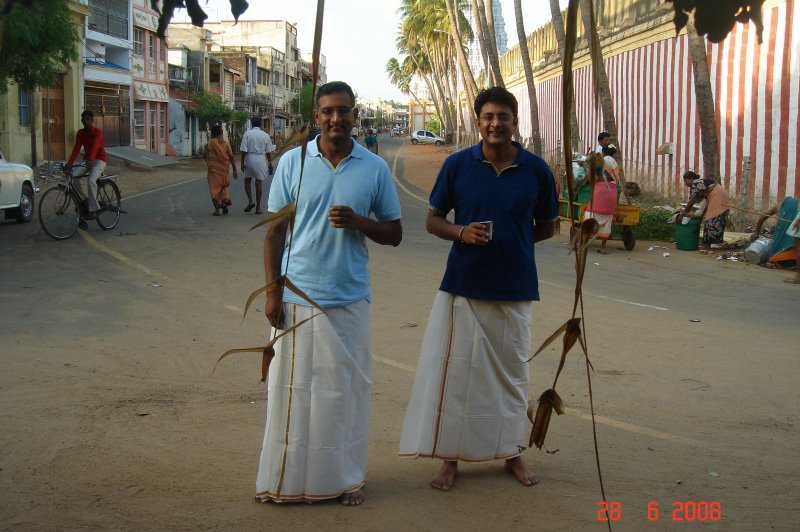
As traditional as it gets. A quick visit to my birthplace, Srirangam, Tamil Nadu, India after 25 years. Some things never quite change, like stuck in a time capsule. A place where time not only has stood still but every street every alley has retained its unique charisma. As nostalgic as it sounds, it certainly doesn’t appear that I will be back anytime soon. For those who grew up in cosmopolitan India, a place like Bhopal (Central India) is what I have always considered home. Just being born someplace doesn’t make it home.
I have seen people fawn over nostalgic things and true to spirit, nostalgia may not be related to a place but it could be old pictures, old books and other such forms.
I would be interested to hear what you think of this.

South Africa- Izwe imilingo

I have been meaning to write for a few days now. Now after finally having overcome the jet lag between Australia and South Africa, its good to be alive again. Coming to South Africa although for a short stint; I see this as an opportunity to see more of the world. Additionally some experience in the Aluminium smelter business is enriching.

This country is indeed interesting. Since the end of apartheid, it seems the country has exploded into chaos. While taking a drive around the countryside, the fields and meadows resemble India in so many ways. You see people walking along the road in the middle of wilderness, stark poverty evident everywhere. While this country is not a classic 3rd world country, it is more like a two and half! We have been asked by security experts not to be complacent or travel alone. Crime is quite prevalent and Johannesburg, the largest city is pretty overwhelming for first timers.

My next door neighbour at the apartment block is a South African of Indian origin. He was telling me how his forefathers travelled across the Indian Ocean in 1861 from India to work on the sugar cane plantations outside Durban.


Working 6 days a week leaves only Sunday to explore. Last Sunday 3 of us (Myself, a Canadian, a New Zealander) managed a trip to visit a Zulu village, where the Zulus still live as did way back at the turn of the 20th century. Very interesting to see how they go about their lives (I have attached a picture of me with a Zulu chief)

Few more weekends we plan to go see a crocodile farm and go on an African safari.


Another interesting day trip: Driving by the African savannah and entering the St Lucia estuary. This place is at the southern end of the Mozambiquan coastal plain and is classified as a World Heritage site (Inaugurated by Nelson Mandela “Madiba”) in 1995. Taking a boat on the river you can see the water is full of hippos and crocodiles. Lazing around in the sun, hanging out in water, these are abound. I was just over 200 k’s from the South African borders of Swaziland and Mozambique.


A little fact I found out that Nelson Mandela actually married the Mozambique strongman, Samora Machel’s widow. The lady has the unique distinction of being the first lady twice!


Tourism is the only industry that thrives here while locals make their livelihood on the cane and pineapple plantations. Poverty is very visible but for a person who grew up in India, its not all that shocking.

Europeans come to African not only to watch the big game but some of them have been known to indulge in game hunting. Game hunting primarily refers to hunting of the Big five (African elephant, Lion, Leaopard, Cape Buffalo and the White Rhino). Game hunting packages cost as much as $25,000 for a 12 day  trip.


While there is plenty of game to watch, I am not sure if some of the power hungry corrupt African dictators are not more dangerous. When you look north from South Africa, Zimbabwe (Mugabe) and the chronically tribal warfare infested countries of Burundi. Rwanda, Angola stand out. And with Western hired guns to add fuel to the fire, Africa continues to sustain its sobriquet of the “Dark Continent”.

=================================================================

Talking to an Indian South African guy, he tells me how bad it was pre 1994 during the days of Apartheid. No right to vote, not allowed to enter white neighborhoods, running scared of the white man, eating in different sections in the same restaurant..Terrible..Wonder why they think its okay to treat a person of a darker color differently. Bloody shame!

============================================================

Just three weeks in this country and while my travels have not been extensive, the time still allows to get a fairly good perception of lifestyle and dynamics in the current South African society. I have had the opportunity to speak with several people from varying nationalities. Many non South Africans, primarily Europeans and Australians see the society and culture as backward and third- worldy. No surprises here, since over 90% of the populations consisting of native blacks and coloured were repressed for a prolonged period. Just lifting the restrictions and ending apartheid does not lead to the native development automatically. This seems like it is a process and may take a generation and a half. Meantime the economic situation amongst the previously underprivileged populace continues to worsen.

It used to an enforced segregation until 1994 and now almost two decades later, its more of a natural self segregation. So much so, that illiteracy and prevalent crimes have come to be associated with the blacks. And its conveniently forgotten that it is the minority who created this situation in the first place. This is an unfortunate stigma many South Africans will carry for the rest of their lives.


The repeatedly flashing pictures of people living in shanty towns on a bare subsistence are extremely visible throughout the country. The native folk are extremely friendly and take pride in what they do and graciously accept any kind of tips. The same is to be said of the White minority; nowhere do the common white people appear to be dictators or the despots they were made to be. The common folks have been fairly friendly to us foreigners ,I would say, more so than the Australians. So at a grass roots level, the true citizens are as integrated but cultural and economic differences do make it appear that society is stratified.


The leadership could be doing a lot more than soaking in corruption and polygamy. The basic tenet of leading by example is surely absent. The continuing paucity of power and the consequences faced by the government in terms of rioters and power line tappers does not look to be improving anytime soon. The presence of hired guns like ourselves is noticeable in almost all industries. Power, Aluminium smelting and other such core industries have a plethora of expatriate experts while the local talent is almost invisible. These expatriates could do a lot better by actually training the locals rather than earning a few quick rands and complaining about the lack of initiative on part of the local populace. The leadership may well treat this as a chronic problem and these issue be addressed before South Africa goes the way of its other fellow African nations.


The visit to the Umfolozi game reserve would be considered as a once in a lifetime opportunity. The massive 500 hectare wild life reserve opened up in 1895 to create a reserve for the great white southern Rhinoceros. The white hunters had been shooting them for game for several years and it took them a few years to realize the fun and games will cause the white rhinos to be extinct. This necessitated opening of the game reserve; subsequently followed by introduction of major wild life into the park. And one thing that surprised me immensely was the fact that the animals are not fed. They are in open country and are wild animals, pure and simple. Therefore they have to hunt their own food and survive the jungle and be part of the food chain.

Seeing these glorious animals in their natural splendour is an unbeatable sight, unparalled in its grace and memory. Soaking up the knowledge and nuances of many of animal behaviours was an added bonus.

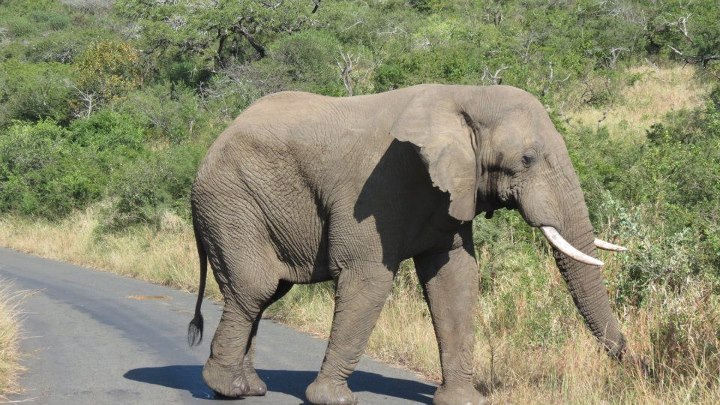
We were fortunate enough to view the Elephant, the White Rhino, the Cape Buffalo, Giraffes, antelopes and zebras at close proximity.


Alaska- The land beyond

Travelogue, Alaska

Alaska is not in the US, it certainly doesn’t appear to be. It’s not even in this part of world. Its a million miles away from it all. When a state twice the size of Texas and with a population of just fewer than 700,000 is way up there, it’s hard to fathom what’s in there. What’s there is the sheer beauty and magnificence of nature. When you think of a painted landscape of flowing rivers, mountains, cascades, trails, that is in essence the microcosm of Alaska.

Reality strikes however when you fly into Fairbanks, the second largest city in Alaska and that reeks of being fairly ordinary and I overheard people calling it a crummy town. While that may be true, an ugly pit stop is hardly a deterrent to what lies to the north, south, east and west. Of all the wilderness area designated in America, over 60% lies in Alaska. Eskimos and the native Alaskans, the Athabascans still live off the land. Strewn in many remote outposts across the state, they do enjoy many of the benefits that the state has to offer. But when I met a few of them in Fairbanks, they didn’t exactly come off as people enjoying life. Far from it. May be these are the citizens who chose to leave the wilderness and chose the urban life. The whites I came across are the ones who came over for a brief stint from the upper northern states and never left.

The impressive thing is the attitude on how the locals perceive their state as a natural reserve and they are fiercely proud of what they have. They thrive in the winters too when temperatures dip 50- 6- F below zero. Dog mushing, sleds are the order of the season. How some of them live off the land and when we hear politicians bickering about taking guns away from people, I came away from Alaska thinking why would be paint everyone with the same brush and basically take away means of livelihood for these folks who hunt during the summer to provide for winter.

Wild life of course abounds and it would not be uncommon at all to see a big moose crossing the highways, big guys for sure and I am told, the best option is to run when confronted. And grizzly bears thrive in the lands here and finding their ways to eat the wild berries they are visible too. Denali looks like a safe haven for these guys and looking at how NPS maintains the reserve, there is hardly any doubt they will be disturbed. Speaking of the environment, there is a whole peninsula designated by the National Petroleum Service as a reserve. So this is the land many are after. Seemingly this will provide enough oil for generations and make us fully self-sufficient instead of dealing with not-so friendly nations. Drill! Drill! Drill! is the call from many quarters. I was convinced of this before but when you get to feel the fragile Tundra you may change your minds. Just inches below the surface, you actually feel the presence of perm-frost, a think sheet of ice even in the summer. Guess what happens when you start drilling, not only the obvious melting of the frost but imagine the species of flora and fauna it helps sustain. It’s a resort for sure for oil, but a last one at that. Prudhoe Bay, off the Arctic coast in the North West is where they discovered copious amounts of oil in 1968. BP and Exxon promptly got the license to build the 799 mile pipeline from the Bay all the way down to Valdez (Remember Exxon Valdez spill, 1989?). This sustains the state and the way the 140 deg oil is insulated from even getting close to the frigid ground is well kept. It’s a wonderful example of nature co-existing with mankind.

A trip up there may sound fairly touristy but if you bothered to go a little deeper, it may well change your prejudice and may be even some ill-conceived perceptions.

Ég elska Ísland- An Icelandic essay

Iceland; evokes bone chilling cold as you even read the words. And Iceland in January? Well it must take someone with a lower level of intelligence to make a trip to this remote North Atlantic island. And Iceland conjures up thoughts of cold, freezing cold, bone chilling cold in an ambience of breathtaking scenic views, virgin lands, Vikings and incredibly long words. And that I presume would be the general perception right? If you were into a little bit of geography, you would know its not colder than some parts of the continental United States; New York, Boston and even Washington DC on most days. Having germinated the idea of travelling to that exotic place by my definition, I set out to travel.

Destination- Reykjavik, southern Iceland

A population of just over 300,000 in this vast area and the lack of any real crowds as you touch down hits you. It’s a tranquil place where you wouldn’t have to venture out too far to take in some spectacular views. The whitened surface and the ominous volcanic rocks jutting out just adds to the exotics and mystique. Waterfalls, volcanoes, Lava beds, geysers you name they have it all. So just picture this, the chaotic atmosphere all happens underground and its fairly active geothermal seismic zone. Then when you see what they’ve done to use this chaos to their advantage is nothing short of living off the land. You hear things of nukes, coal, oil and other fossil fuels but is the land not bountiful enough that provides heat from other sources? Heat sources that do not leave their dirty mark on the face of the earth or the upper zones. And I certainly do not claim to be a die hard tree hugger, but the sheer efforts in utilizing of renewable heat sources to generate over 99% of their power needs leave you nothing short of impressed.

The Power-

Geothermal and Wind power- Use of heat extracted from geysers and underground wells to produce steam to spin the turbines is the geothermal part while the high velocity winds are further utilized to generate power as well. No coal, no SO2, no NOx to deal with! And then they create a lagoon with the spring water loaded with minerals so you could get into your swimsuit and be submerged in 75 degree hot water while there are those amazing snow capped rocks watching over you. To borrow a famous phrase, “Its real and its spectacular!”

The history-

English was very prevalent and I did not have to learn the 30 letter words in Icelandic to find my way around. And every Icelandic name means something and it could be a tool, it could be a Viking warrior or a weapon made of stone. Iceland started off as a Pagan culture when Vikings came over to settle there in 870. The pagans worshipped Viking Gods such as Thor, Odinn and then around the 1100’s, Christianity happened followed by a reformation to Lutherans in the 15th century. However, they did manage to found the first parliament in the 10th century. Iceland has had a turbulent past including the dreaded Black death,; the Plague in Europe, take over by the Danes and continuing to be ruled by them until 1944. 1944 is when Iceland became independent.


And to add, during a significant volcanic eruption in the 17th century, the island was covered in fog for upto 6 months. Dread, misery and depression took over and it was indeed so bad that the islanders went through a complete generation without any kind of musical arts and dance. The fog caused by volcanic ash was reportedly so bad that people could not venture out even to sea to catch their daily fish. When I saw that beach, a beach of black sand caused by the lava, it looks sinister and the waves that crash against the black rocks give it a highly eerie feel. The beach could be from a sci-fi thriller and you feel like you are about to be just swallowed by the angry waves that will appear out of nowhere sounding like a crack of doom. It takes a special stepping back to actually admire the sheer breathtaking surroundings, the like of it not seen before by me.

The highlights was obviously being in the Arctic zone in the winter and the opportunity of a lifetime to be able to view the Aurora Borealis, a streak of white and blue buzzing through the night sky.

Practicalities-

Iceland is expense, very expensive. A light meal for two could cost upto $40 and a pair of woollen socks could set you back by $40 as well.

  1. Travel light and dress in layers if you want to be there in the winter. The sun doesn’t rise until around 10.30 am. Its not the cold that gets you, its that dreaded wind and makes it feel you want to fly to the South seas!
  2. Carry proper footwear with some good wooly socks and mittens. Do not ever attempt to get out in your Sperrys
  3. Several cheap flights from the east coast and Europe flying into Keflavik, a 45 min drive from Reykjavik. Not bad at all with the flight not lasting over 5 and half hours.
  4. Buy your own booze at the duty free. Do not attempt to buy yours at the bars in Reykjavik if you can help it.
  5. Reykjavik has a very active night life and what better to do in winter after 4.30 pm than to hang out at the city center downing a few!
  6. Food- You get it all although if you a tad faint hearted you may not want to eat bull’s testicles or a rotten shark.
  7. Try to get into group tours but do not book them online from your country. You will get lot better deals if you book it all when you arrive in Iceland.g

Chile -A glimpse from 2012

Having spent the last few weeks traversing South America, I consider it as a great opportunity. Not just being able to see the continent from the mighty majestic Andes to the Pacific Ocean, from Rio Del Plata to the arid regions, but the chance to live the local life is indeed a windfall. Chile is a country which reflects an unending optimism, the urge to be among the best in the region. And the evidence all points to this. The mineral market has been capitalized by the Government and the ease with which mining giants, BHP Billiton, Xstrata, Barrick can operate in this stable economy makes it a win- win situation for everyone. Never did I sense that unemployment is an issue, never did I sense people desiring to leave Chilean shores for better opportunities. It’s all there and prosperity obvious. And this is Santiago. Valparaiso, the significant harbor on the pacific did lose its economy at the turn of the previous century with the opening of the Panama Canal but has picked herself up and is looks well in tune with any port city in the world; turning herself not only into a la Gold Coast, but being a key contributor to the Chilean economy. I have to yet to explore the north and that’s exactly where the reddish tinges of Copper are all pervading.

Contrast to Chile is that large country across the border; Argentina. Flying into Buenos Aires and getting away from the airport is nothing short of my own experiences in Bombay (I will not call it Mumbai). The dirt, the chaos, the ugly buildings lining the main freeway and the obvious lack of new construction is something you cannot miss. The version of Argentina is at least two fold, the cab driver version is one of rosy optimism and while there are problems, the country is in a growth mode nonetheless. And then a few days later I ran into a Professor of Oceanography and the version from the erudite folks is diametrically opposite. The country, sitting on some of the best natural reserves will not make it any easier for companies to operate and the mindset and the policy of not expending the USD will continue to hurt them. If the seller of real estate keeps waiting on getting paid in USD and the buyer will not pay in any currency other than the Argentine Peso, it doesn’t take a lot to figure out that there is a development and growth impasse. The people have not been helped by the fact that the regimes they are under swing from one of extreme privatization to one that is socialist. When someone says they cannot buy even a decent bread toaster in Argentina, it certainly gives you a lot to ponder.

One thing is, like my earlier sojourns in South Africa, the people here come off as very friendly and the kind you will not mind having a beer with.

A mosaic of God’s wonders-A photographic essay

A journey through the Umfulozi reserve, Natal, South Africa (Elephant, white rhino, buffalo, Giraffe, zebra, cheetah) and a few shots from Denali, Alaska (Moose, black bear, caribou). The one at the bottom is of a Llama in Peru

The African South East- Life & times

I have been meaning to write for a few days now. Now after finally having overcome the jet lag between Australia and South Africa, its good to be alive again. Coming to South Africa although for a short stint; I see this as an opportunity to see more of the world. Additionally some experience in the Aluminium smelter business is enriching.

This country is indeed interesting. Since the end of apartheid, it seems the country has exploded into chaos. While taking a drive around the countryside, the fields and meadows resemble India in so many ways. You see people walking along the road in the middle of wilderness, stark poverty evident everywhere. While this country is not a classic 3rd world country, it is more like a two and half! We have been asked by security experts not to be complacent or travel alone. Crime is quite prevalent and Johannesburg, the largest city is pretty overwhelming for first timers.

My next door neighbour at the apartment block is a South African of Indian origin. He was telling me how his forefathers travelled across the Indian Ocean in 1861 from India to work on the sugar cane plantations outside Durban.

Working 6 days a week leaves only Sunday to explore. Last Sunday 3 of us (Myself, a Canadian, a New Zealander) managed a trip to visit a Zulu village, where the Zulus still live as did way back at the turn of the 20th century. Very interesting to see how they go about their lives (I have attached a picture of me with a Zulu chief)

Few more weekends we plan to go see a crocodile farm and go on an African safari.

Another interesting day trip:  Driving by the African savannah and entering the St Lucia estuary. This place is at the southern end of the Mozambiquan coastal plain and is classified as a World Heritage site (Inaugurated by Nelson Mandela “Madiba”) in 1995. Taking a boat on the river you can see the water is full of hippos and crocodiles. Lazing around in the sun, hanging out in water, these are abound. I was just over 200 k’s from the South African borders of Swaziland and Mozambique.

A little fact I found out that Nelson Mandela actually married the Mozambique strongman, Samora Machel’s widow. The lady has the unique distinction of being the first lady twice!

Tourism is the only industry that thrives here while locals make their livelihood on the cane and pineapple plantations. Poverty is very visible but for a person who grew up in India, its not all that shocking.

Europeans come to African not only to watch the big game but some of them have been known to indulge in game hunting. Game hunting primarily refers to hunting of the Big five (African elephant, Lion, Leaopard, Cape Buffalo and the White Rhino). Game hunting packages cost as much as $25,000 for a 12 day  trip.

While there is plenty of game to watch, I am not sure if some of the power hungry corrupt African dictators are not more dangerous. When you look north from South Africa, Zimbabwe (Mugabe) and the chronically tribal warfare infested countries of Burundi. Rwanda, Angola stand out. And with Western hired guns to add fuel to the fire, Africa continues to sustain its sobriquet of the “Dark Continent”.

=================================================================

Talking to an Indian South African guy, he tells me how bad it was pre 1994 during the days of Apartheid. No right to vote, not allowed to enter white neighborhoods, running scared of the white man, eating in different sections in the same restaurant..Terrible..Wonder why they think its okay to treat a person of a darker color differently. Bloody shame!

============================================================

Just three weeks in this country and while my travels have not been extensive, the time still allows to get a fairly good perception of lifestyle and dynamics in the current South African society. I have had the opportunity to speak with several people from varying nationalities. Many non South Africans, primarily Europeans and Australians see the society and culture as backward and third- worldy. No surprises here, since over 90% of the populations consisting of native blacks and coloured were repressed for a prolonged period. Just lifting the restrictions and ending apartheid does not lead to the native development automatically. This seems like it is a process and may take a generation and a half. Meantime the economic situation amongst the previously underprivileged populace continues to worsen.

It used to an enforced segregation until 1994 and now almost two decades later, its more of a natural self segregation. So much so, that illiteracy and prevalent crimes have come to be associated with the blacks. And its conveniently forgotten that it is the minority who created this situation in the first place. This is an unfortunate stigma many South Africans will carry for the rest of their lives.

The repeatedly flashing pictures of people living in shanty towns on a bare subsistence are extremely visible throughout the country. The native folk are extremely friendly and take pride in what they do and graciously accept any kind of tips. The same is to be said of the White minority; nowhere do the common white people appear to be dictators or the despots they were made to be. The common folks have been fairly friendly to us foreigners ,I would say, more so than the Australians. So at a grass roots level, the true citizens are as integrated but cultural and economic differences do make it appear that society is stratified.

The leadership could be doing a lot more than soaking in corruption and polygamy. The basic tenet of leading by example is surely absent. The continuing paucity of power and the consequences faced by the government in terms of rioters and power line tappers does not look to be improving anytime soon. The presence of hired guns like ourselves is noticeable in almost all industries. Power, Aluminium smelting and other such core industries have a plethora of expatriate experts while the local talent is almost invisible.  These expatriates could do a lot better by actually training the locals rather than earning a few quick rands and complaining about the lack of initiative on part of the local populace. The leadership may well treat this as a chronic problem and these issue be addressed before South Africa goes the way of its other fellow African nations.

The visit to the Umfolozi game reserve would be considered as a once in a lifetime opportunity. The massive 500 hectare wild life reserve opened up in 1895 to create a reserve for the great white southern Rhinoceros. The white hunters had been shooting them for game for several years and it took them a few years to realize the fun and games will cause the white rhinos to be extinct. This necessitated opening of the game reserve; subsequently followed by introduction of major wild life into the park. And one thing that surprised me immensely was the fact that the animals are not fed. They are in open country and are wild animals, pure and simple. Therefore they have to hunt their own food and survive the jungle and be part of the food chain.

Seeing these glorious animals in their natural splendour is an unbeatable sight, unparalled in its grace and memory. Soaking up the knowledge and nuances of many of animal behaviours was an added bonus.

We were fortunate enough to view the Elephant, the White Rhino, the Cape Buffalo, Giraffes, antelopes and zebras at close proximity.