What, in your opinion, is the most significant issue facing mankind today?
-
Violence
-
Hunger/Starvation
-
Climate change
-
Commodity prices (Oil, minerals)
-
Economic disparity
-
Disease
Ashok's rantings- Travel, musings et al
My World- Commentary on travel, Project Management, politico-social issues and a lot more
What, in your opinion, is the most significant issue facing mankind today?


Having spent the last few weeks traversing South America, I consider it as a great opportunity. Not just being able to see the continent from the mighty majestic Andes to the Pacific Ocean, from Rio Del Plata to the arid regions, but the chance to live the local life is indeed a windfall. Chile is a country which reflects an unending optimism, the urge to be among the best in the region. And the evidence all points to this. The mineral market has been capitalized by the Government and the ease with which mining giants, BHP Billiton, Xstrata, Barrick can operate in this stable economy makes it a win- win situation for everyone. Never did I sense that unemployment is an issue, never did I sense people desiring to leave Chilean shores for better opportunities. It’s all there and prosperity obvious. And this is Santiago. Valparaiso, the significant harbor on the pacific did lose its economy at the turn of the previous century with the opening of the Panama Canal but has picked herself up and is looks well in tune with any port city in the world; turning herself not only into a la Gold Coast, but being a key contributor to the Chilean economy. I have to yet to explore the north and that’s exactly where the reddish tinges of Copper are all pervading.
Contrast to Chile is that large country across the border; Argentina. Flying into Buenos Aires and getting away from the airport is nothing short of my own experiences in Bombay (I will not call it Mumbai). The dirt, the chaos, the ugly buildings lining the main freeway and the obvious lack of new construction is something you cannot miss. The version of Argentina is at least two fold, the cab driver version is one of rosy optimism and while there are problems, the country is in a growth mode nonetheless. And then a few days later I ran into a Professor of Oceanography and the version from the erudite folks is diametrically opposite. The country, sitting on some of the best natural reserves will not make it any easier for companies to operate and the mindset and the policy of not expending the USD will continue to hurt them. If the seller of real estate keeps waiting on getting paid in USD and the buyer will not pay in any currency other than the Argentine Peso, it doesn’t take a lot to figure out that there is a development and growth impasse. The people have not been helped by the fact that the regimes they are under swing from one of extreme privatization to one that is socialist. When someone says they cannot buy even a decent bread toaster in Argentina, it certainly gives you a lot to ponder.
One thing is, like my earlier sojourns in South Africa, the people here come off as very friendly and the kind you will not mind having a beer with.
I have seen a huge diaspora of Indian professionals across the globe in various capacities. Sterotypical Indians are not a myth but quite a stark reality. Having grown up and studied my undergrad school in India, I have allowed myself the liberty of sharing my observations and some subtle tips. When someone like me has grown up in India in the 70’s and 80’s, it is truly eye opening to see several myths busted almost on a daily basis.
For those of you that work with junior level professionals from India (most of you probably do), you possibly think of them in a group rather than individuals. You think these kids tend to stick together protecting themselves from some awkward fears? You think these people assume no identity and go on busting their chops like the proverbial oompa-loompas? You think they get a discount at the local 7-11’s?
The first two are fairly closer to the truth. And a lot of it comes with the “safety in numbers” mentality that comes in intrinsically from just being in a “foreign land”. Takes a while to break them, months, years may be. Some of you probably sound like Hollywood stereotypes too and may come off as too brash. So this is where the inter-cultural compromise comes in. And remember talking to them louder and real s-l-o-w ain’t the solution.
Then the age old Indian myth on superiority of race is ingrained, surprisingly still prevalent in many parts of India outside the metro centers. The erroneous notion that fairer.whiter the person the more intelligent he/she is. Indian have their own brand of racism where stores still sell products that will turn you “fair and lovely” or “fair and handsome” , which is an insinuation of the Indian brand of racism. With this rather naive notion in mind, you may see young Indian professionals intimidated by your approach. Its cool, no one means anything malevolent. Again inter-culture boundaries need breaching to reach across and make them feel belonged.
Trust me, the level of intelligence and diligence seen in several of these entrants (FOB kids) is some kind of a rare commodity. Nurture it well without sense of exploitation or looking down upon them. I have seen the “looking down upon” approach especially to young engineers that just do not dress or appear to be savvy looking.
For you Indian kids, I’ll say this- Work speaks for itself. Do not be intimidated by other people and just because they speak better English does not make them superior. In fact your English is way better than their Hindi, that I can safely say. Assimilate well when you travel overseas and do not be a wildebeest, be a stand out person and performer. Trust me, this will go a long way.
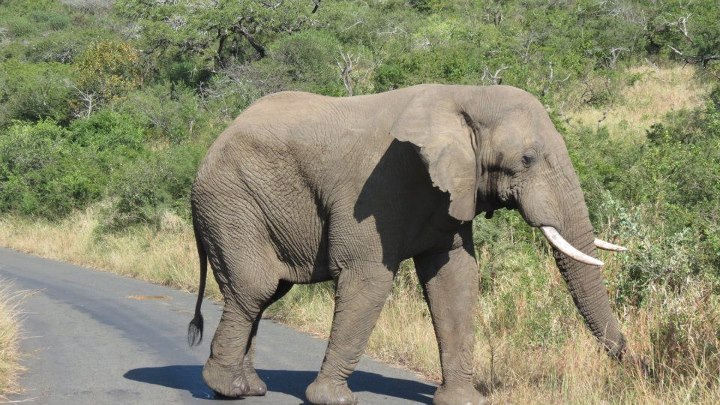
A journey through the Umfulozi reserve, Natal, South Africa (Elephant, white rhino, buffalo, Giraffe, zebra, cheetah) and a few shots from Denali, Alaska (Moose, black bear, caribou). The one at the bottom is of a Llama in Peru


The concept of travel and time and travel in time have been fascinating forays for most of us; travel enhances the outlook no doubt. Wheeling and dealing and working in teams that afford complete engagement with multiple cultures and nationalities is the pinnacle of diversity. As the world started to shrink in the late 90’s and global village came into existence, goal oriented teams became the norm, irrespective of who the team members are or how diverse they may be or what corner of the earth they may be based in. And speaking as someone who grew up in a socialistic Indian public sector, the limited exposure of dealing with someone outside of India was the Soviet influence in setting up steel and heavy industrial plants. Then the 90’s happened.
The IT sector may be what is perceived as a classic case of the culture mixer, but EPC industries have possibly made this step way before the rest. Imagine this- A team working towards constructing and commissioning an industrial plant located remotely at a fast trace pace with just over 200 people thrown in. This is where a team will thrive like a bunch of seamen thrown together in a submarine for a few months. During these times, boundaries cease to exist and focus of the individuals becomes the common goal, the goal to deliver.
Being part of a multi cultural team and even better leading a multi cultural team is seen as a person’s forte. An effective leader is thus born; any leader that can get a project delivered through a multi national, multi cultured team can inevitably motivate and bring a diverse group of individuals together .These are the people you want in your organization for these are the people who will deliver when it matters.
Speaking from personal experience I can lucidly express what it means to be part of such a team and lead such a team. Its the unbridled joy in formation and motivation of such teams that leads to the feeling of a job well done. I can see how its effectively facilitated project delivery.
1-Team members do not see themselves as “from somewhere”, they see themselves as part of a focus group that is in this together to deliver. Nothing less
2- Keeping the group motivated by means of an engaging blend outside of work; i.e. highly informal team building sessions. This makes it easier for people to look forward to come back to work on “Monday”
3- Freely share cultural experiences between team members. If I know more about the South American culture or the Chinese culture now, its not because I “googled” but I had a few team members who shared this freely with me. And its incredible how much further this goes in fostering a better working relationship.
4- People are people, so the usual tenets of recognition, attaboys/attagals, celebrating success and lending helping hands to the weaker links will always work.
Nothing gives me a better sense of satisfaction than delivering a project while working in a team of people from all over the globe. Its my “United Nations” and its where you not only build projects but you build values, professionalism, networking and life long memories.
We love the way you fish and your perseverance. In fact it almost makes one feel good about oneself when someone sends you an “in-mail”, extolling your skillsets and talent and how badly they want you in their organization.
I know of several folks that have gotten some fairly good deals professionally and financially through linkedin executive search consultants and good on them. Most exec head hunters I have dealt with are specialists who understand the thick fiber of aptitudes and can see through “embellished” resumes. So all you gentlemen and ladies, please carry on doing what you’re good at.
I have message for those not-so-skilled head hunters and I have had a fair share of them as well. I would hesitate to christen them as ignoramuses, rather I’d call them amateurs.
I would also make a quiet appeal to all you head hunters and work with people to better customize their needs and not always “sell” what your organization is offering.
thank you all.
This is getting insane. Paris happens, San Bernardino happens and then come news clips about these few sub-humans who have performed these depraved acts sending most of us into a frenzy. While slamming your doors to people from a particular community is shameful, how about a strong regulation on the refugees coming in? Don’t let just about everyone in. Even when people come here on a somewhat dubious visa, problems still happen. Thought the visa process was a lot more stringent.
And the left screaming for gun control? Pray tell what do you mean? If only it means taking assault rifles out of the equation, I can buy that. Others, no, it just doesn’t cut it. Visa application and gun application whetting if implemented effectively may be just what we need. Saying “No” to guns and saying “no” to refugees does not appear to be a viable solution
I grew up in a small town (Bhopal) and I have not seen better harmony between people of different classes or religious beliefs.
My journey through South America has now taken me to new lands. Having done my almost regulation trip to Chile, Peru beckoned. Excitement was all I felt as I made my way to Incaland. Funny I think, as I recall a local Peruvian later told me how people know of Machu Pichu but the mention of Peru is met with an astounding look !! I had but a week in which not only to make the best out of my trip but also to ride up to 14,000 ft to indulge in some training on a Copper concentrator my company is building in the Peruvian Andes.
For a non- South American, the appeal of Peru starts and ends with Machu Pichu, the Lost city of the Incas. That’s exactly what I did. Arriving into the historical city of Cusco (pronounced Cosco if you are an Inka) is an experience in itself. Perched at 11,000 feet you start to feel the high altitude and physically fit or not, shortness of breath is not an uncommon phenomena . Cusco is the capital of the Incas. The Inca Empire had over 9 million citizens in the 14th century. That is truly amazing. You start to get the sense of their advanced way of life and their administrative structure when you consider that magnitude. Cusco was the city that Spanish conquestadors got to , led by Fransciso Pizzaro and his band of 177 men in 1533. Machu Pichu was their second capital and was a residence for the elitists; philosophers, noblemen and a school that was an equivalent of a Brahminist society. That was however never discovered by the invaders. Cusco and all cities in the vicinity bore the brunt of the invasion. Injected with diseases unknown to the Incas, a vast majority of them perished. What is truly amazing and awe inspiring is the the journey from Cusco to Machu Pichu. Contrary to popular belief, you actually travel downhill from Cosco. From 11,000 ft to 8,000 ft. A 90 min car ride to Ollantaytambo, then a 100 min train ride in InkaRail to a Agua


Calientes station and then a 20 min bus ride to the top. That’s when it srikes you. The majestic fog covered mountain stares at you with the grandeur of the Inka Kingdom truly comes to light. Everything seems insignificant at the first sight of the magnificence. Then the reality and the realization of the architecture, the terraced slops for agriculture, the highly advanced solar clock, the sun temple, its all surreal. The Inka Pachakuti watches over you as you explore the area and a million camera flashes popping. The architecture , especially the masonry by means of interlocking keys in the stones and how they have withstood the centuries is not something you would expect in that part of the world. As everyone says and agrees, “Its once in a lifetime experience” and no, it is not over rated at all, unlike the Niagara Falls, may be.
The area around Cusco which accounts for the rest of the Empire; Pisac, a city where the farmers delved. This is the place where they discovered over 5,000 Inka mummies. A city which was one of the many raided by the conquestadors still retains the original drinking water fountains. I felt like Tintin in Prisoners of the Sun. I was half expecting a Llama to spit in my face.
Cusco is the heartland of the Incas. Inca-pharma, Inca-foto, Inca-cola , its all about the Incas.
Peruvian people and food. Wonderful . That’s how I can summarize. Peruvian food with its own blend of spices would appeal so much to an Indian tongue and when accompanied by the lovely Peruvian hospitality tastes even better. Rest of Peru? Well from what I have seen on my way upto the mines is another impoverished third world economy. Peru with its copper and Molybdenum should find a way out of the misery of its people and progress and follow Chile’s example and you would hope they don’t go the way of their eastern neighbors.
Overcrowded urban centers in Lima, Arequipa, Trujillo and Cusco make up for probably around 60% of the population and it is uncertain if the existing infrastructure can continue to sustain this growth. Spirits of people can take some battering sometimes, but not everyday, everytime.
A trip upto the 14,000 ft mine site
had its own challenges, not least the eight hour ride in a pick up truck and the trip down was accompanied by fog, rain and several 3,000 ft drops, all that on a 100% dirt road. Challenges and opportunities do not come unattached. With every challenge you see an opportunity and that’s what the journey is all about.


I have been meaning to write for a few days now. Now after finally having overcome the jet lag between Australia and South Africa, its good to be alive again. Coming to South Africa although for a short stint; I see this as an opportunity to see more of the world. Additionally some experience in the Aluminium smelter business is enriching.
This country is indeed interesting. Since the end of apartheid, it seems the country has exploded into chaos. While taking a drive around the countryside, the fields and meadows resemble India in so many ways. You see people walking along the road in the middle of wilderness, stark poverty evident everywhere. While this country is not a classic 3rd world country, it is more like a two and half! We have been asked by security experts not to be complacent or travel alone. Crime is quite prevalent and Johannesburg, the largest city is pretty overwhelming for first timers.
My next door neighbour at the apartment block is a South African of Indian origin. He was telling me how his forefathers travelled across the Indian Ocean in 1861 from India to work on the sugar cane plantations outside Durban.
Working 6 days a week leaves only Sunday to explore. Last Sunday 3 of us (Myself, a Canadian, a New Zealander) managed a trip to visit a Zulu village, where the Zulus still live as did way back at the turn of the 20th century. Very interesting to see how they go about their lives (I have attached a picture of me with a Zulu chief)
Few more weekends we plan to go see a crocodile farm and go on an African safari.
Another interesting day trip: Driving by the African savannah and entering the St Lucia estuary. This place is at the southern end of the Mozambiquan coastal plain and is classified as a World Heritage site (Inaugurated by Nelson Mandela “Madiba”) in 1995. Taking a boat on the river you can see the water is full of hippos and crocodiles. Lazing around in the sun, hanging out in water, these are abound. I was just over 200 k’s from the South African borders of Swaziland and Mozambique.
A little fact I found out that Nelson Mandela actually married the Mozambique strongman, Samora Machel’s widow. The lady has the unique distinction of being the first lady twice!
Tourism is the only industry that thrives here while locals make their livelihood on the cane and pineapple plantations. Poverty is very visible but for a person who grew up in India, its not all that shocking.
Europeans come to African not only to watch the big game but some of them have been known to indulge in game hunting. Game hunting primarily refers to hunting of the Big five (African elephant, Lion, Leaopard, Cape Buffalo and the White Rhino). Game hunting packages cost as much as $25,000 for a 12 day trip.
While there is plenty of game to watch, I am not sure if some of the power hungry corrupt African dictators are not more dangerous. When you look north from South Africa, Zimbabwe (Mugabe) and the chronically tribal warfare infested countries of Burundi. Rwanda, Angola stand out. And with Western hired guns to add fuel to the fire, Africa continues to sustain its sobriquet of the “Dark Continent”.
=================================================================
Talking to an Indian South African guy, he tells me how bad it was pre 1994 during the days of Apartheid. No right to vote, not allowed to enter white neighborhoods, running scared of the white man, eating in different sections in the same restaurant..Terrible..Wonder why they think its okay to treat a person of a darker color differently. Bloody shame!
============================================================
Just three weeks in this country and while my travels have not been extensive, the time still allows to get a fairly good perception of lifestyle and dynamics in the current South African society. I have had the opportunity to speak with several people from varying nationalities. Many non South Africans, primarily Europeans and Australians see the society and culture as backward and third- worldy. No surprises here, since over 90% of the populations consisting of native blacks and coloured were repressed for a prolonged period. Just lifting the restrictions and ending apartheid does not lead to the native development automatically. This seems like it is a process and may take a generation and a half. Meantime the economic situation amongst the previously underprivileged populace continues to worsen.
It used to an enforced segregation until 1994 and now almost two decades later, its more of a natural self segregation. So much so, that illiteracy and prevalent crimes have come to be associated with the blacks. And its conveniently forgotten that it is the minority who created this situation in the first place. This is an unfortunate stigma many South Africans will carry for the rest of their lives.
The repeatedly flashing pictures of people living in shanty towns on a bare subsistence are extremely visible throughout the country. The native folk are extremely friendly and take pride in what they do and graciously accept any kind of tips. The same is to be said of the White minority; nowhere do the common white people appear to be dictators or the despots they were made to be. The common folks have been fairly friendly to us foreigners ,I would say, more so than the Australians. So at a grass roots level, the true citizens are as integrated but cultural and economic differences do make it appear that society is stratified.
The leadership could be doing a lot more than soaking in corruption and polygamy. The basic tenet of leading by example is surely absent. The continuing paucity of power and the consequences faced by the government in terms of rioters and power line tappers does not look to be improving anytime soon. The presence of hired guns like ourselves is noticeable in almost all industries. Power, Aluminium smelting and other such core industries have a plethora of expatriate experts while the local talent is almost invisible. These expatriates could do a lot better by actually training the locals rather than earning a few quick rands and complaining about the lack of initiative on part of the local populace. The leadership may well treat this as a chronic problem and these issue be addressed before South Africa goes the way of its other fellow African nations.
The visit to the Umfolozi game reserve would be considered as a once in a lifetime opportunity. The massive 500 hectare wild life reserve opened up in 1895 to create a reserve for the great white southern Rhinoceros. The white hunters had been shooting them for game for several years and it took them a few years to realize the fun and games will cause the white rhinos to be extinct. This necessitated opening of the game reserve; subsequently followed by introduction of major wild life into the park. And one thing that surprised me immensely was the fact that the animals are not fed. They are in open country and are wild animals, pure and simple. Therefore they have to hunt their own food and survive the jungle and be part of the food chain.
Seeing these glorious animals in their natural splendour is an unbeatable sight, unparalled in its grace and memory. Soaking up the knowledge and nuances of many of animal behaviours was an added bonus.
We were fortunate enough to view the Elephant, the White Rhino, the Cape Buffalo, Giraffes, antelopes and zebras at close proximity.


 Ashok's rantings- Travel, musings et al