Journey to the end of the World- 53 degrees south

The journey to the edge of the world sure sounds ominous but it couldn’t be farther from the truth. The journey that took me right to the southern most region of the world was fairly uneventful but the sheer excitement of touching a southern latitude was sufficient fodder for the travel bug within me. Hard to say if I am bitten by that travel bug or contaminated with it. The past few months would seem to suggest the latter.
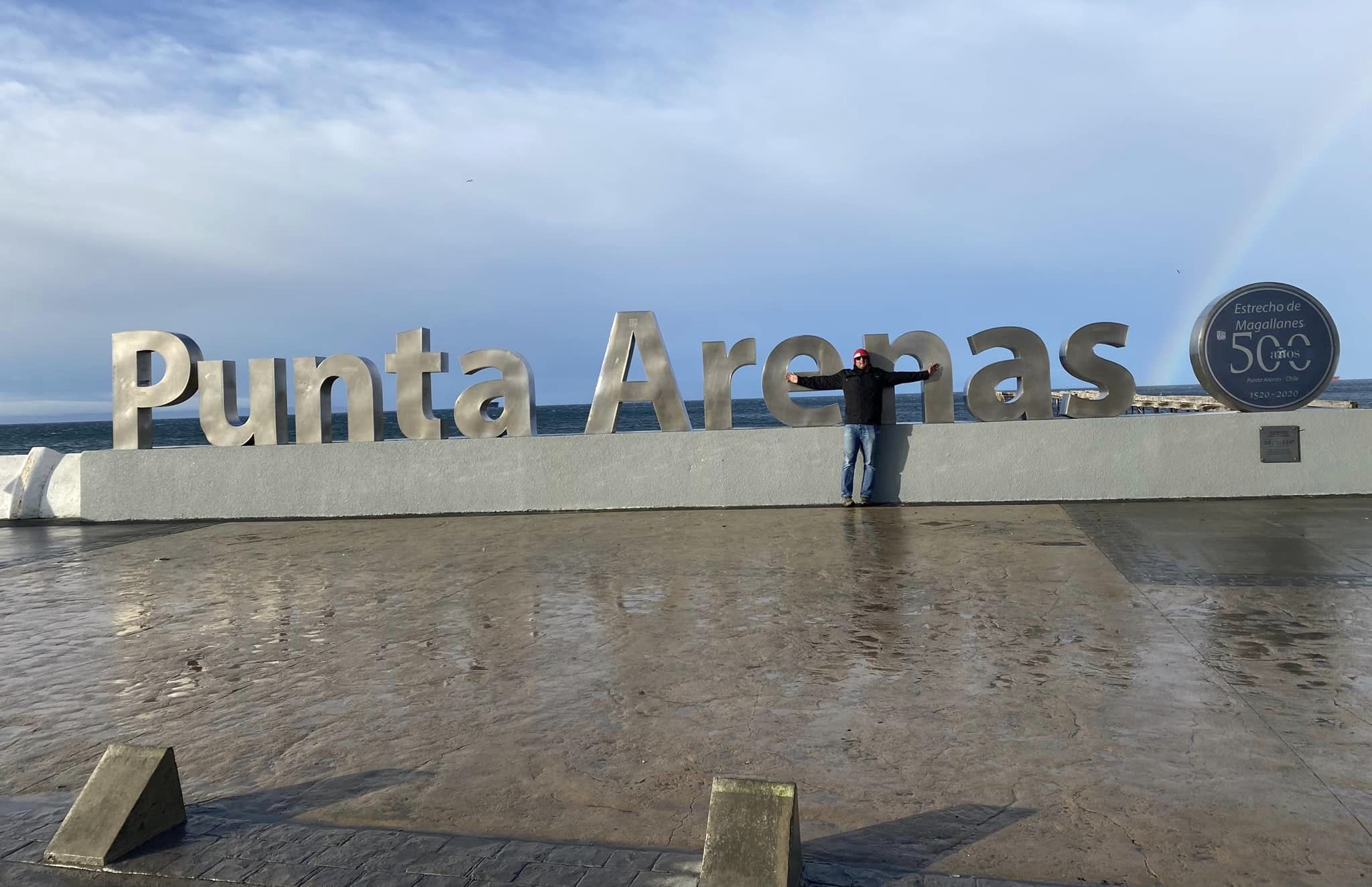
Anyway, for those geographically inclined, given the North and south poles are at 90 degree latitude and as far as the northern hemisphere goes, you could go almost upto 85 degree on land . South is different, vastly different and by the time you are around 55 degrees there is no land between that latitude (southern tip of the American continent) and the Antarctica peninsula. And imagine my delight to know the Hotel I stayed in Punta Arenas (one of the three most southern cities in the world) was right next door to the old post office. This is the place where Robert Falco Scott, the British Naval officer sent off 400 letters to several people announcing he was back safe after discovering the Antarctic peninsula. That was in 1904. Several years later in 1911 he lost the race to the South Pole to the Norwegian, Roald Amundsen and the journey ended with his death. I am told they were not all that prepared and even their sled dogs couldn’t take it.

What am I doing here? Punta Arenas is the city right by the Magellan Strait. He was Ferdinand Magellan almost the first person to circumvent the globe and its been 500 years since he found that route that connects the Atlantic to the Pacific. The town is all his for sure; and when you consider the intrepid explorers that chose this path to go to lands unknown, traversing the angry seas and this one did prove that the earth was not flat; contrary to popular belief at that time. That must have been quite a voyage. Originally from Portugal, he managed to upset his masters so much so that they pressed criminal charges against him. He somehow managed to get to Spain where the King was magnanimous enough to sponsor his trip to discover the elusive passage to Asia. The year is 1518- After a route starting from Lisbon and heading south along the west coast of Africa the ships head west towards Brazil and Argentina. Between countless spells of intrigue, treachery, betrayal and other such shenanigans they find the strait. What a momentous occasion it must been and hardly did he know he’d have towns, streets, GPS and even the small penguins named after him. I know a few people that we can have weasels named after them. So after he crosses over to the pacific side him and his entourage get to Philippines to their way to Malacca which was supposed to be their eventual destination. Magellan gets into a scuffle with one of the local tribes and gets killed and with him his ambition of being the first person to circumnavigate ethe globe lies 50 feet deep in the Pacific. His second in command, Juan Sebastian Elcano manages to reach Spain three years after they set sail. The year is 1521.
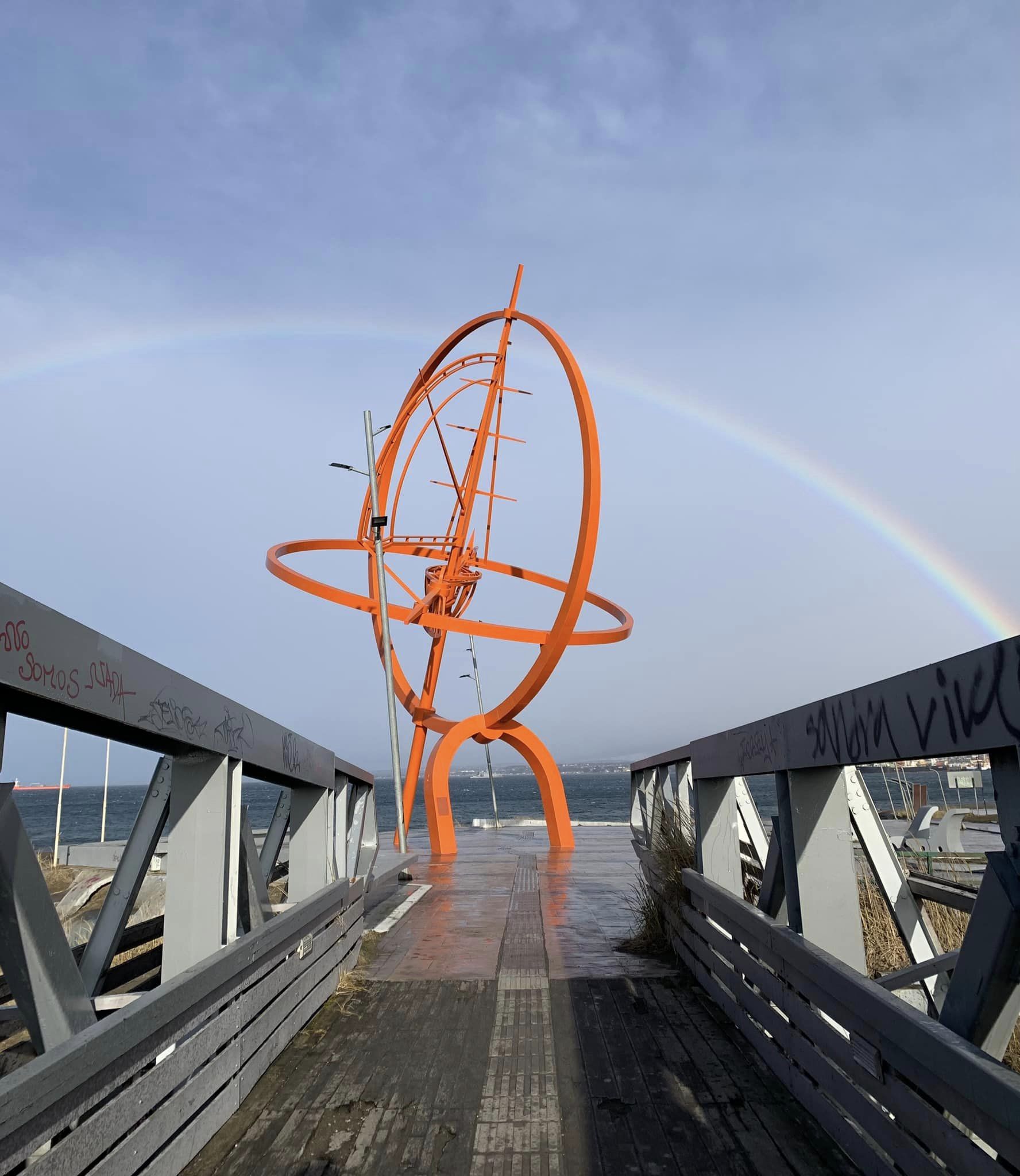
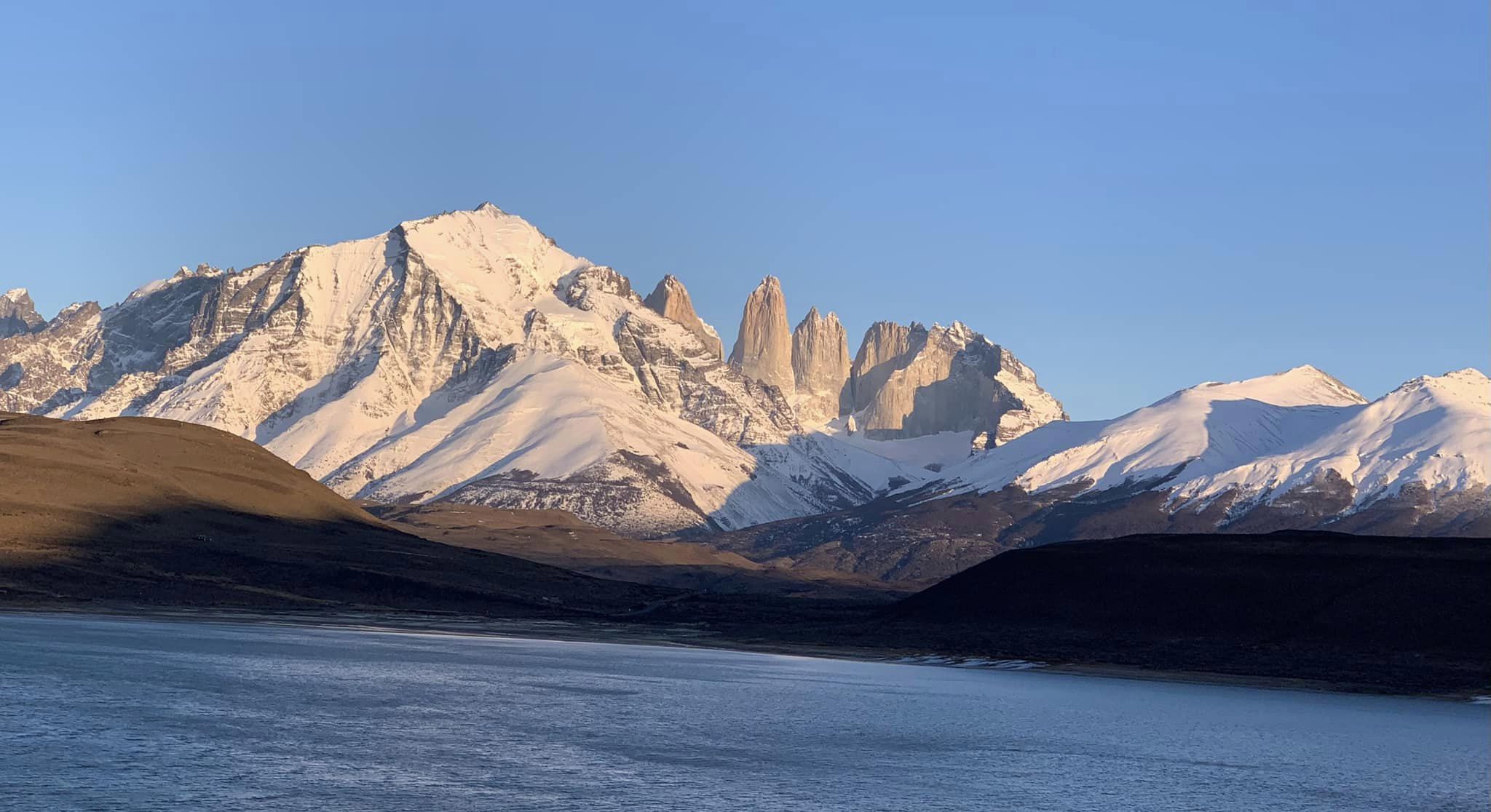
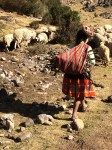
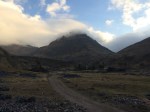
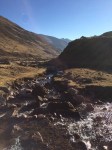
The gateway to the Torres del Paine national park is on a route that heads north from Punta Arenas towards the city of Puerto Natales. The trip to the Torres del Paine is just over 90 mins from there and once you’re in that region, you could be on the moon. Secluded and majestic in its appearance its all about the blues. Blue skies, blue waters, blue hued glaciers and Paine actually means blue. Chile and Argentina are so co-joined here and you could literally be on the Argentine side in less than an hour.

Its home to the largest count of the Puma. Puma- What a cat – sits on top of the food chain here and he’s got plenty of Guanacos to feed on. Guanacos, part of the camel family are wild and love being in a herd. The Puma is a loner, he is more of a cat than a lion. He doesn’t roar, he meows and loves to eat, sleep , rest and repeat (Some of you may be able to relate to him and it certainly sounds like me on a weekend!)
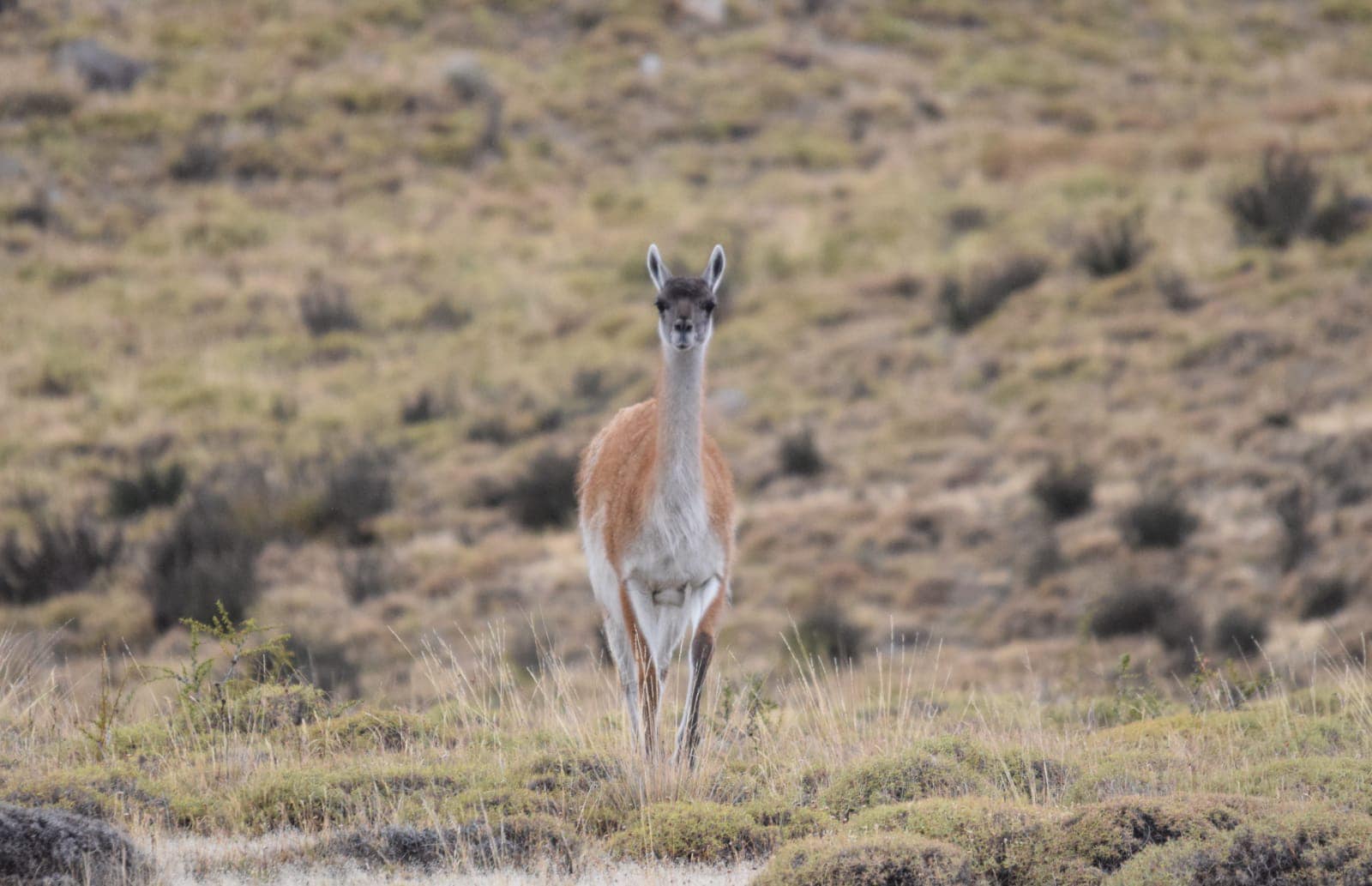
I was fortunate enough to get sightings of the Puma and a herd of Guanacos and the picture perfect landscapes of the region are as close as you’d get to see unpolluted , virgin surroundings untouched by civilization. Sight of a broken piece of an iceberg made the day even better.

Missed seeing the Magellanic penguins- The penguins migrate to the Isla Magdalena , close to Punta Arenas starting in Sep. They usually hang out around the Atlantic and make the two month journey to get to the place for breeding. Interestingly they do this journey every year and create quite a ruckus on the island. Perhaps later this year, these penguins get the opportunity to see me. Much like the gorillas in Rwanda.

Some fun facts & FAQs-

  1. Penguins may walk funny they are monogamous and stay loyal to their partner their entire life
  2. No- They don’t serve Penguin soup at restaurants there
  3. You cannot adopt a Puma. They bite and they are highly carnivorous
  4. Pumas are not considered an emotional support animal and the airlines do not allow them to travel on your flight.
  5. Guanacos are fast runners but usually end up on the Puma’s dinner plate because simply put, Pumas run faster.
  6. The entire Patagonia has less Spanish speakers than Miami
  7. The wind velocity at the Magellan Strait is enough to carry you away to unknown destinations

Travel tips-

Fly to Puerto Natales directly from Santiago, Chile if you are in for the Torres. If you want to be part of Magellan’s city, you’d better fly into Punta Arenas. You could always do a multi city trip. And the Bus Sur that run between Punta Arenas and Puerto Natales on the Ruta de final de mundo (Route to the end of the world) are absolutely the best way to get around.

Murakoze Rwanda- Journey to the land of a thousand hills and a million smiles

My own piece on my mission to Africa- Opinions are my own, mostly facts and any resemblances to goats, people are purely intentional.

The Bridge that launched a million smiles!

The bridge the mission and instances of my own ineptitude!

Embarking upon the mission was a mix of nervousness and excitement and in spite of several discussions with my predecessors I had that lurking fear of heading into the unknown. Wikipedia, You Tube, first hand accounts do not prepare you well enough, you can watch, you can read, you can talk but unless you get your own boots on the ground its hard to experience the feeling of being in Central Africa.

And being a bit wary, the first flag was when the visa I had applied for came back within 48 hours and with an error wherein they had listed my birthplace as Turkey. Little did I know I looked like a Turk (which to me was a compliment!) ; however a simple one line email fixed that. The Rwandan embassy came back to me less than 24 hours later and corrected it and issued me a visa that was accurate. What made it even better was their use of the valediction– “Welcome to the land of a thousand Hills and a million Smiles”. That was that one boost I needed to look forward to my adventure.

The desire to do something different, be part of something that enables a few smiles is what most of us aspire for. And you don’t need to jump on a plane and travel halfway around the world to do that; you could do it in your neighborhood. But what prompted the Rwandan mission was to make a difference to people that are starved of the basics in life, people with real problems, people with real challenges. Not people who complain about the heat and humidity or the fact that their network speed sucks.

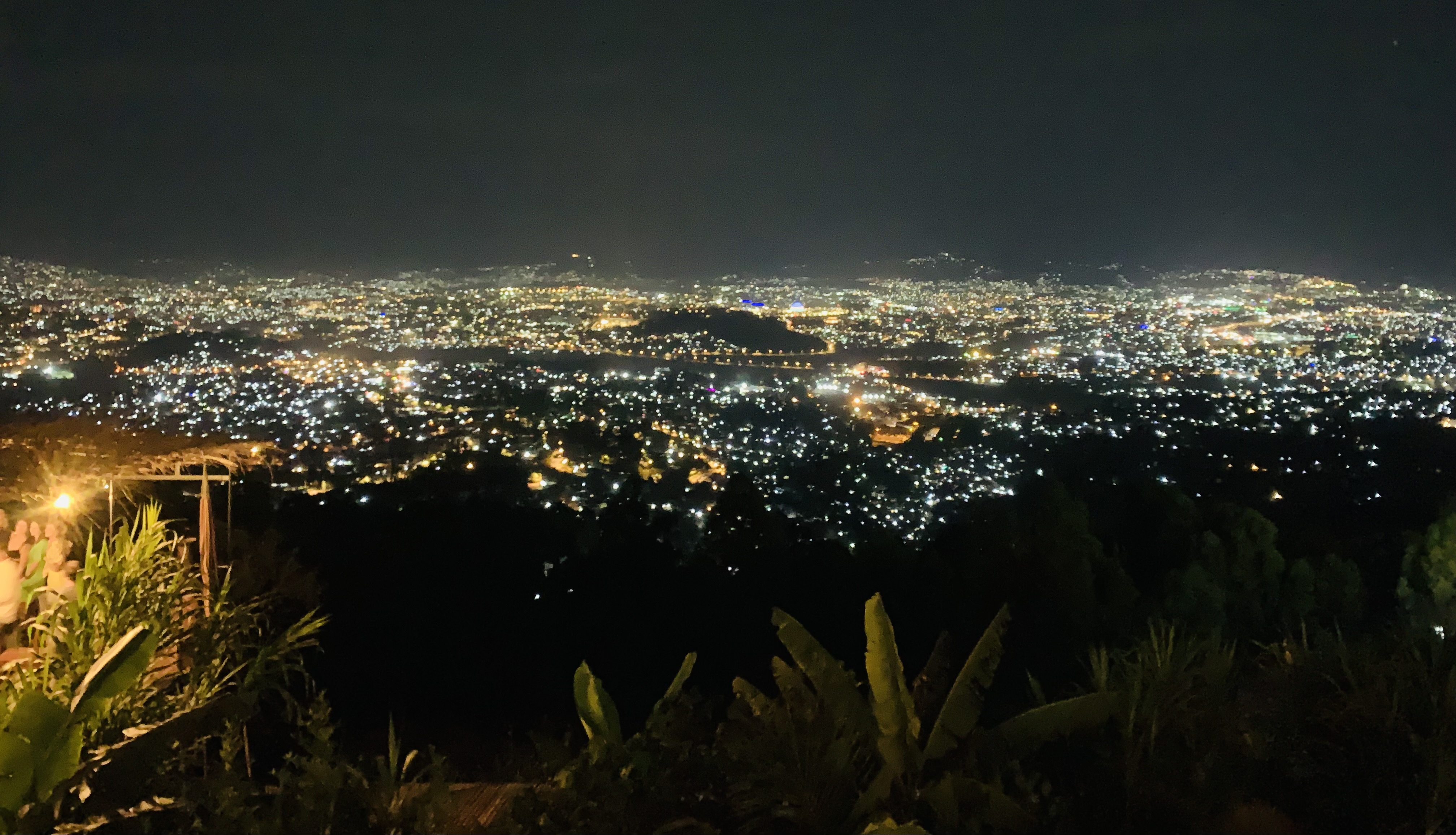
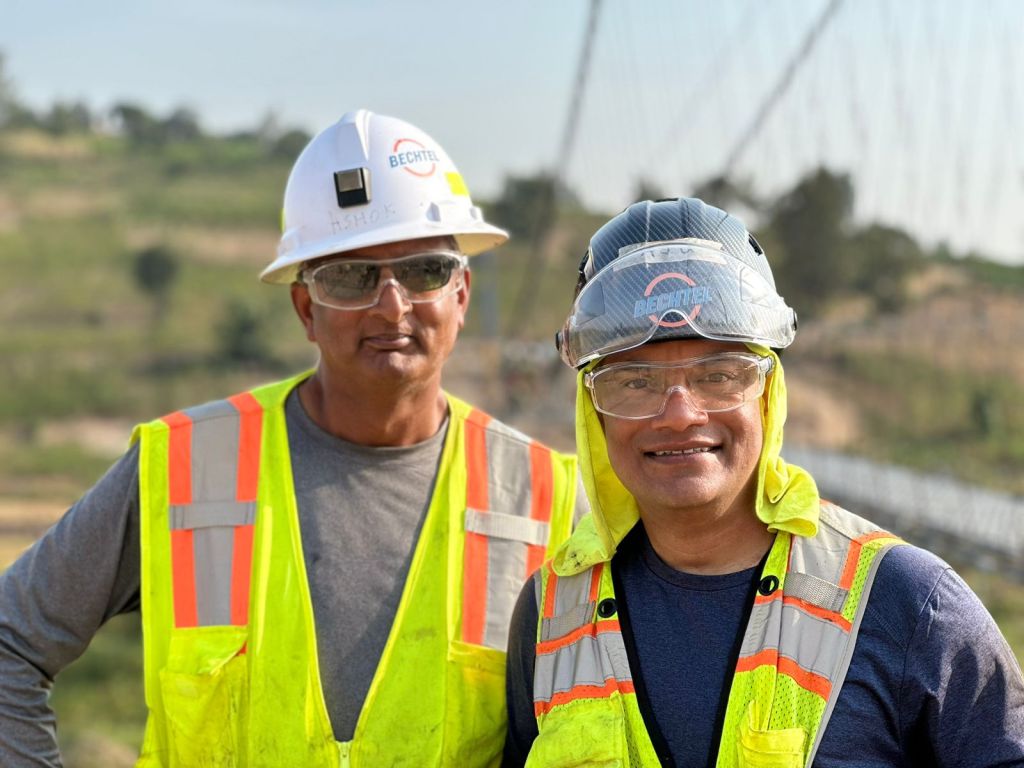
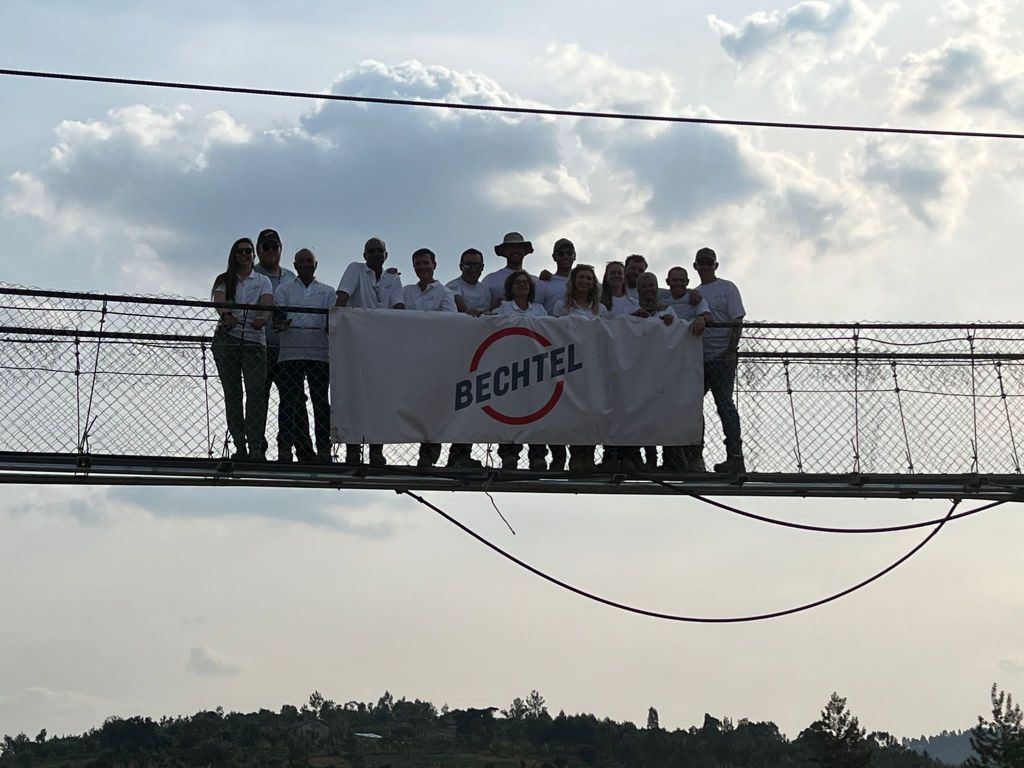
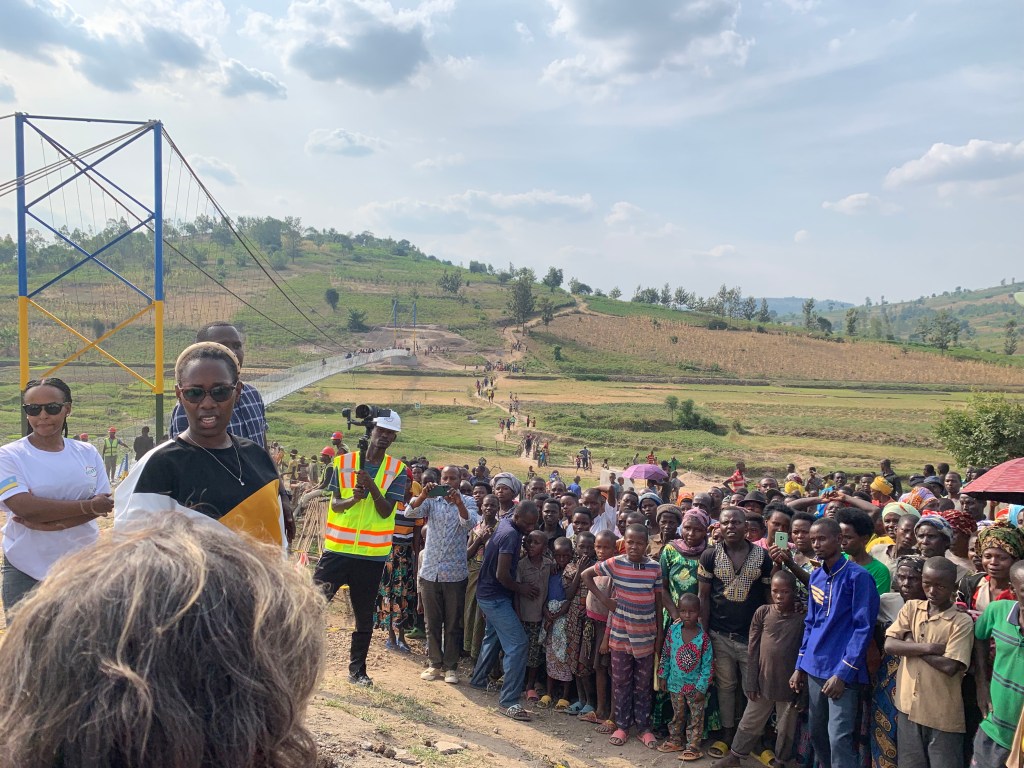
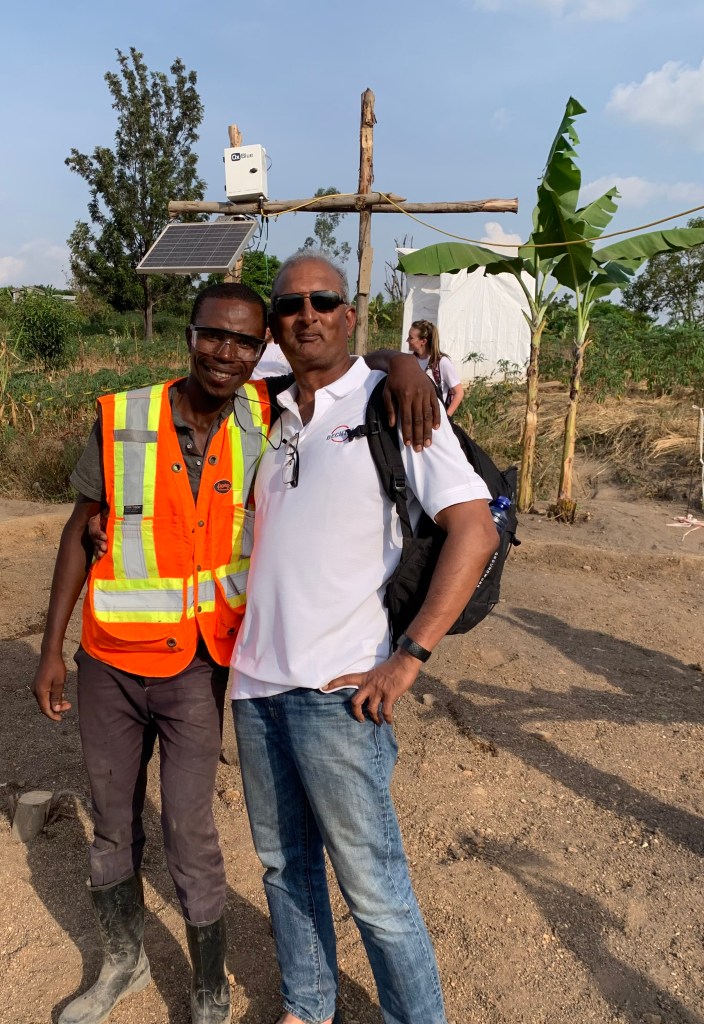
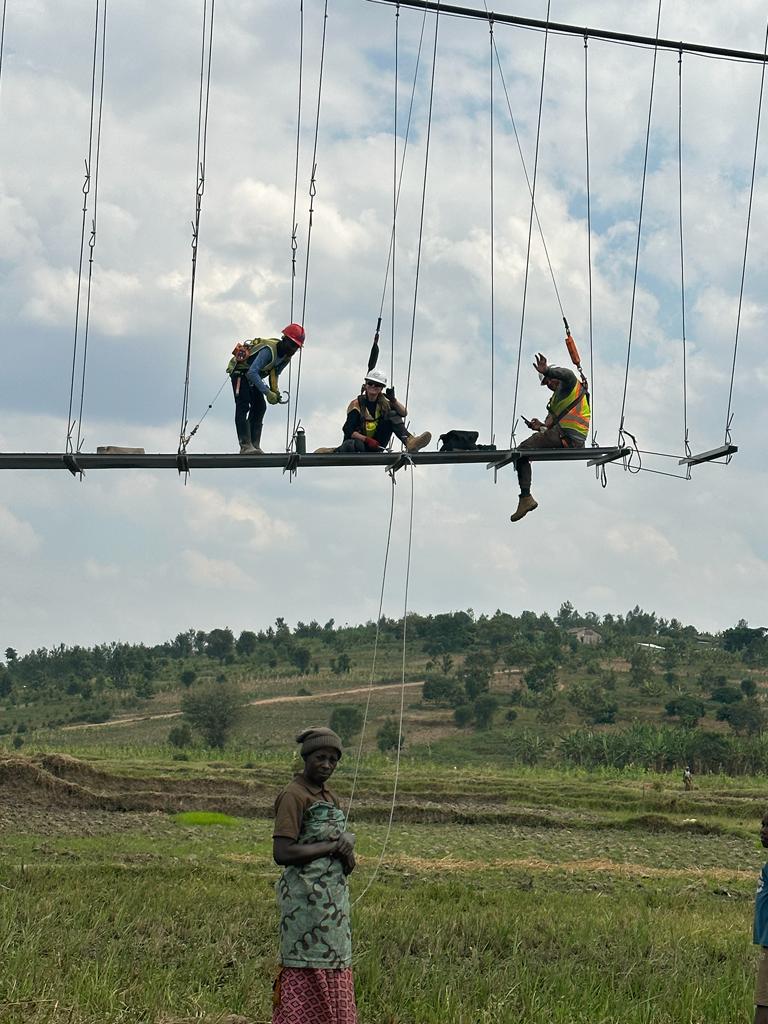
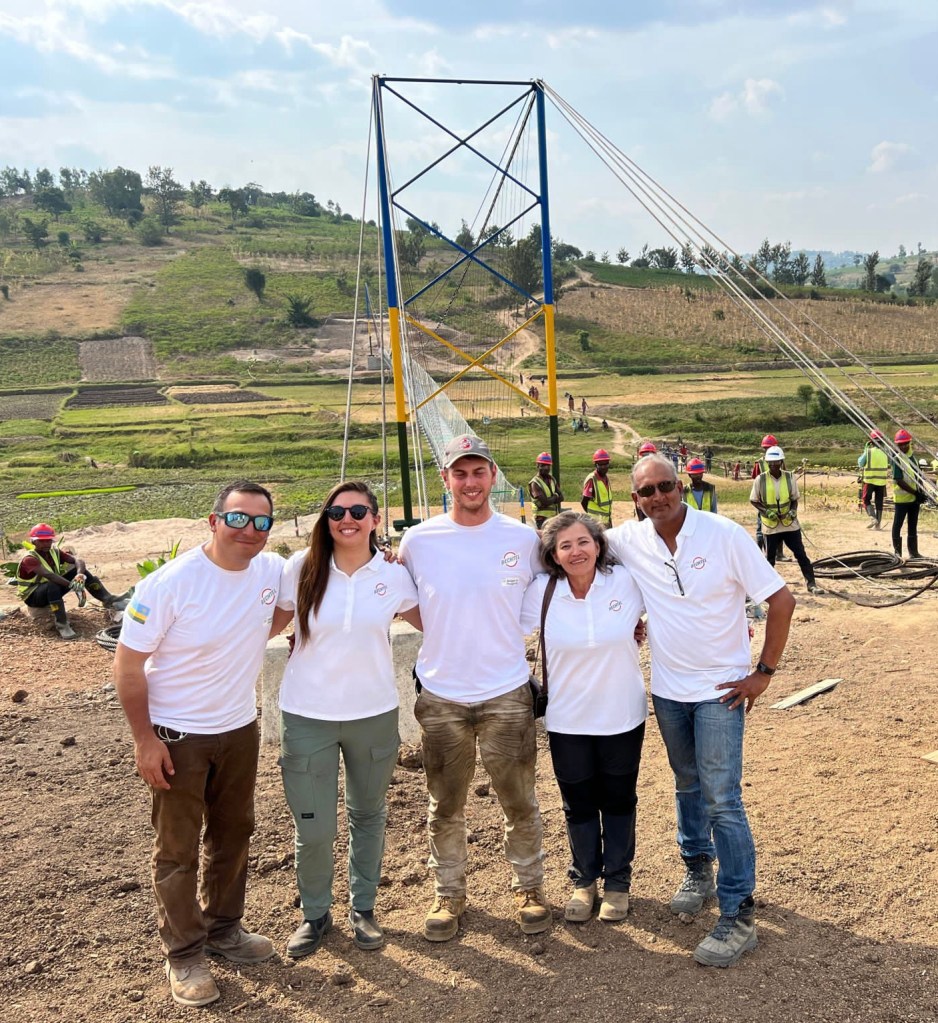
There we are- A team of 15 from different locations around the globe working with Bridges to Prosperity (B2P) to help build a 140M Cable suspension bridge in the Nyanza Province of Rwanda. A place south east of the capital city, Kigali and million miles away from the comforts of home.  B2P is essentially a Denver based NGO that work with developing nations and corporate partners all over the world to make the world a better place by building bridges in rural areas. Here’s the link to their website

The funding was almost in place and the thanks to several colleagues and friends, we were able to raise up $60K in just about 3 weeks. Kindness and generosity ain’t dead. The prep work consisted of grabbing everything that may have some use – Getting vaccinated for almost everything but Rabies and yellow fever. After copious reading and research, I found yellow fever shots are not needed for Rwanda and rabies- well that was just way too expensive and I made a mental note not to pet the gorillas or for that matter any mammals when I got there. If I had a compulsive desire to pet a goat in the village I would gladly ask one of my vaccinated co-workers to do it on my behalf!

Visa check, cell phone check, vaccination check, camp mattress check, pillows check, personal safety gear check and of course sun cream. It had only taken me 27 years to realize all skins burn, yellow, white, black and brown- and its not just a White privilege!

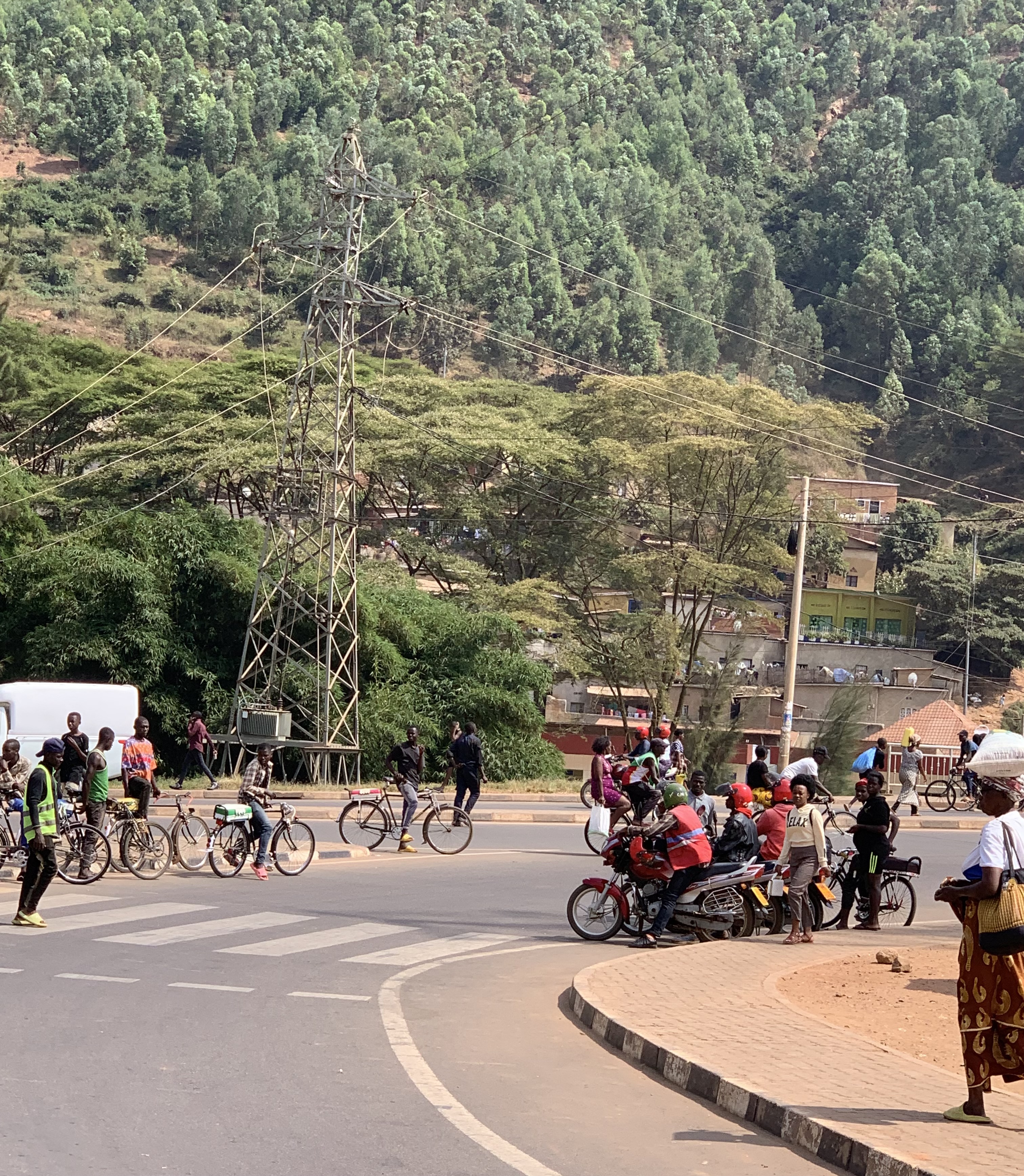
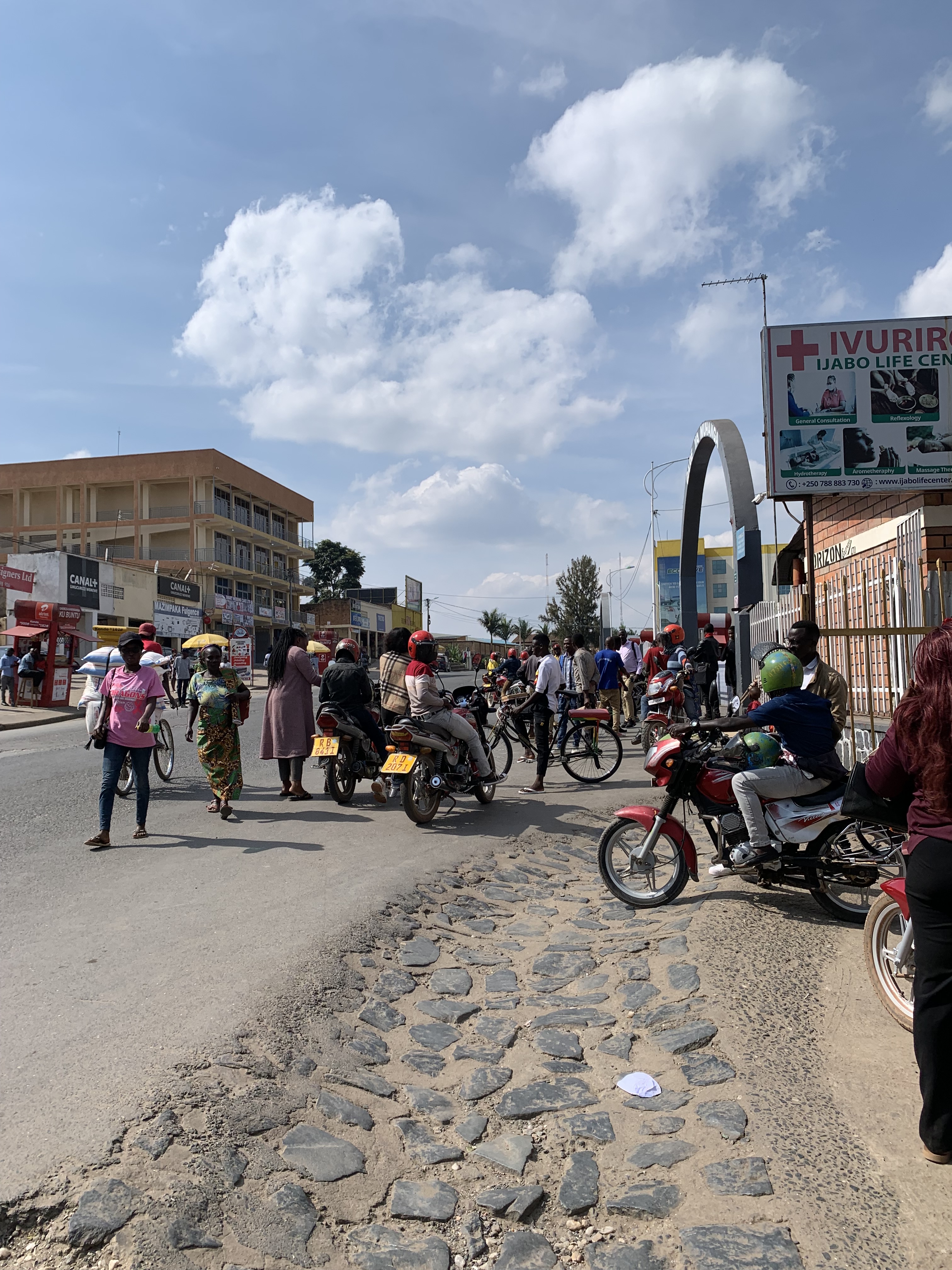
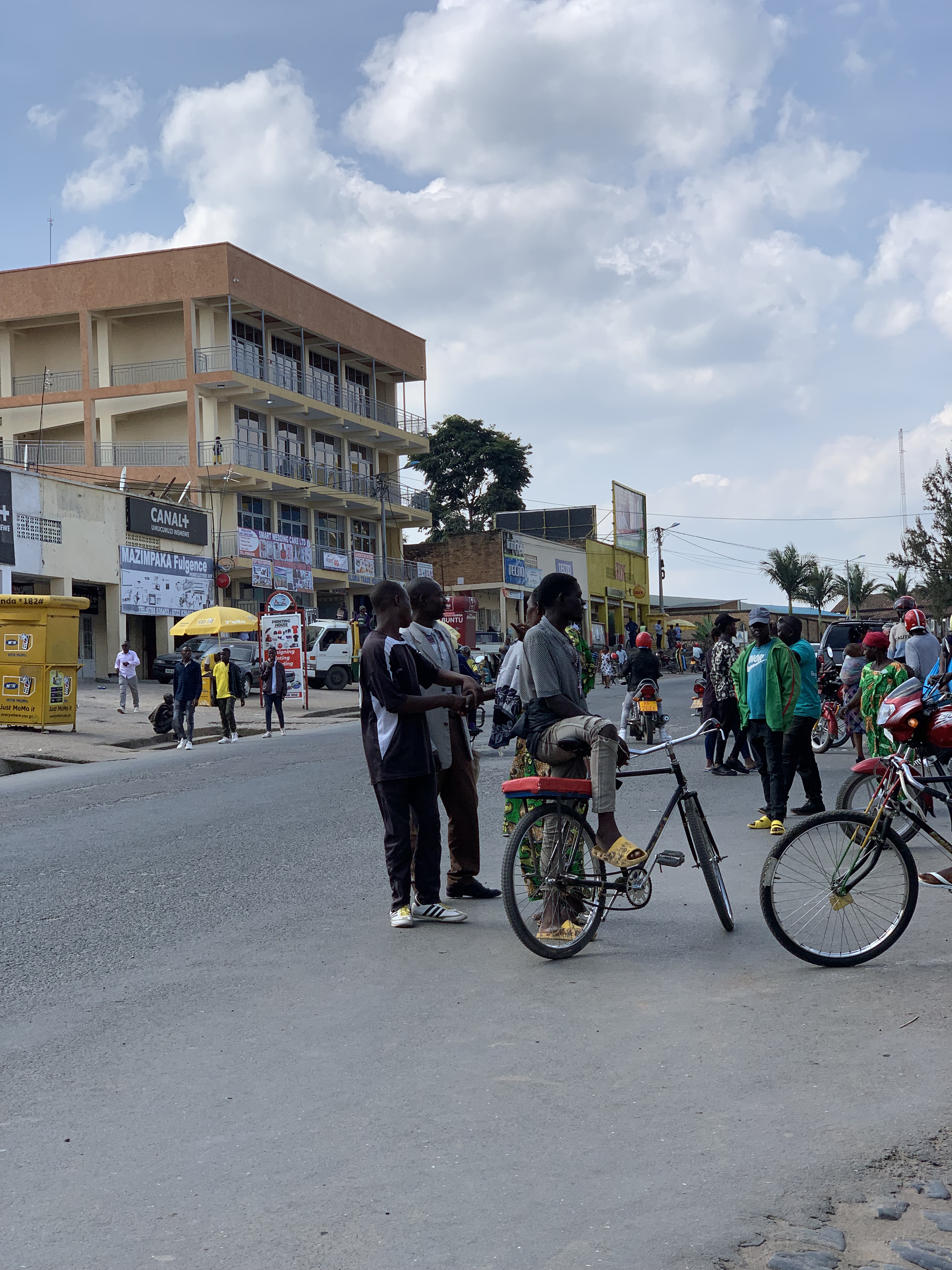
After a long haul flight from Houston to Istanbul and then on to Kigali- That was a journey and a half. What I noticed is the detour flights takes heading into Africa since Sudan was a no-fly zone and I couldn’t wait to get my feet on terra firma. Fortunately better sense prevailed and I had decided on getting there a day early- Acclimatize and getting to spend a day in Kigali. What did strike me on my way in to the hotel was the unlittered clean streets . Just a surprise considering every third world country I have been to , garbage is sort like a trademark. I later found out two very interesting facts. One Rwanda banned use of plastic bags in 2009 and every fourth Saturday at the end of each month, they ban all vehicular traffic for 3 hours and every citizen gets going and helps keep the streets clean. Umuganda is a national holiday in Rwanda taking place on the last Saturday of every month for mandatory nationwide community work from 08:00 to 11:00. Participation in umuganda is required by law, and failure to participate can result in a fine. The program was most recently re-established in 2009, and has resulted in a notable improvement in the cleanliness of Rwanda. That is just awe inspiring and so unexpected but explains a lot.

Rwanda has quite a troubled past and those of us that were old enough to follow world events in the early 90s, the genocide was a highly dark chapter in their history. While it all culminated in three months in 1994, where over a million Tutsis were systematically killed by the Hutus in an incredible spate of violence. Practically families, neighbors and friends turned against each other in an orgy of murder that has thoroughly traumatized society. This chapter of Rwandan history is still green and quite an emotional one and one of the drivers I spoke to in detail opened up to me on the horrors and the aftermath of it all. You are best advised not to broach this rather sensitive saga with the locals. I did get an opportunity to visit the Genocide museum in Kigali, which in itself was a gut wrenching, emotionally draining experience. A must visit if you happen to be there.

Heading to the town of Ruhango and settling in to our accommodations- A shock a surprise but took me about 2 hours to get accustomed to the basics of nature. It was like being in a dorm- Three to five people to a room and a small matter of sharing a communal bathroom; one between the 22 of us including the Bechtel team, the B2P staff and the like. Using the term “shower” is an exaggeration, I’d better use ablution facilities to represent the water filled bucket and the squatter’s toilet. Basic but gives you a perspective of what the local community accepts it as a norm. The sleeping quarters where you start to get used to all the moans, groans and snores which I would christen as the “morbid symphony of Ruhango”

Use of common greetings in Kinyarwanda struck quite a note with the locals and helped “bridge” any apprehensions felt initially. The terms “Mwaramutse” (good morning), “Mwiriwe” (good afternoon”), “Murakoze” (Thank you) were the most popular ones. At work it was a slightly different tone with cries of “Hagarara” (Stop), “Yego” (Ok) and “Tugende” (Lets go) and that reverberated all day long.

An endearing experience will always be the screams and cries of children that would chase our vehicle through the small hamlets as we commuted to the bridge site. Cries of “umunyamahango” (Foreigner) and “Goo-doo morning” would echo is my head for years to come. And when the kids came over watching the build and some of them venturing out to make friends with us with was just the elixir we needed to keep going. For some of the team, this was highly entertaining and novel but from those that have been to or grew up in impoverished regions, this is just how life is.

The bridge itself- All I can say is the teaming with the local community was a refreshingly amazing experience. The level of collaboration, being in the ditches with them working under the searingly hot equatorial sun was something I had not experienced before. It was hard manual toil and you had to hydrate yourself constantly and not to forget to apply copious amounts of sun lotion and definitely not a walk in the park. That’s something I have to emphasize – Its pure hard work and while it would all seem glamorous on the surface and “cool”, it’s a testimony to the efforts of the crew on the ground and the backroom staff that made this endeavor possible.

And a note on my own skills (or lack of it!)- For a person that had glued his own knees to the floor while installing floor tiles, I am rather proud to come off unscathed. My ineptitude with handling small tools is legendary and I only wish the poor villagers and my co-workers in the Nyanza province did not have to see me monkeying around with impact wrenches, grinders and even a pair of pliers! If Neil Armstrong said that small step was a giant leap for mankind, using an impact wrench to tighten a small bolt was nothing short of spectacular! An Indian in Africa may not be big news, but an Indian trying to wrestle with a grinder on his own without any adult supervision is folklore! And hey who better to make fun of me than me, right! As they say, it all worked out in the end and I am back with all my fingers and toes intact.

At the end of the two week period, we could look back with a sense of accomplishment and be proud of what we had done. Built a bridge that would link the communities together. Built some friendships, built a legacy and in my best German accent I could say “I’ll be baack”

The larger team had a mixbag of characters – From the sublime to the ridiculous, from the protected to weathered professionals, from strategists to wannabees. It takes all kinds to make this work. And one thing of note- People took to drinking warm Primus beer at the accommodations like a duck to water not because they loved it but because it was better than the other option.

And how could I ever miss our partners in crime- The goats. Of course the goats that seem to rule the roost in the valleys of Ruhango. With deep regret and sympathy I must mention we had to procure four of these hoofers to provide a feast to the local craft in form of a barbeque lunch. They were carefully procured, tested , butchered and grilled and apparently they were a hit with everyone, well not everyone so its with mixed feelings I say this with no bias- One person’s sorrow may be another one’s feast.

Cannot say I have regrets- It would have been nice to get a day off and go off see the big 5 at the Akeygera National reserve but they will always be around and we will always be back. Small price to pay for the rewards.  Well, the gorillas would just have to wait to get their sighting of Ashok!

Murakoze Rwanda – You are definitely a cherished memory and you did walk the talk- The land of a thousand hills and a million smiles!

Mountains, valleys, glaciers and the mule- Tour de Mont Blanc 2022

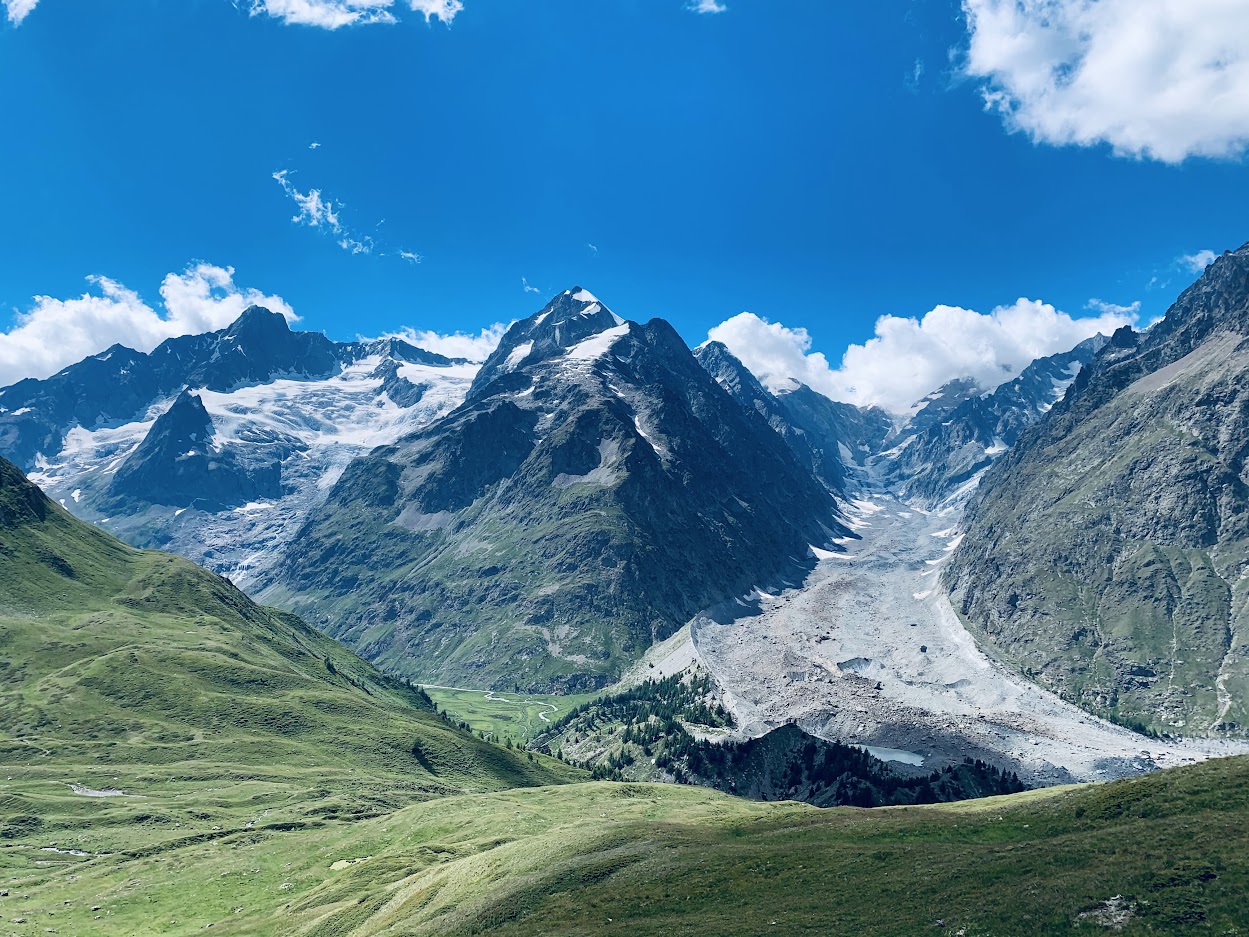
The vision of mountains, glaciers, din of the cow bells and the lush green meadows with rather posh sounding names conjure images of a commercial for Swiss chocolates , fancy watches and appears to be pure bliss. These are the attributes that spells “Alps” and while watching it firmly ensconced on your couches its only adds to the allure, hiking the terrain around the Mont Blanc, the peak of the Alps is a step that takes you even closer to realizing and feeling that dream- Up, close and personal.

We had been planning to undertake this 7 day hike around Mont Blanc- popularly known as Tour de Mont Blanc (TMB); it’s a hike in the Alps doing either a clockwise or a counter clockwise circuit that takes you across a challenging terrain traversing numerous mountain passes, peaks, valleys, meadows and glaciers. This takes you through the French, Swiss and Italian Alps and for a semi-skilled hiker like me, completing the circuit may be as close as I can get to landing on the moon. The sheer magnificence of the Alps can leave you feeling over whelmed but what comes with it is a massive sense of accomplishment.

Embarking on this journey, I was not that prepared having been living in flat Ontario past few years. My only training consisted of the F45 HIIT (High intensity Interval training) that I have been doing past few months and surely that helped. With that as my prep, I landed in the picturesque town of Chamonix (which hosted the first winter Olympics back in 1924), via Lisbon and Geneva. The journey now begins as we make our way to the hamlet of Le Tour, France.

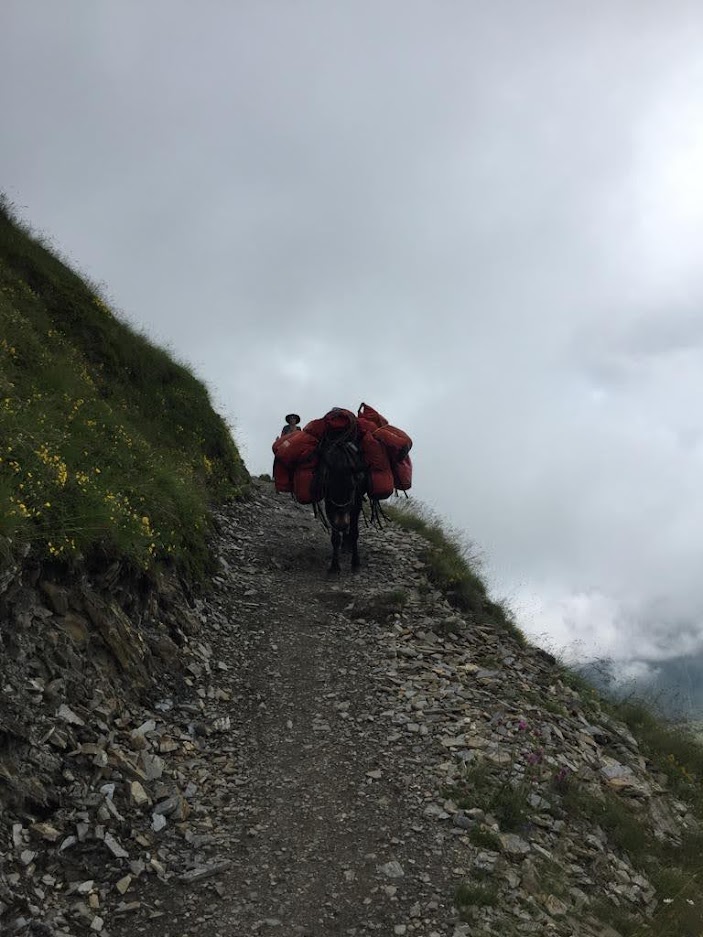
The group had a total of 14 people plus the guide and our favorite companion for the next 7 days, Picasso, the mule. Each of us would carry our day packs – With water, rain jackets, small nibbles, plastic utensils while Picasso would carry 7 kilos (15 lbs) per person and some lunch. The rest of the group were clearly far more skillful than I- having done other strenuous hikes so it was going to be either attempting to match their pace or carry on at a more pedestrian pace. By Day 3 I realized, this was not a race and the winner was not going to be getting any sort of discount. That strategy also afforded me to pace myself nicely while taking breaks and take pictures that would create memories of a life time. I am no snail but I am not one to run circles around others either.

Day 1- With all the enthusiasm I could muster, the trek from Le Tour to Col de Balme started out in open sunny climes and while we ascended upto 1000 m (3000+ ft), the second half of the climb took the wind out of my sails. This was where we made our first border crossing into Switzerland and had the first sighting of Mont Blanc.  So lunch at 7,200 ft before descending in the second half the day. Not too bad and just when I thought the day was over when arriving at the Village of Trient, we were told we had another 200m (600 ft) of climb to do before we got to our first refuge. The refuge- Well, it was a smallish room that slept 4 and we always knew we had do a quad on one of the 6 nights, so got that of the way . Common showers and again not too bad. The food consisted of a decent 3 course meal with cold beer. The meals and accommodations were part of the tour fees but you’re on your own for beers.

Day 2- It had rained quite hard overnight so the trek today was upto the area of Le Bovine through steep switchbacks. The second half of the trek led us through open Alpine meadows where the cow bells only became louder. The descent was steep and over rough rocky terrain and never seemed to end. Arrived at the pretty town of Campex du lac before getting on a bus to get to La Fouly. The refuge was slightly better today with a fondue dinner awaiting us

This is when the realization stuck that I have to do this for 5 more days so the mental aspect had to be re-adjusted and had to hit that reset button. This meant I would walk more leisurely, not try to compete with the experts and go at a pace that made the hike fun, as opposed to a chore. This worked wonders and I started to see the landscapes and savor the ambiance more clearly. The bonus of this strategy was those several interesting conversations with other hikers who were either doing solo back packing or self guided tours.

Day 3- My favorite day- Through pretty Swiss hamlets, views of the glaciers before getting to an elevation of 8,300 ft which was the crossing over to Italy. This is when the greeting to other hikers start to change from Bonjour to Buon Giorno! Made our way to the Elena refuge, which was one of the better accommodations. Again the 3 course meal did not disappoint. The beer especially felt special.

Day 4- Had to hike on flat streets before picking up the trail and that was not fun. Its almost like you are itching to get to a climb and lugging a backpack on winding streets can play trick with the head. The second half of the hike was so rewarding that I walked slower than usual to take in the panoramic views of Mont Blanc which seemed to get closer and closer as I hiked. Ended the day at the Bartone Refuge where you had to slip in coins to get hot water flowing to get your shower. Not bad considering the options. The toughness of Day 5 was all I had in mind and had to try to compartmentalize different phases to help get to sleep

Day 5- A two hour downhill hike to a jewel in the Alps, the town of Courmayeur was not bad at all, but going around town during the brief stop over, figured some of us could take the cable car and knock off 500m especially the climb did not look too attractive and monotony screamed. After spending an hour in town, joined the rest of the group and then found we had to hike up for several hours before the break for lunch. True to form, I did not let my mind play tricks and decided to test myself on a climb after lunch. And to my sheer surprise I was able to hike fast and even found time for a 20 min nap on the slopes before others joined up. The hike to the Elisabetta refuge consisted of- beautiful meadows, flat dirt roads followed by a 45 minute ascent which spelt pretty much the tank being empty by the time I made it. The accommodations were quite ordinary; common showers, filthy restrooms and disappointing food. At least I had a bed; may have been sticky but I had my meat sheet.

Day 6- Not a bad day at all. Got upto Col De la Seigne and caught a museum on the way . This strip is on the Italian French border and had constructed a garrison during the second World War. The descend was okay and after lunging in the sun for lunch, took the scenic route to get to the town of Le Champeaux. While the rest of the group had taken the more pedestrian path up the highway, a few of us decided to take the dirt trail and that had us circumventing a broken off piece of a glacier and it was all so worth it. The digs were definitely the best- The room, the beer, the food and helped me prepare well for the long day that lay ahead. This would be the last night and all I needed was a surge of energy to get me through the last day.

Day 7- Started off with a massive climb of over 1100m (3300+ ft) upto Col du Bonhomme, then the promise of finishing up the rest of the journey in under 3 hours including treading carefully over a packed ice river . And it was done. Done at 2.50 pm local time in the tiny hamlet of Notre Dame de la Gorge.

Had hiked over 70 miles, 210,000 steps and average ascends of 800m (2500 ft) and 1000m (3000 ft) descends per day. More than the numbers the massive sense of finishing up without bursting a lung or making a fool of myself seemed to sound better.

What to do?

  1. Prepare for the hike and build some sort of endurance, either by doing day hikes or at least working out your cardio at the gym
  2. Invest in some good hiking boots, decent 30L back pack, hiking poles. Do not skim off by looking for cheap deals when it comes to personal equipment.
  3. See if you want to do a guided tour or a self guided tour through an agency. We used Cairn Adventures which worked out quite well. It would have been even better if our guide spoke fluent English. As nice as she was and as much as much as she tried to tell us about the trail, flora and the fauna, having her speak in English rather than French would have been a bonus. In fact we had signed up for an English speaking guide so I felt that was a slight let down.
  4. Keep yourself fully hydrated as much as you can
  5. Carry a good sun screen. Yes Brown skins also burn
  6. Carry sun hat. Baseball caps may look cool, but they leave several parts exposed.

What not to do-

  1. Do not treat this as a race. Its not the Tour de France. This could be once in a lifetime thing so make the best out of it. Destination is good but the journey is so much better
  2. Do not guzzle too many beers during the stops. A couple is probably okay and definitely do not imbibe any liquor. Not good. Wait until you are done on Day 7
  3. Do not carry too many things in the 7 kilo pack that the mule carries. Recirc your hiking clothes and go light with evening wear. You are on a hike not a cruise.

Following the achievement we spent a week in Europe and felt first hand what the heat wave is all about. Between Milan, the French Riviera and Portugal, even I was burnt to a crisp. Not wanting to say much but I will leave you with this- Do not ever rent a car in Europe if you can help it. There are plenty of transport to go around. You just don’t get the SUV’s and if you get a car where you stop for gas every 100 kilometers, your moods and your diatribes may not be printable.

Fire Water & Ice- The Arctic journey in Iceland

The end of summer was just about the perfect time to get into Iceland. With the pandemic having parked us all within the confines of home and WFH, travel was at first a luxury but for a globe trotter it became a necessity.

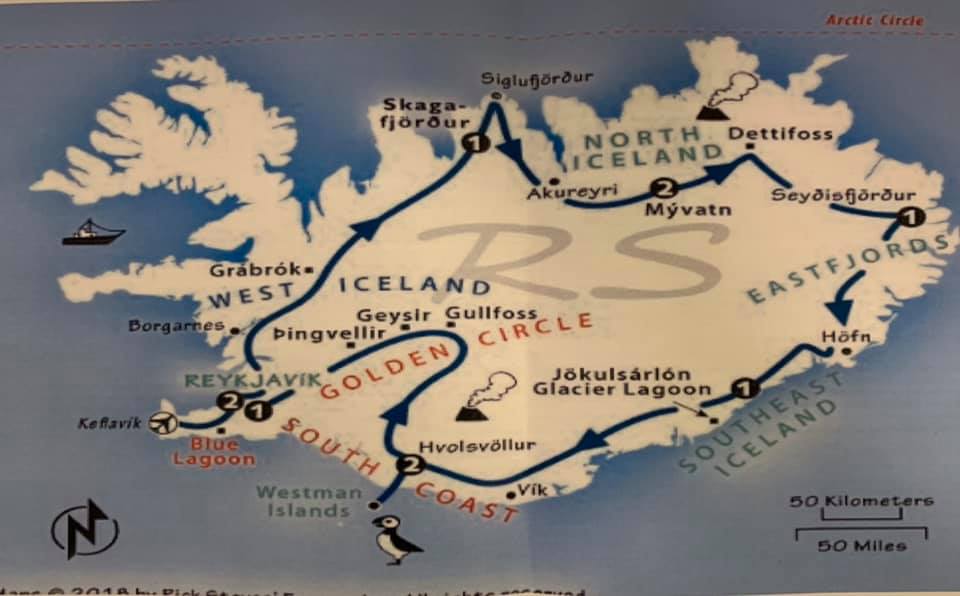
Picking Iceland was easy. I had been there before for a brief bit and always dreamt of taking a comprehensive tour so it was what we embarked on. From doing a comprehensive research of things to do before and during the trip to actually embarking on this Arctic adventure it was all quite an adventure. It wasn’t backpacking, it wasn’t taking tours and it wasn’t about going there to click photographs of the magnificent landscape, but it was about driving around the ring road of Iceland anti-clockwise moving always, stopping for hikes while taking in those spectacular images of fire, water and ice. I’d call this a “Carpacking” adventure.

The route shown above plus the Snaefellsnes peninsula on the west

So check out all those travel pre-reqs-

Get your COVID testing done 72 hours before you arrive- PCR or Antigen, either will do. Remember to pre register on the Iceland government website to get a bar code before you get on the plane (travel.covid.is). Also make sure to carry your vaccination certs. And lastly book your COVID test appointment on the same website and schedule it such a way that you can have that done 72 hours prior to your scheduled arrival. Costs 50 Euros for a PCR and 30 euros for the Antogen test. One more thing, carry your own booze and water bottles. Iceland is wonderful but you don’t want to be found short of these commodities while on your trip.

We found the best way to follow our ambitious route was rent a car from the Keflavik airport. The off we go. We had to cover so much ground. And also while the distances are miniscule compared to North American standard, speed limits are low and fines are very punitive. You could be driving at 90 kmph before you suddenly realize the speed limit is down to 70 before getting down to 30.

Day 1– Straight from the airport heading east along the south coast- The Golden circle that had the Thingvellir National park, The Geysir (The Strokkur was especially a miniature version of Old faithful but erupted almost every 4-5 minutes accompanied by the ooohs and aahs). Next was the awesomely spectacular Gullfoss. Then the trip on Route 35 to the Kerid Crater. Spent the night in Selfoss- An uplifting town of 8000 right by the river.

Thingvellir- Home of the continental tectonic plates

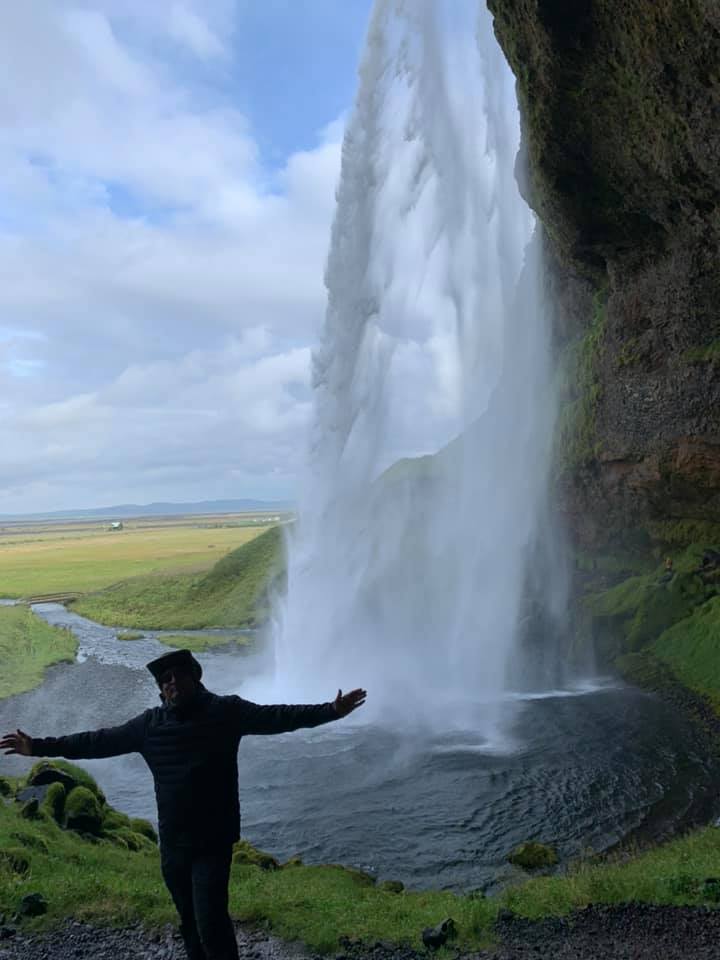
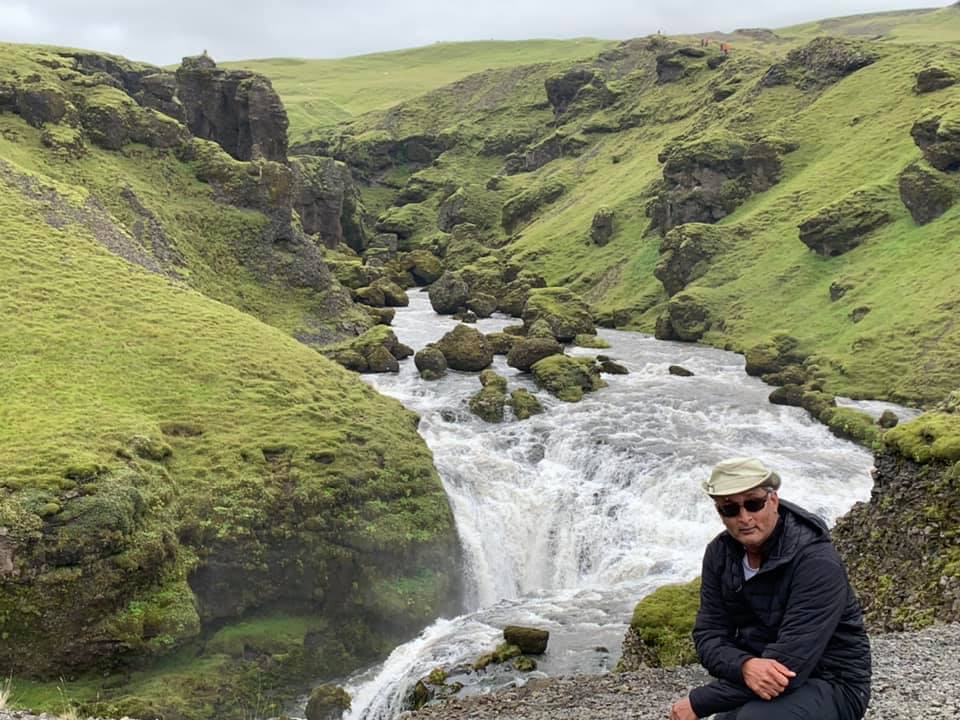
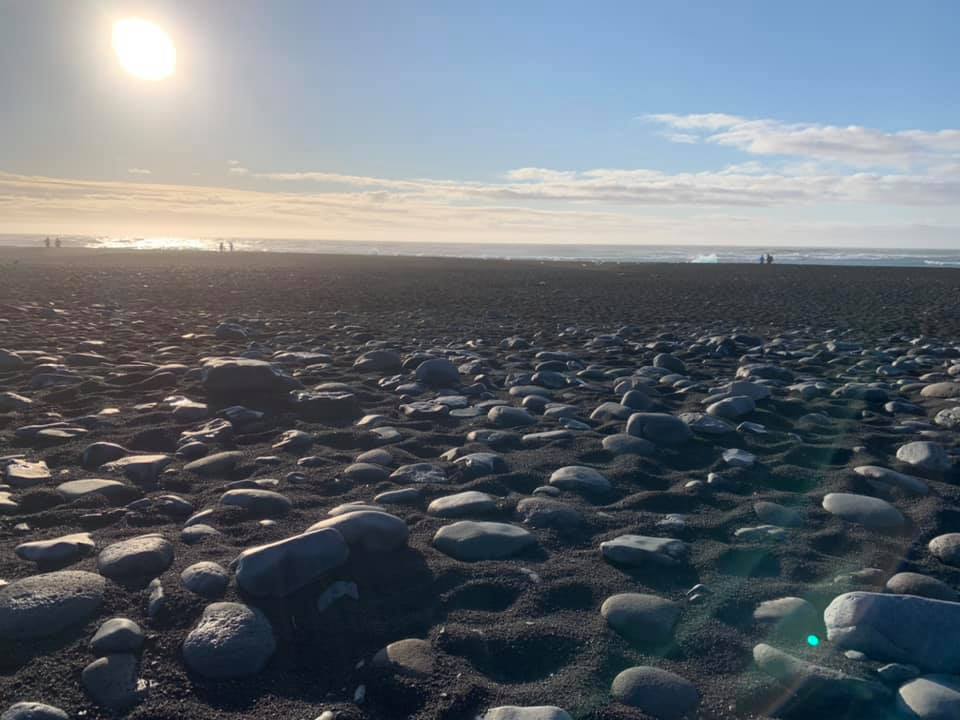
Day 2– Long day. Headed along the south cost on Route 1 making our way south east. So much to do, so much to hike so much to cover. Seljalandsfoss (Where you could actually hike up and behind the falls). There are two other falls in the vicinity and one of the falls is hidden inside a cave. Feels like a dream. Next stop was Skogafoss where the climb upto the top was a great cardio workout followed by another hike two other falls. And just when we thought we had our workout for trhe day, driving along the south coast we took a left to check out the Sólheimajökull glacier . Well the walk turned out be an amazing hike, where the volcanic rocks dust the icebergs giving it an eerie look. A must do. What we did next , well we shouldn’t have. A flat monotonous walk from the car park to see the DC plane wreck (2 miles one way) by the ocean. Avoid this if you have other things to do. But before we went down to Hofn (stop over for trhe night), we had to go see that treacherous sinister looking Reynisfjara. Having been there before and experienced the sneaky waves, do not turn your back to the water for too long. Its enthralling! Wanted to do the glacier lagoon and the Diamond beach but just ran out of time and it was almost 10.00 when we settled in for the night in Hofn. Hofn is a small fishing village facing the Ocean on the south east.

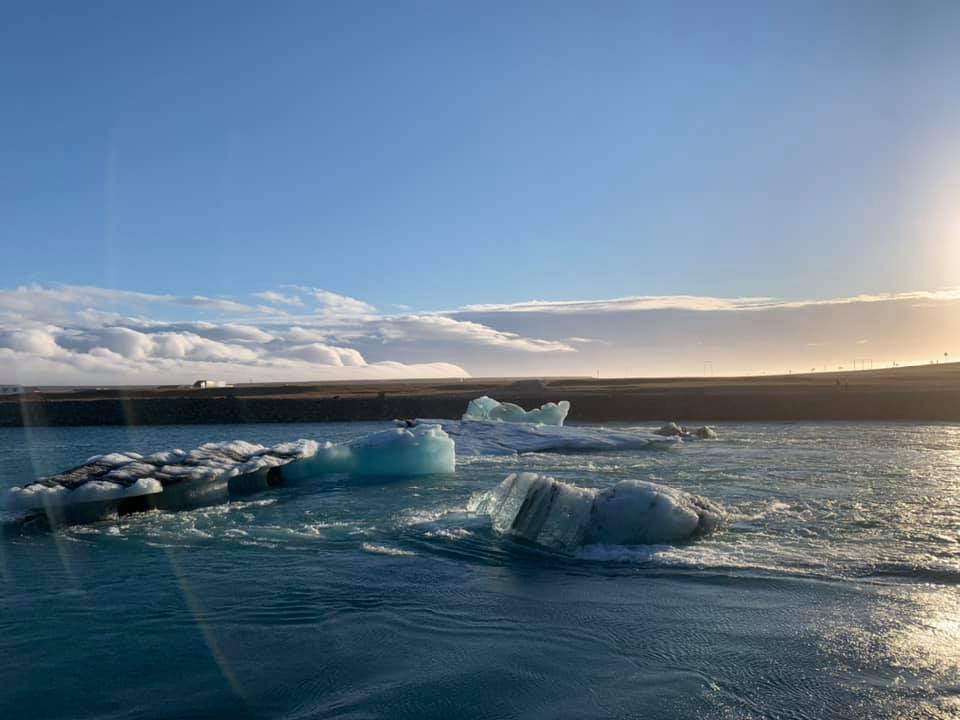
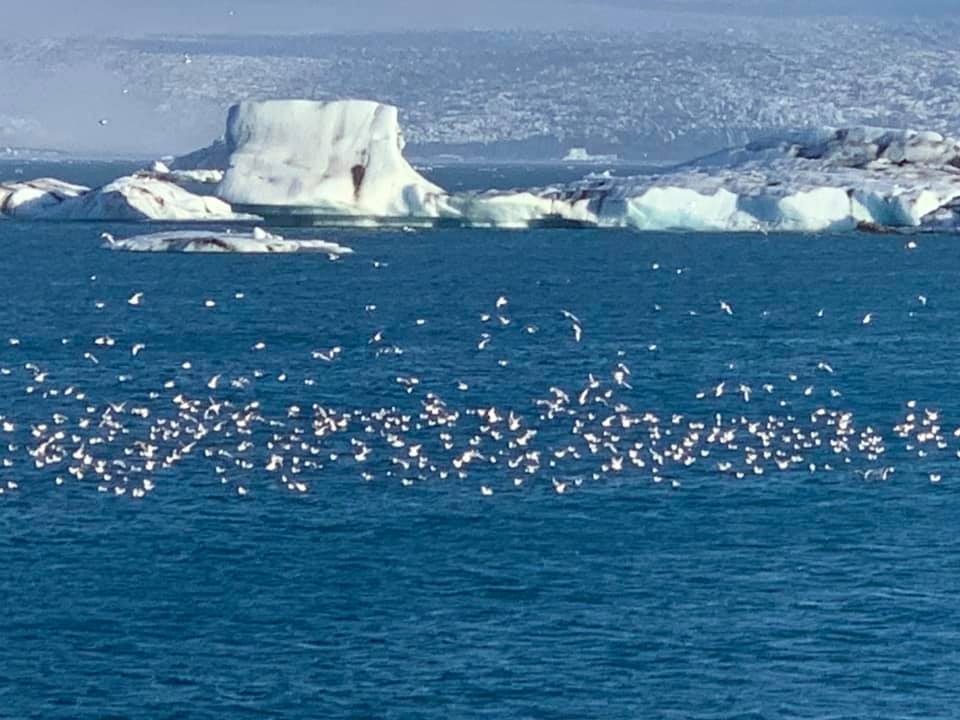
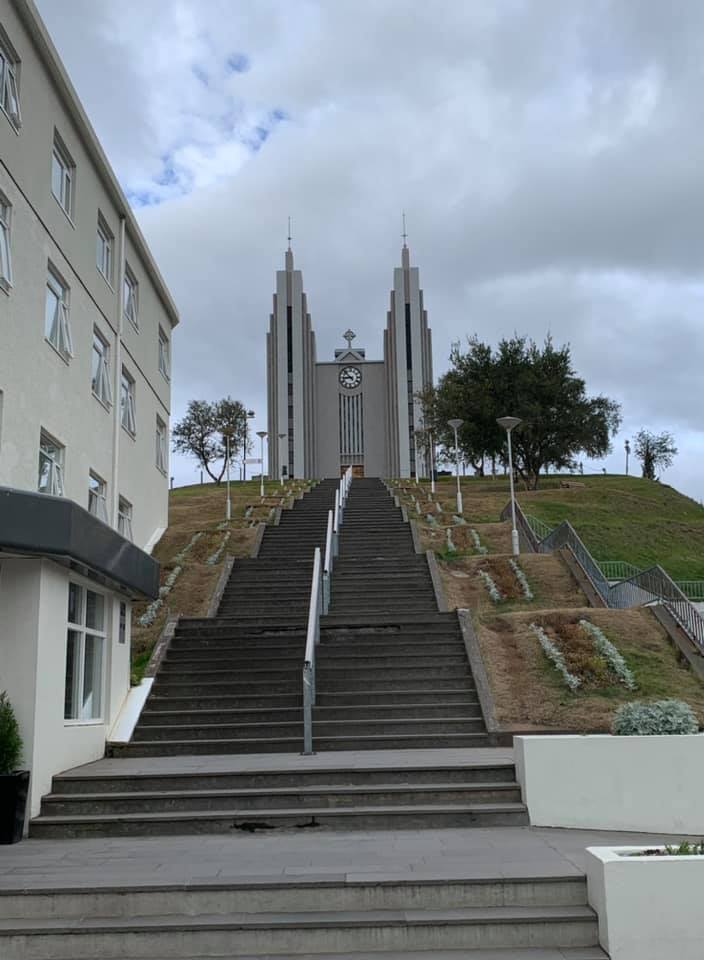
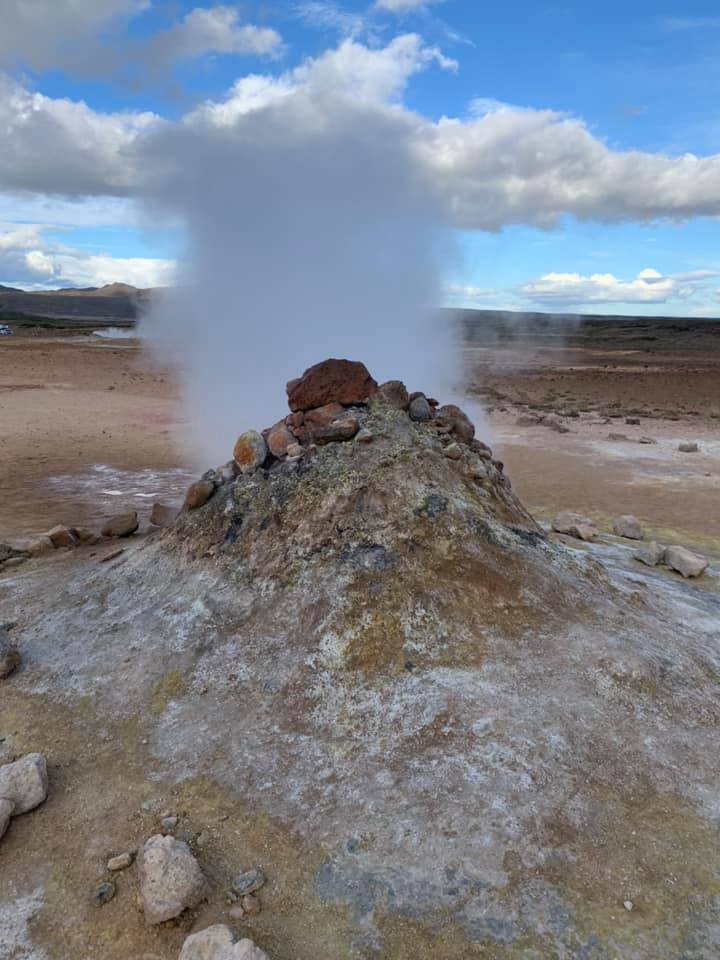
Day 3– Headed back east on Route 1 to get to The Glacier lagoon and Diamond Beach. While it added 100 miles to the trip, it was worth every mile. The Vatnajökull glacier occupies 10% of Iceland and as ice chunks breakaway flowing it to the Ocean. The lagoon had these mini icebergs floating accompanied by some prancing seals. Just across is the Diamond Beach where the ocean carves these icebergs into magnificent ice sculptures and when the sun shines upon these, these truly look like diamonds. Then the journey took us along the eastern fjords, with a small town at the mouth of every fjord. Its all on route 1 and our drive took us to the North. Diamond Circle as its known that has the Dettifoss (very silty, angry waterfall) and the Godofoss (Awe inspiring Waterfall of the Gods where statues of Viking Gods were thrown in when Christianity pervaded the country in the 12th century. Interspersed between these falls was the geothermal fields that has everything you could dream of- Bubbling mud pools, steaming mini volcanoes, mini geysers and the place smells strongly of a high school chemistry lab with all that suphurous gases. The night was spent in the second largest city , Akureyri, a town of 18000, right on the Eyjafjörður fjord. Loved the city and even the clouds cleared enabling us to go on a night adventure to chase the Aurora Borealis. It was perfect timing, away from the city lights and watching the spectacle of the green show in the sky. This was just truly fortuitous.

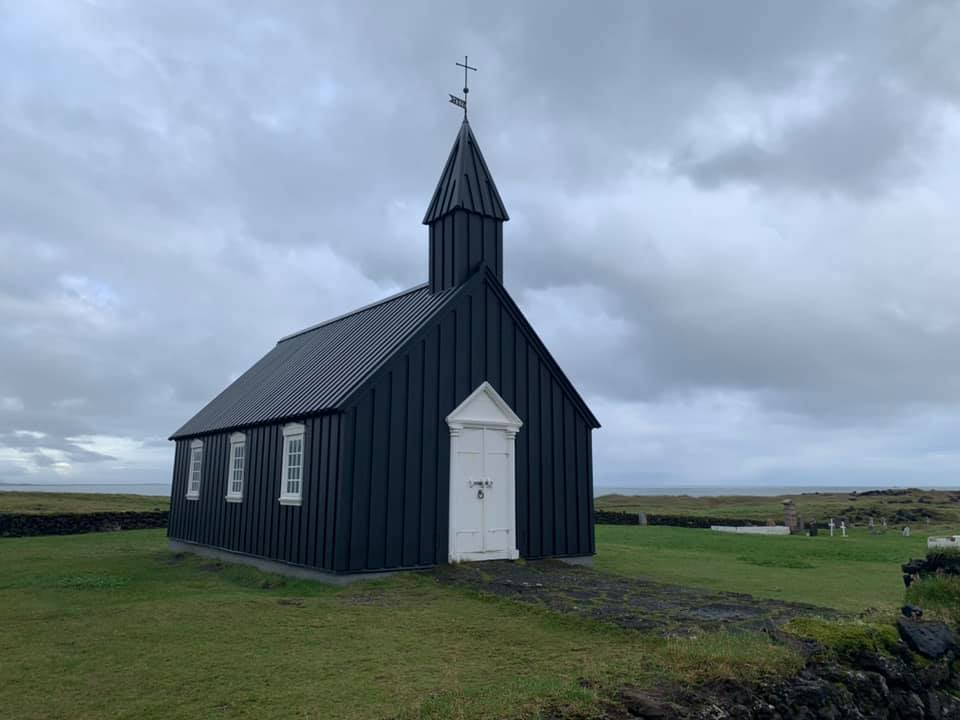
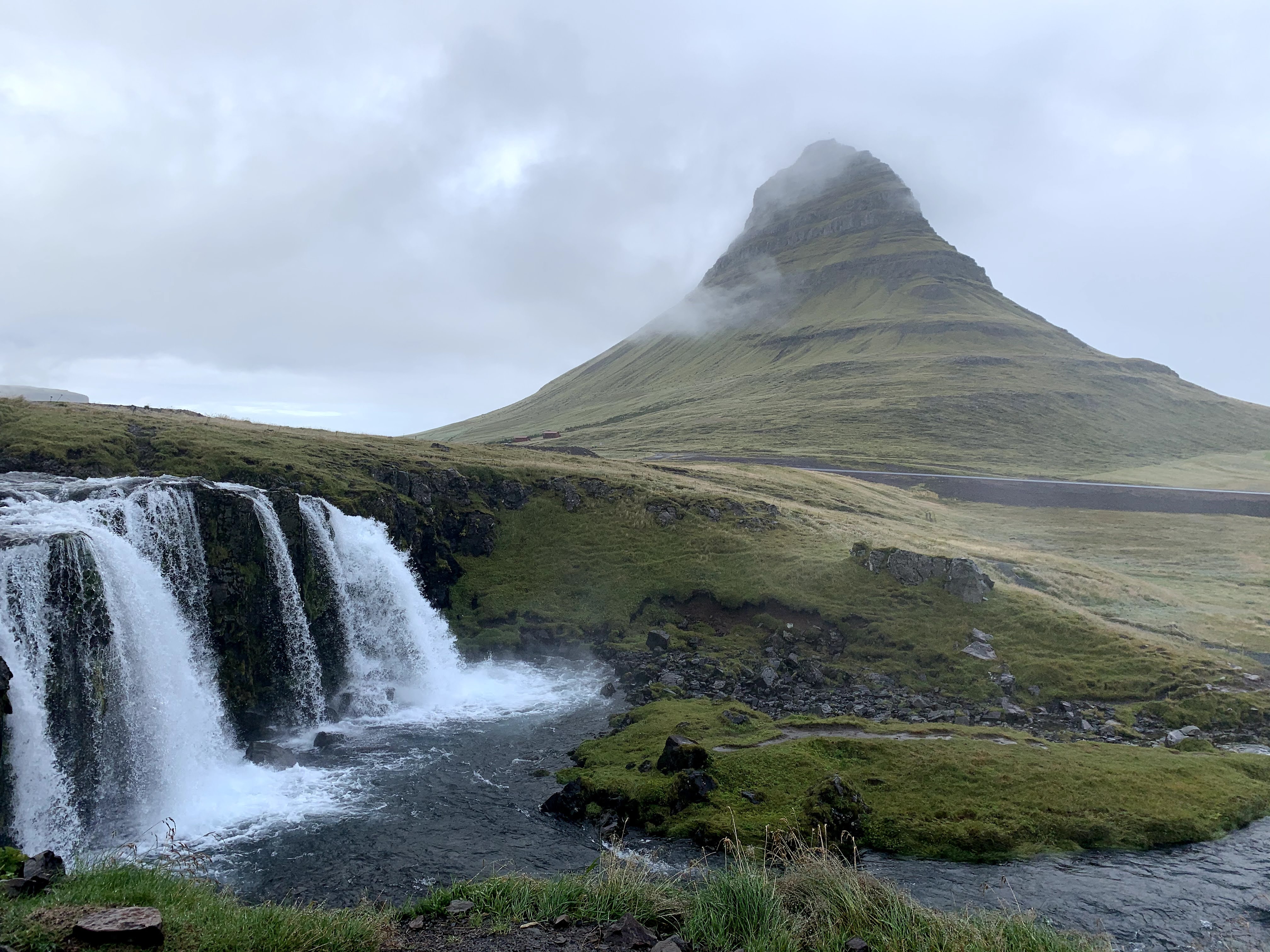
Day 4– In case it wasn’t mentioned before, the gas stations with their kiosks – N1 and Olis are life savers. Great Cappucinos, good eats and well, gas is expensive (almost $7 per gallon). So this day was about driving west from Akureyi to the Snaefelles peninsula. Stop overs at Hvaamstangi to catch the seals but lucked out and saw a whale too in the bay. This country keeps getting better. And entering the peninsula on Route 54, it was just another ooh-aah drive. The town of Grundarfjörður was the gateway to one of the most symmetrical and gorgeous mountain with a waterfall in the forefront- Kirkjufell. A must do. Then driving along the peninsula visiting the old black church in the hamlet of Búðir before taking it “easy” at the Langaholt. So much had been accomplished.

Day 5– This was the day of the west cost along Route 1. From the peninsula to Reyjavik for the COVID test. Good stops on the way with the Goudberg cliffs (free standing basalt rocks), Borganes (picturesque and good place to get gas) then heading down to Arkanes and catch the lighthouses before getting into the capital Reykjavik. Plenty to do, not least the Hallgrímskirkja church situated at the top of the hill overlooking the pretty downtown strewn with cafes, shops and bars. The COVID test was a breeze and I could only marvel at the efficiency of the lab. It was a conveyor belt and got my test results within 6 hours!

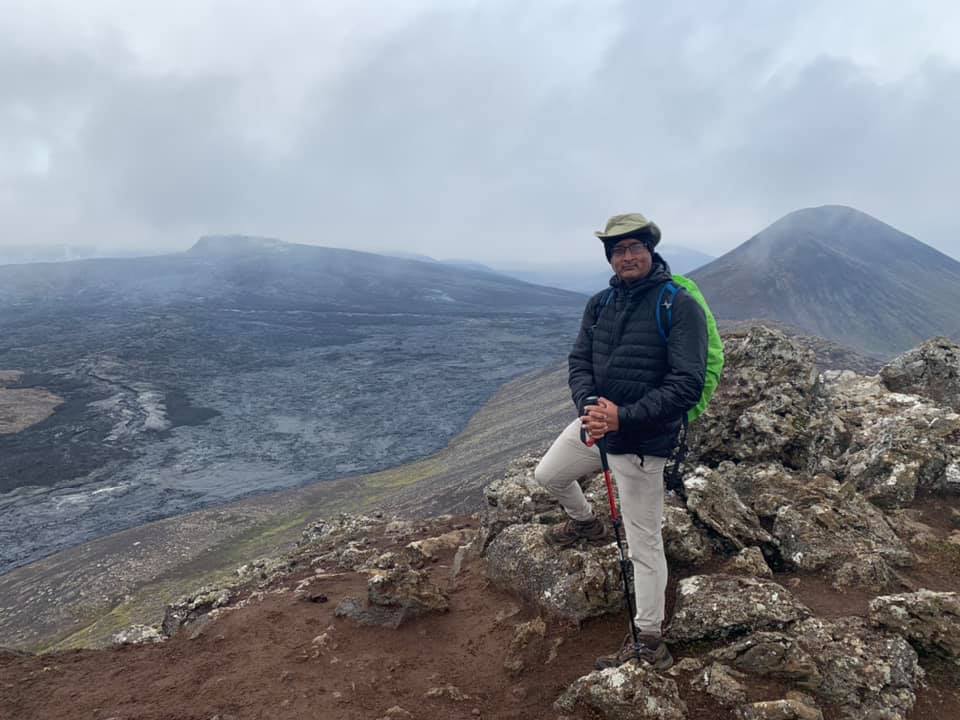
Day 6– This was the day when we got to hike up 1000 feet to be at the site of the active volcano, Fagradalsfjall. This volcano that hadn’t erupted in 800 years started to spew lava and the rivers of fire flowed in 2021. When we went up there , the lava wasn’t flowing but what we saw was awe inspiring. The blackened frozen lava from 6 days ago and the view of the crater from across the valley stood up on the peak. Dreams can become real. After this hike, the blue lagoon reckoned that was quite touristy and then the anti-climactic lunch at the Fridheimar greenhouse tomato farm. I’d say just okay but good for the novelty.

Day 7– Departure day. Good duty free at Keflavik . Iceland- I may be back- yet again!

A journey of need- Germany & Poland

My journey through turbulence of WW2 and the cold war- Germany/Poland

Europe- Germany- Poland just saying these in the same sentence seems like someone’s about to embark upon a tale of World War II. And that’s what exactly I did- heading on a trail that took me from the end of the World War 1 to the end of the cold war.

The trip culminated in decades of reading, watching , vicariously living that era in Desutcheland and eastern Europe. It was a childlike delights being able to see, touch and feel the streets, the buildings, the landmarks and being able to sense it in person. While the journey evoked a massive amount of sadness within me as I felt the evil doings of the Nazis and how one human could possibly do things to another.

My days in Berlin took me to the famous glass dome of the Reichstag- The German parliament building where the plenary chambers were completely wiped out in the fire of 1933, months after the Nazis came to power. It wasn’t used during the third Reich and in fact it did not open up for operations until 1999. With its slogan “Dem Deutschen Volken” and some graffiti made by the marauding Red Army in 1945, it’s a symbol, a monument of unified Germany overlooking the Brandenburg Gate. (Tip- Please make reservation online a few weeks prior to the visit. While its free, it fills up quick.)

The Brandenberg Gate is that absolute symbol of the end of the Cold war, the wall collapse and of course the stage for the third Reich powerful parades. As a reference the gate was in the neutral zone of the Berlin Wall. The Reichstag was on the west side of Berlin. As I stood there, it took me all but a few moments to get transported to that era when the place was cold, surrounded by barbed wire, an inner wall and then looking into west Berlin. Parisian Platz is an absolute joy to be in shouldered by the famous Hotel Aldon, where Hitler infamously made the Czech leader wait an eternity before deigning to meet him and then screaming at him causing the Czech to faint.

TIP- Public transport was one of the best I have ever been, The Berlin Welkom card for zones BC enables you to unlimited travel on the trams, buses, S-Bahn and the U-Bahn.

The pedestrian crossing signs in the east Berlin side has that guy in a hat and its different from the signs West Berlin. The guy in the hat was how it was during the East Germany (DDR times). Its endearing!

I walked over to checkpoint Charlie- Site of many a spy novel and thrillers. Its almost overwhelming to be standing there again letting the mind work its magic. The walk on Wilhelmstrasse then the turn into Zimmestrasse and Niederkirchnerstrasse is to feel the grim silence of the cold war. A short walk from there takes you to the memorial of the Jews which again takes you to some heart wrenching stories from people that perished from the holocaust.

The second day for me in Berlin was a travel through the darkness of the Topography of Terror museum which stands on grounds of the SS and Gestapo headquarters and it truly shakes you up when you walk around reading about the horrors inflicted upon the Jews, Sinti and Roma gypsies and the homosexuals, mentally challenged and the site plans were finalized for the “Final Solution”. There was this great exhibit on the Warsaw uprising that brought a stark reality to the travails of Poland and how Warsaw was razed to the ground inspite of the brave underground Poles that resisted the Wehrmacht.

Then this amazing thing Germans have done is to preserve several of these memories of extreme horror; a means to acknowledge the crimes but mostly to make future generations aware of how dark that era was. My journey took me to one of the main concrete bunkers built near the Alhalter station, famous for harboring several thousands of German civilians during the Allied bombings in 1945.

And as I started my day I decided to hop over to the East side gallery- where a good section of the Berlin wall is intact and has enabled graffiti artists to express the cold war and freedom in many forms. Then a visit to the Cecilienhof palace in nearby Potsdam, where the Big 3- UK, US and Soviets signed the Potsdam Agreement that set the course for post war Germany and Poland. It was just surreal being in the exact same room where Churchill/Attlee, Truman and Stalin sat in July 1945 and signed off on the agreement. The palace grounds are a pure joy to wander around and the town of Potsdam is just charming. On the way back from Potsdam, I had go and feel for myself the infamous Gleis 17 (Platform 17) at Berlin Grunewald station where thousands of Jews were transported by rail to the infamous death camps east- Auschwitz-Birkenau, Belzec and other. Makes you shiver in fright, as I stood at the desolate abandoned platform.


The next day took me to me one of the earlier concentration camps, just outside Berlin that housed political prisoners and barracks that were later used by the Soviets- Sachsenhausen. Its hard to explain the emotions as you go through the prison cells, wait, close your eyes and feel the morose ambiance.

The journey across the border from Berlin Lichtenberg to Krakow, Poland was shrouded in thought and sadness making my way to the death and I chose to take the rail. While the medieval of Krakow was a happy place to partake in the local Polish cuisine – A mouth watering recipe of the Polish summer hunter’s stew consisting of Kielbasa pork and cabbage followed by a delicious serving of pirogis. A visit to the 13th century Wieliczka Salt Mine was more of a distraction but was an enriching experience nonetheless. (Tip- Do not attempt to do the Salt mine and Auschwitz-Birkenau the same day. The Polish Zloty goes a long way and stands at 4 to $1 USD. Use Uber liberally in Krakow).

The last day in Europe was all about Auschwitz and Auschwitz-II (Birkenau)- A very emotional experience and from the time you enter the camp gate with that sinister sign “Arbeit macht frei” meaning “Work will set you free” makes you shiver.  A sign that symbolizes persecution, horror and death. The tour takes you into the camp barracks built by slave prisoner, the horrid living conditions and that prisoner hierarchy that had the Jews at the absolute bottom. Unspeakable emotions envelop you as you walk into the infamous Barrack # 11, the place of torture, execution style killings and a short walk away from the basement that served as the first Gas chamber. The very mention of the gas chambers and Zyklon B crystals is nerve wracking as you start to imagine thousands of women and children being told they’re being led to the showers for a thorough rinse. Mass murder, crimes against humanity, deep anger builds up. The short journey to Birkenau that has that evil symbol of the camp gate seen from the offloading ramp of the rail carriages. Where thousands and thousands of Jew and others were offloaded and led to their deaths; hard to even pen down the grisly experience.

HOW CAN HUMANS DO THIS TO ONE ANOTHER? EVEN BESTIALITY DOESN’T BEGIN TO EXPLAIN THIS!. RIP

Conquest of the Grand Canyon

GC-3

The thought of conquering the Grand Canyon was fairly intimidating and the use of the term “conquer” is fully intentional. And for someone like me being able to hike down and up the Canyon is quite a considerable accomplishment. Me and my mates never underestimated the Grand Canyon and based on the ratings, reviews, feedback, we wanted to ensure we prepared for the worst. And having heard horror stories of sizzling summer temperatures, we thought around fall was definitely ideal. So yes, November is actually a perfect time if you are well prepared to protect yourself against 36 deg F (5 deg C) temperatures at the bottom of the canyon.

And as D-day got closer the nervous excitement only enhanced and unabated. The weekends of carrying 20 pounds of stuff in my backpack and hiking up and down the Appalachians and work put in at the local gym is only part of the prep, as I found out.

Physical prep of course involved weekend hikes basically upto 5-7 miles on rough rocky terrains. In addition weekdays involved a few hours of spinning classes as well as other cardio workouts either on the treadmill or the elliptical machines.

Mental Preparation-

I always thought mental prep was overrated; however as I realized to my own advantage mental prep is probably as essential or significantly more so than the physical prep. Visualizing the terrain, building up the mental strength to survive 36 hours of rough rocky terrain, ability to brave the colds and keeping up a positive disposition are some things I can affirm clearly helped.

The gear-

Dress in layers, make sure you have a 60-65 liter hiking backpack, hiking poles, sturdy hiking boots, 1-2 liters of water (3 if you hike in the summer months), a light weight tent, self inflating sleeping mat and a mummy sleeping bag. You must definitely carry PB & J sandwiches, trail mix (salty foods are good) and dehydrated foods that you can feast on by adding a bit of hot water. A small gas heater was our life saver. A trip to one of the recreation stores (REI, Cabellas) is mandatory. A good night’s sleep prior to the day of the hike is strongly recommended. Do not get carried away by imbibing alcohol. You can always treat yourself once you are done with the “conquest”. Hand warming and toe warming pads help if you get too cold. If you cannot burden yourself with 20 lbs of stuff in your backpack, you can always book mules to carry the stuff and that’s always an option.

Make sure you have prior reservations to the Bright Angel Campground. Its a lottery and you must book it at least 4-5 months in advance. You do not have any option to camp overnight if you don’t. The NPS website has all the information. https://www.nps.gov/grca/index.htm

The hike-

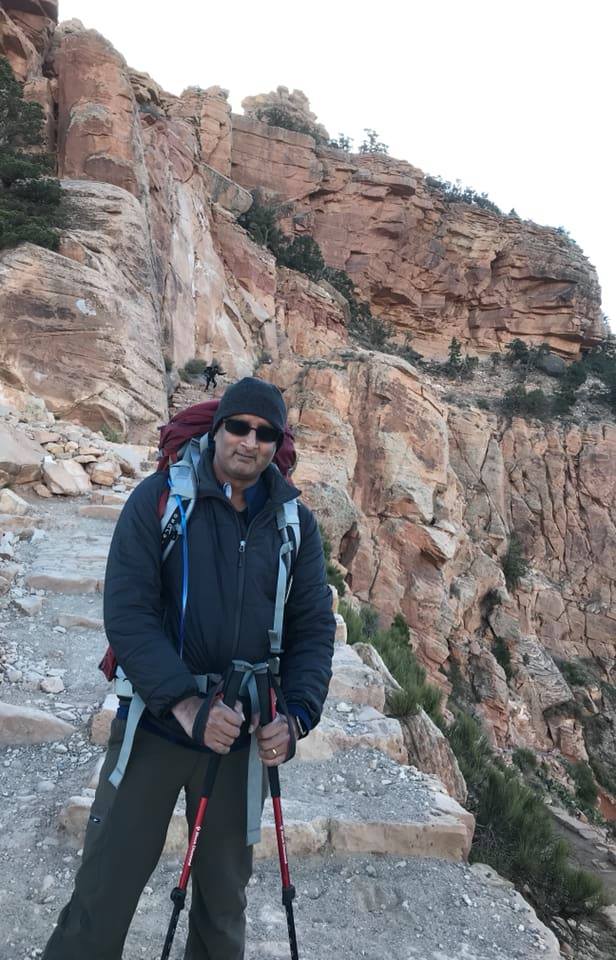
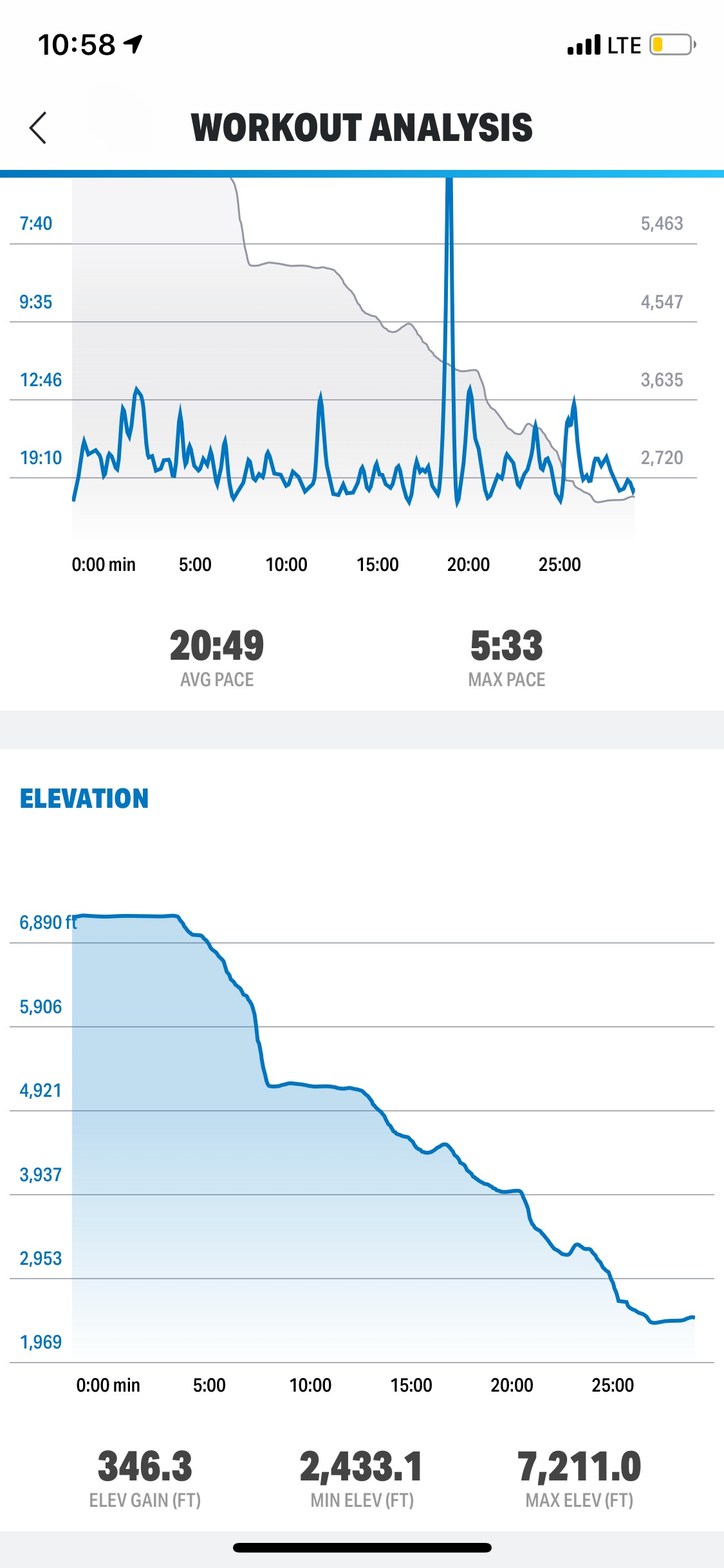
Go for the South Rim, since its open all year round and remember the elevation at the top of the Canyon is close to 7,000 feet. You basically are hiking down to the Colorado river campground which sits at 2,400 feet. We took the South Kaibob trail to go down and it took us under 5 hours for a total distance of 7.5 miles. Not too easy to hike down but as long as you are able to sustain the balance and allow yourself to smell the roses.The sheer magnificence of the hike and the canyon layers of rock formations is awe inspiring. It can be very humbling. We started at  7.00 am and of course sunrise doesn’t occur until 7:15 so we were able to use the cooler temperatures to our advantage. And the first hour or two are when you are excited about taking pictures before monotony can set in. The last hour of the hike going down did take a mental toll not because it was full of additional switchbacks but we thought were getting closer to the base but we just weren’t there yet.

Hike down

Getting to the campgrounds just around 1.00 PM gets you enough daylight to set up the tent, prep time for the food, eat and get it all sorted out prior to darkness setting in around 5.30 pm.

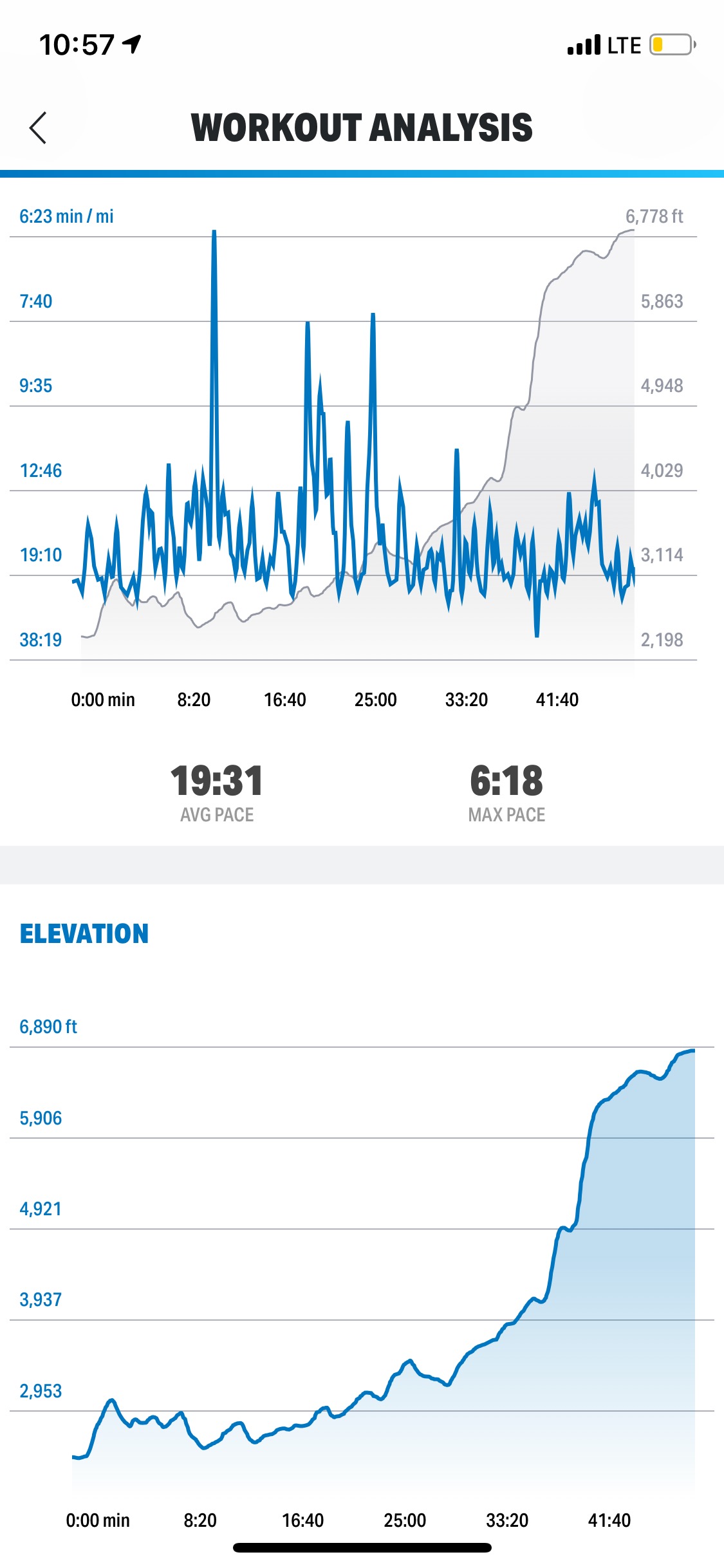
We took the Bright Angel trail going up. Its an extremely picturesque trail for the first half upto the Indian garden that sits at 3,800 feet. The hike gets steeper after that point but since the trail is not exposed directly to sunlight and goes past several cascades and varying vegetation and the occasion glimpses of deer and foxes, you are in a bettre place mentally. It took us under 7 hours to get to the top; 10.7 miles from the campground to the pinnacle.

Hike Up

If you are into it, you are going to love it truly; and you might even be tempted to go for it again and stretch yourself.

A few pictures just cannot do justice to the spectacle. You have to be there in person to truly appreciate the grandeur.

Other tips-

Fly into Vegas and rent a car and remember a AWD vehicle is recommended. Remember, adding a driver to the rental agreement costs extra in Nevada. And a charging bank for your devices is probably a no-brainer.

Like they say- Take a hike!

Armenia? That’s who you are!

5afd4c3d-7e5a-464f-b4a1-46c2f696033a

Oh Armenia- With a bit of tentativeness and some excitement I decided to venture to this erstwhile Soviet republic . With not a lot of information except bits from the Anthony Bordain show it was intended to be “go with the flow “ kind of trip. When a few guys decide to embark in alien lands with not even a rudimentary awareness of the language or culture, the trip actually becomes exciting; no expectations; just figure out what to do once you get there.

By sheer fortune, we were there when Armenia was celebrating its national day with massive street parties, concerts and the like including local cops in high heels! Yerevan (the “Y” is silent) is a city that hardly sleeps and you could easily get into any café or bar and get a decent drink. The city is ancient , tad older than Rome. Christianity is prevalent and it has that certain old world charm about it.

IMG_1264

Besides the constant going out and checking out the eateries and bars, day times were spent visiting the Cascade monument; Nothing spectacular but a must do when you are there. We did a day trip to Lake Sevan- Pretty impressive to a huge lake inside Armenia 0ver 74 miles long and among the high altitude lakes in the Caucasian mountains . Several monasteries over 1,000 years old become part of the route and it’s a discovery worth going on to.


The country’s infrastructure seems quite adequate and we were impressed with the quality of the roads but language? That’s a whole different kettle of fish. The country itself seems to be a little confused. Not sure if they are fully out of the Soviet era yet or they are doing their best to be progressive. Outside the hotels or restaurants, finding a cabbie or a local that speaks half decent English was like having a root canal. Not that I expect every person on the street to speak English but certainly taxis drivers would have been conversant with the basic phrases; the relative rudeness of the taxi drivers is perhaps explained by their frustration caused by their inability to communicate?


Leaving aside the parties, the taxis and the city, the most poignant moment for me was the visit to the Genocide museum. Built on top of a hill overlooking the city, there is just not enough the world could do to remember the 1.5 million Armenians that were systematically exterminated by the Turks between 1895 and 1915 as part of the Hamidian, Adana then the Young Turks massacres. A journey through one of the painful chapters in history and you cannot even begin to comprehend what these folks went through. The pictures are heart wrenching and to walk through the museum without feeling a terrible sadness is just not on. RIP.

So what else? The dollar goes a long way. I was able to get upto 482 Armenian Drams (AMD) for $1 USD. A 10 minute taxi ride costs you upto 1000 AMD ($2)

  • Ride to the Republic Square from the airport will set you back 5,000 AMD ($11) tops .
  • Sumptuous breakfast for 4- Anywhere between 20,000 to 25,000 AMD ($40- $50)
  • Drinks and dinner for upto 4 people- Anywhere between 20,000 AMD to $35,000 AMD ($40- $72); depending on your imbibing and gluttony capacities of course!

Stay- Plenty of options but try to be within a minute or two from the Republic Square. The Marriott which is part of the Republic Square was where we stayed and it was certainly worthwhile. Well worth the $150 USD per night. Just make sure breakfast is included when making the booking. If not, make sure you get a rebated rate. Service is quite good, no hassles.

May not go back there but spending a good part of a week, I’ve come back with some great memories.

A herd of trouble- Here come the tourists!

This is work of non-fiction. Resemblance to anyone living is intentional. No animals were harmed during the writing of this piece , they were all let loose.

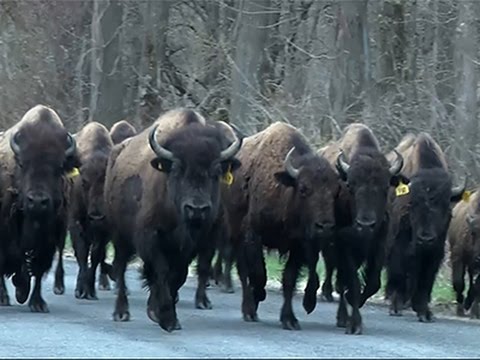
A herd of wildebeest , a flock of sheep – And who do you reckon resemble these creatures representing the world’s most intelligent creature (kinda, sorta, rumored) homo sapiens?

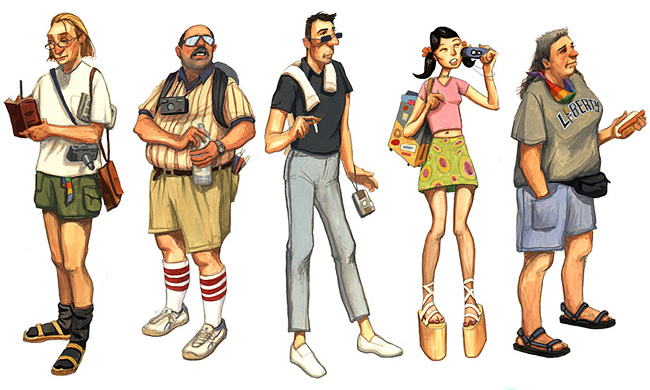
Think Think..cannot be that hard and surely you may have been part of this motley group that mindlessly follows the other without any semblance of intelligence, expensive cameras slung around their necks, excitedly whispering in a language that is alien to all but themselves, eagerly pointing fingers to their offsprings, eyes wide open, mouths animated and limbs moving in a synchronous fashion. And let me provide some more hints! They do not pay much regard to their ambience, they do not worry too much about the weird things that hang in the air which others call traffic lights and the only only thing that may perhaps change is what they’d wear depending on the clime. TOURISTS! That’s right ..You finally get it..

And if you thought I was referring to a certain tribe in eastern Botswana or the central Amazon, I may have said like a quiz master-  “Not quite, close but I’ll give you the points”

They rush through things, they do what lesser humans can hardly dare achieve, run through Europe in just over a week, mock the seals in Monterrey, blow raspberries at the White rhino, pile on to Roman ruins taunting Nero and their ilk, moon the Statue of Liberty, finger on the pyramids of Giza and “holding” the Tower in Pisa. Oh yes, it is not an exaggeration but tell me if you haven’t seen this obnoxious behavior or even having been of this herd. It may be endearing sometimes but I am also told by certain medical experts that such sights may act as emetics (a substance that may cause involuntary retching), stampedes (a fairly common occurrence at the Niagara Falls, NY or the Taj Mahal, India or the Jungfrau, Switzerland.


Tourist

So kind folks, keep away when you spy these marauding creatures approaching you in peak summer and run as fast you can in the opposite direction. Woe betide anyone if you’d dare stand in their way  (seen the rampaging bulls in Pampalona?) and take your self to a happy place. There is nothing you can do, but stand back and admire their tenacity and perhaps secretly hoping you were born in their party of the world.

Said a leader of a tourist group (he wished to remain unanonymous)- Cameras, handycams, smart phones, selfies, selfie-sticks- We have it all. Bring it on Evil Knieval we dare you, we are unstoppable and we have basically taken over humanity and if its summer do not even attempt to get the term “challenge” in your thoughts!

Happy hunting all!


A journey through a sliver of the Bible

 A passage through a sliver of the Bible-

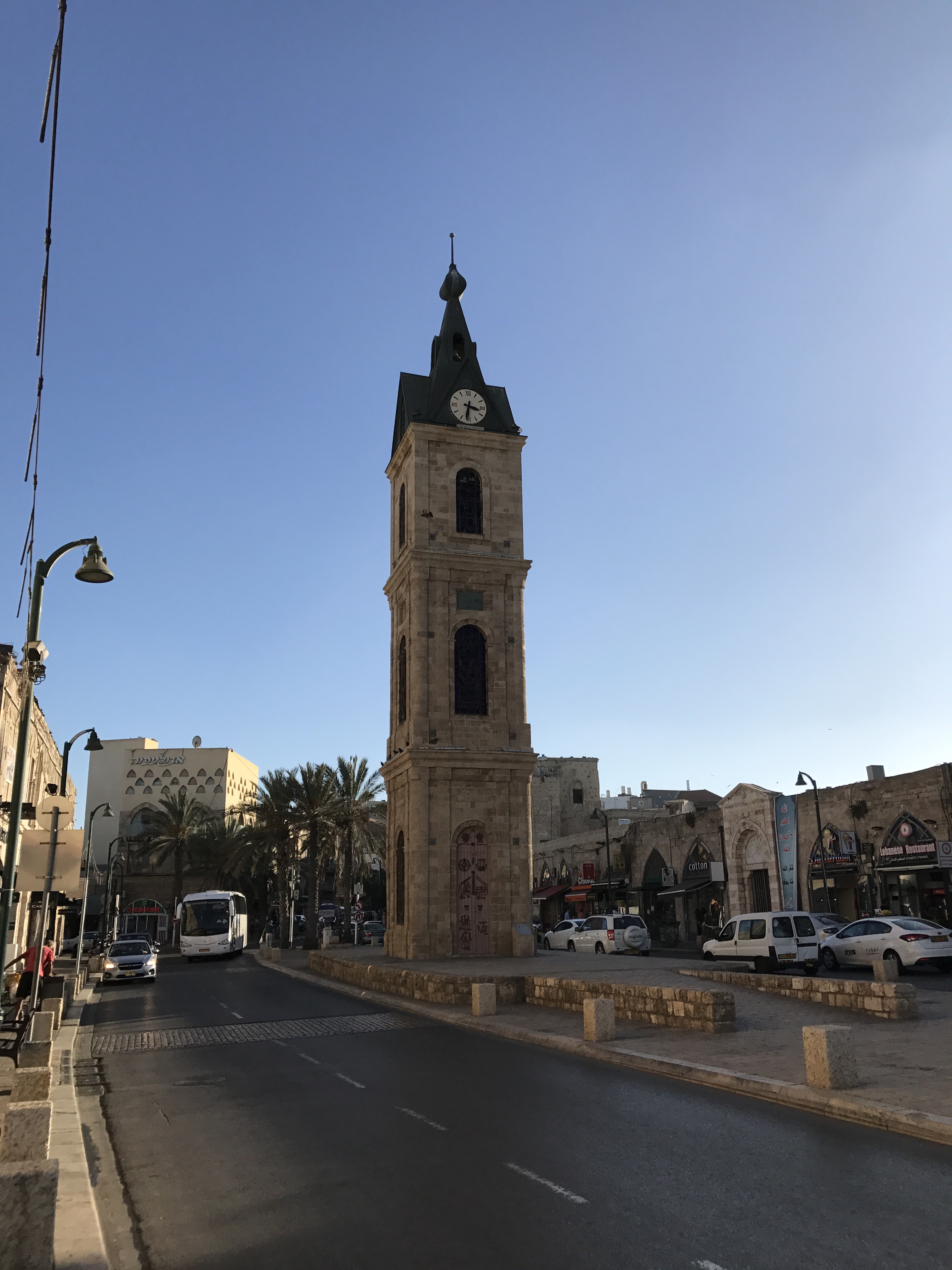
Israel – As a first timer, its been a revelation and teaches why I should not listen to the media and other know-alls. Beautiful country and for a population of just over 8 million, the young country but biblical land has so much to offer. If not for the searing temperatures, it could just have been anywhere when you are in Tel Aviv. Then you turn south and go to the ancient port city of Jaffa (or Yafo, as its called), you start the time travel to times of Abraham.

A history of building, invasions, carnage, then the rebuild, development, time and again proves just how resilient the folks are. Tel Aviv is just barely 100, while Jerusalem is well over 4000 years old. Tel Aviv is just like any other modern city and still yearns to grow with its subway under construction and skyscrapers dotting the horizon. For an avid hiker, it’s a dream come true since everything in the city that is worth visiting can be covered on foot while savoring the ambience of the outdoor cafes.

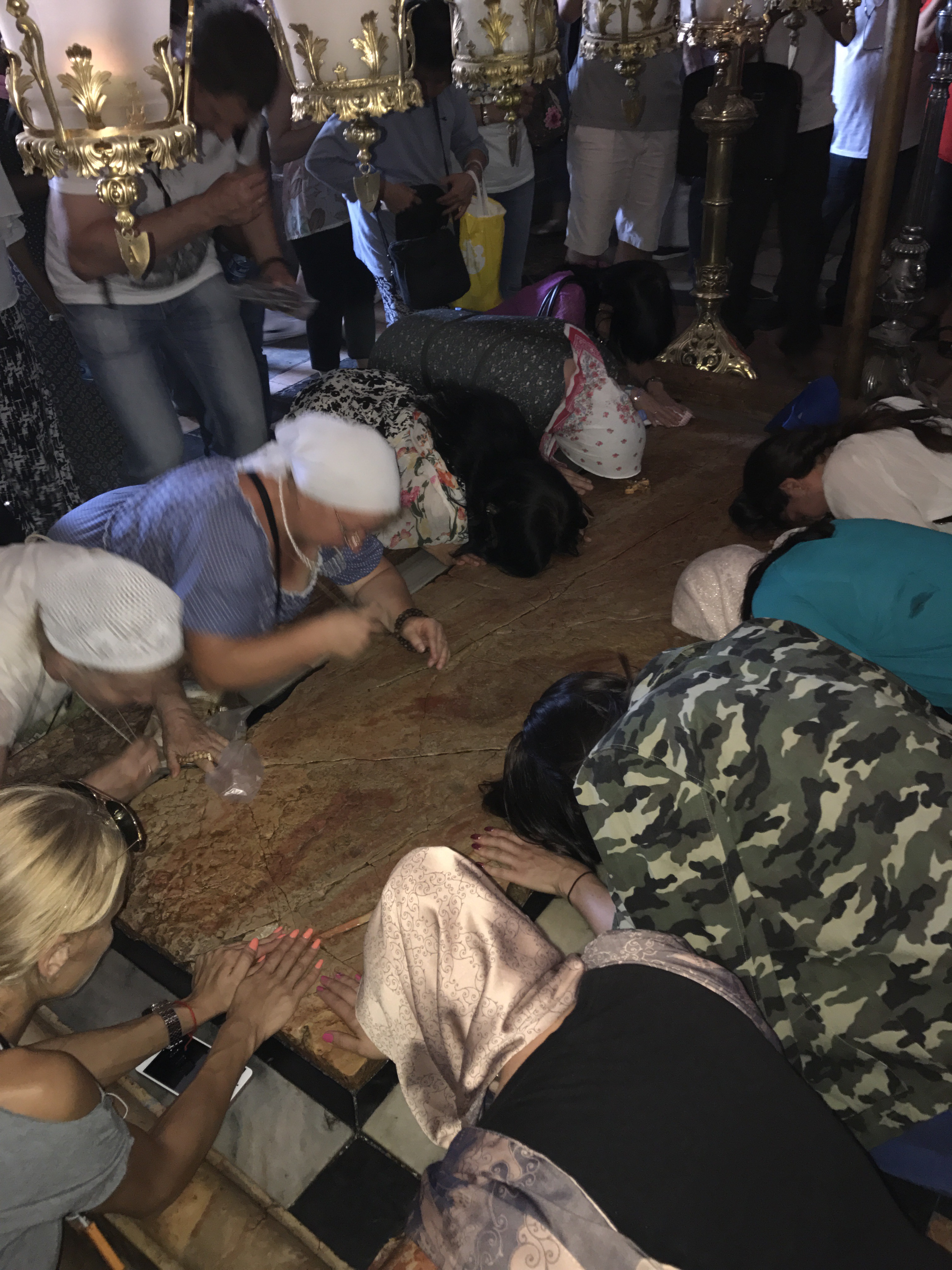
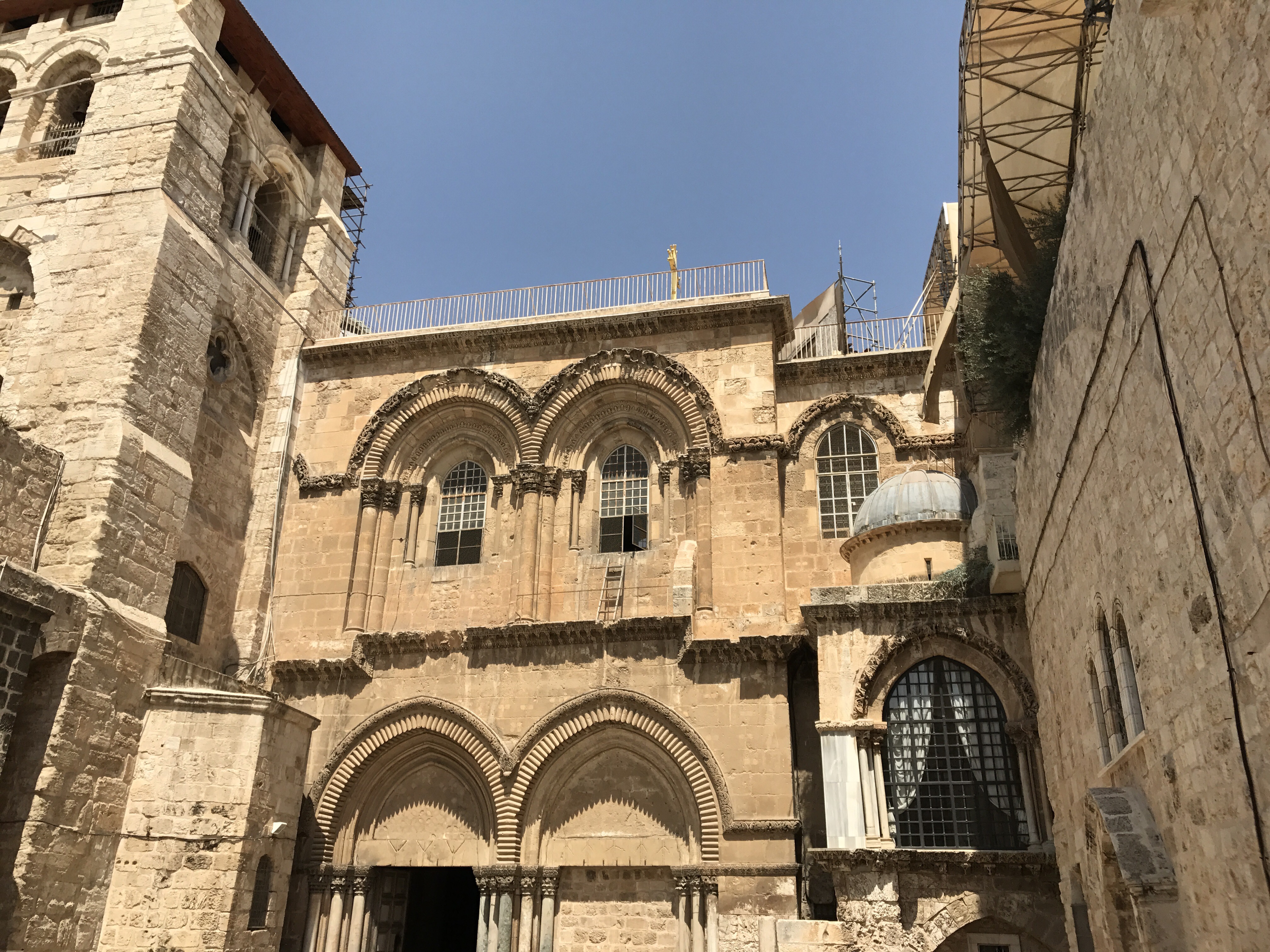
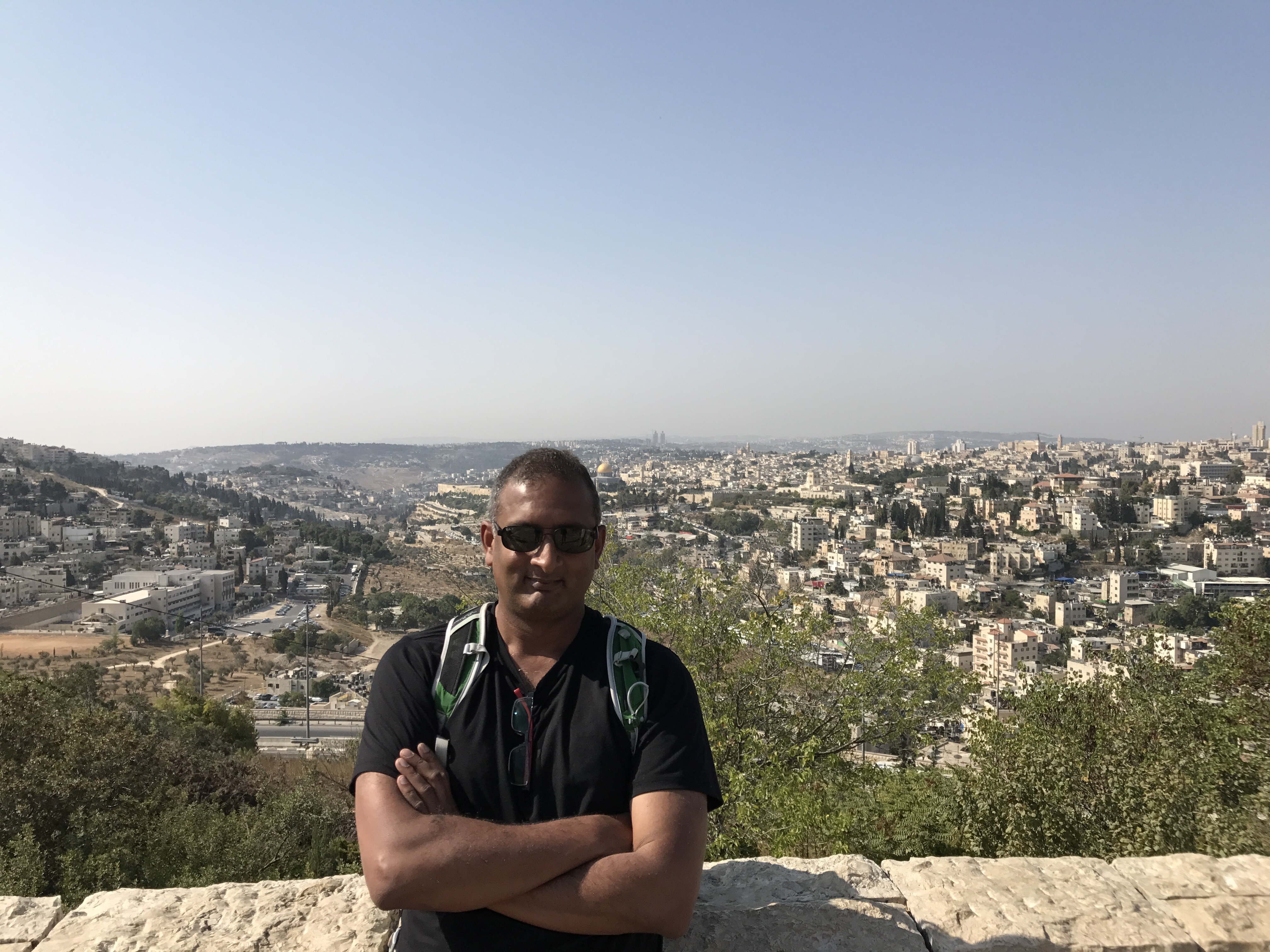
An overwhelming experience to walk through the Biblical history in Jerusalem has to be the highlight. The east part of Jerusalem (Jeru for City and Shalom for Peace) was founded by King David (Of the David vs Goliath fame). The temple mount stands in the middle of the walled city which by the way has just over 40,000 denizens, Armenians, Jews, Muslims and Christians; A perfect harmony of cultures in this microcosm. The city is divided into these four quarters and underneath it all, lies the pathway over which Jesus was crucified and walked to his final destination. I got to see the place where he died, the place where he was anointed and the monument over his tomb. That is truly awe-inspiring.

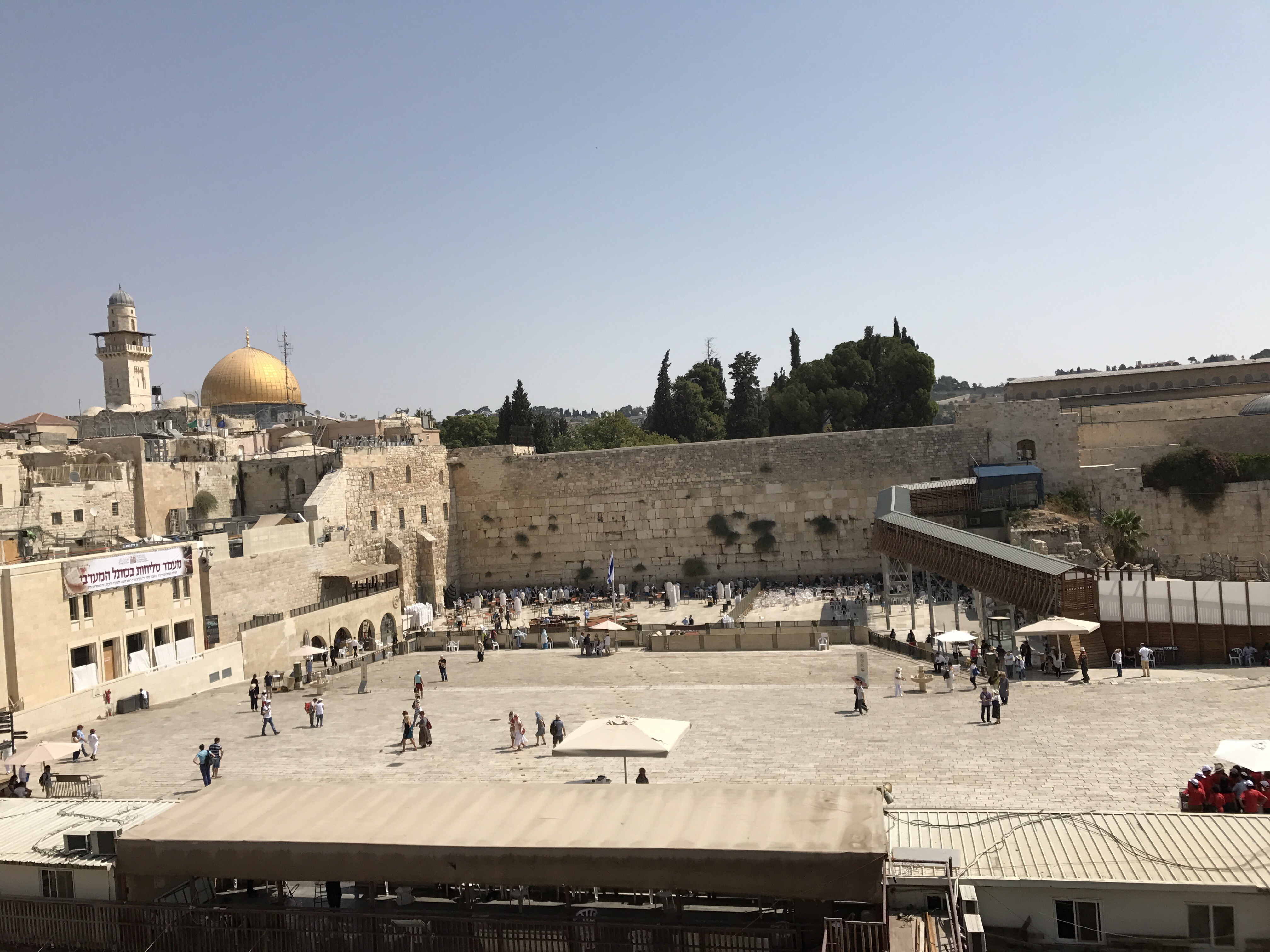
Another sub highlight is the famous Wailing wall, that used to be a retaining wall of the temple structure. As you turn left of the wall, you see the minaret of the mosque that was built by the Muslim conquestors on the 7th century. The Al-Aqsa mosque also stands proud in the temple courtyard. Everyone from King David, Babylonians, Romans, Muslims, Ottomans, the British, The Jordanians and now the state of Israel has had something to do with this Biblical city.

Then the drive from 3000 m above sea level to 400 m below sea level passing through yet another slice of history and political turmoil, The West Bank to the Dead Sea. The Dead sea, where absolutely no life exists. Wading through it feels like wading through a barrel of oil, such viscosity made worse by the sulphates, bromides , chlorides and other mineral salts that keep it saturated. You could see Jordan on the other side of the Sea and its no picnic being at the beach here except to make sure you could actually float on water.

Visitors and Tourists- Just make sure you pick a cooler time to visit Israel if you can but if you are a sun worshipper, then by all means go for it any time. The Mediterranean beaches are just gorgeous and super lively.

One thing for sure – Never else have I seen a people with a more fierce national pride than the Israelis. They all go to public schools until they are 18, at which point all boys and girls have to compulsorily serve a 2-3 year stint in the military. There is a deep sense of belonging that exudes pride and patriotism.


Planes, Trains, Horses & Automobiles- Peru Hike 2016

A journey that took me to the Andean valleys in Peru was a trip through the customs, a trip through the Quechua traditions, a trip through the vastness and remoteness of the countryside yet a supremely enriching experience. A trip that started with another plane ride evolved into all forms of transport; A locomotive engine, an automobile , horseback ride and of course my own two little feet.

As with most journeys in this land which I’d rather refer to as the Inka kingdom, it starts in Cusco, capital of the magnificent Inka empire. Cusco, at just over 11,000 ft does bring back some memories and feeling like Tintin in “Prisoners of the son” I bask in the warm winter sun feeling may be a little bit out of breath. However as the locals say, cocoa tea is that magic pill for altitude sickness and admittedly its a weak concoction and doesn’t do much for me. So I do what I do, get used to the altitude. Embarking in the week of the Peruvian independence day was a great feast for the eyes watching the schools, local fire and police units parading in the central Plaza de Armas, Sitting on the balcony on a lazy day sipping a Pisco sour watching the locals intermingle with the tourists in a rich colorful array of cultures was a treat.

Then the journey begins into the Lares valley. Our  group is typical of an international contingent with a Peruvian (Quechua Indian) guide and an assortment of French and  Polish folks. Traversing a village meat market where heads and hooves of cows are out on display before we headed out towards the Lares Valley while going over a 12,000 foot high mountain pass. Llamas and alpacas are a common sight and seem to have formed a special bond with humans, being the source of food and clothing for all around.

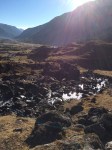
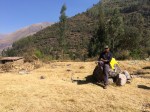
The first day hike goes up from the relatively low elevation of 10,500 ft to the camp 1 at 12,500 ft. The hike takes us through remote Indian villages where life is at complete peace unhindered by technology and simplicity is at its best.The hike is gradual yet tests out the endurance of the feet and heart; frequent rests become the norm as the altitude gets up to above 12,000 ft. The camp we get into as remote as it can get but yet close to the village of the horsemen, where womenfolk dressed in colorful bright red garb spread out their wares consisting of alpaca wool gloves and scarves. It becomes an instant flea market and you cannot help but admire their tenacity as they are fascinated by us and we in turn are fascinated by them. The camp tents are surrounded by the glorious Andes peaks and as the cold sets in, the silence of the darkness is only broken by the occasional barking of dogs and the soothing flowing of the nearby stream.

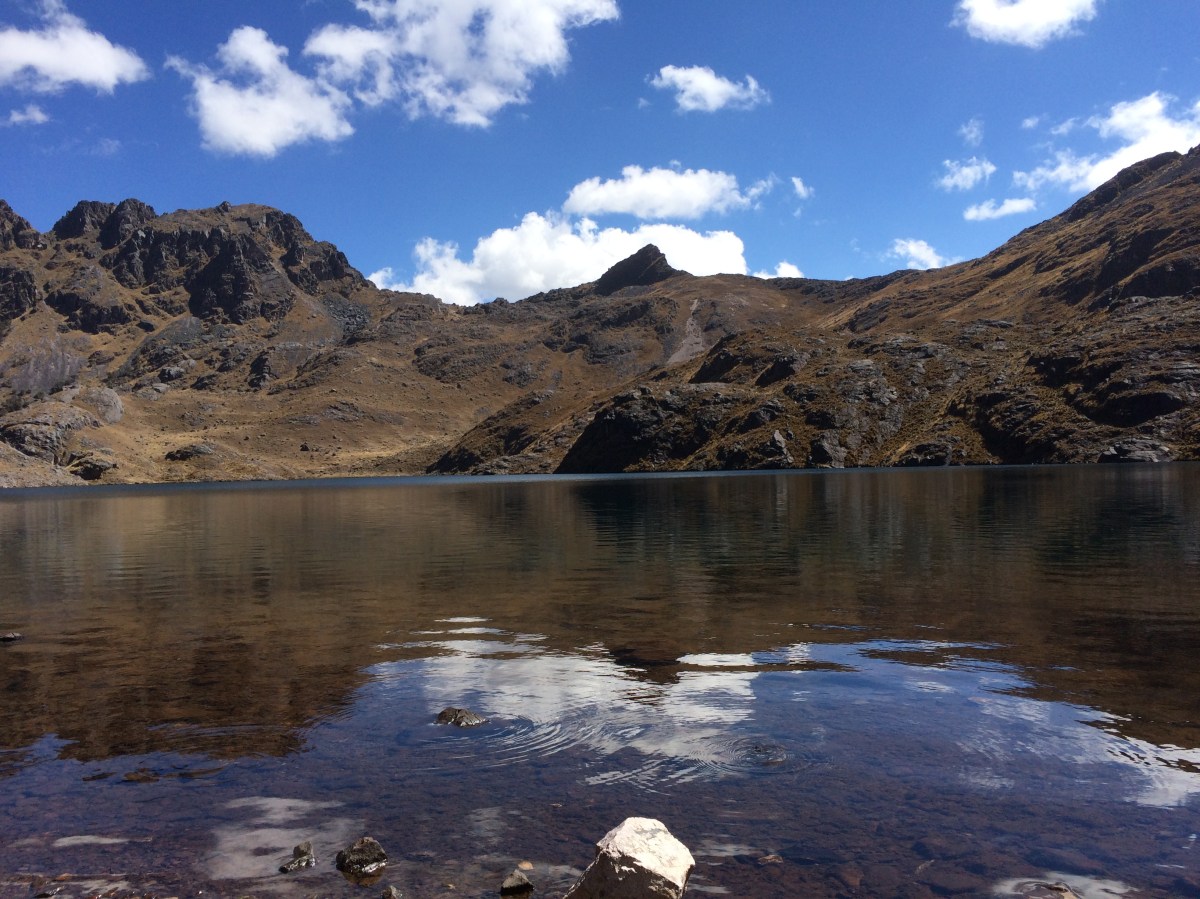
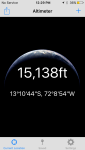
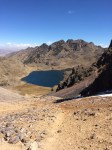
The second day hike starts fairly early and as the caravan departs towards the mountain pass the journey has to be made. We have to be at 15,000 feet in under 5 hours. The terrain is rocky, the slopes are steep yet we must march on. Tyros take frequent breaks while the seasoned hikers lead the trail. Passing other hikers, horses carrying supplies but what is most amazing is the endurance and strength of the men and boys that literally are seen jogging up at these elevations like it was a jog to the convenience store round the corner. After a steep climb and some assistance from the horses, we finally make it to the 15,000 ft point, the mountain pass overlooking a gorgeous lake that makes it all worth the effort. Then the rest of the day is about going downhill and hiking for over 4 hours like a billy goat takes us to the camp 2. A warmer place yet superb in its location where we “chill” for the night.The day 2 has probably got to be one of the most grueling days I have ever encountered in my life and turns out that I actually walked close to 25 miles!

The Day 3 is then decamoing, hopping on to a coach to get to Ollantaytambo and walking around this charming town before getting on the Perurail train to Aguas Calliente. Machu Pichu beckons.

Not just hiking in Machu Pichu, but what is absolutely rewarding are the hikes to the Inka bridge and the Sun Gate that makes it special. A must do, if you haven’t done it already! Then the final hike down the steps from Machu Pichu to our base camp in Aquas Callientes.

My highlights-

The valley hike, meeting the locals, great group of people, discovery of new lands and the sheer feeling of serendipity as we hiked some mind boggling trails around Machu Pichu.

Be prepared for high altitude effects; breathlessness, parched throats and remember its a marathon not a sprint.Hike light and let the horses carry that extra heavy hiking backpacks. Lots of water highly recommended alongwith sun protection. It may have been winter but when the sun gets out, it shines down hard.
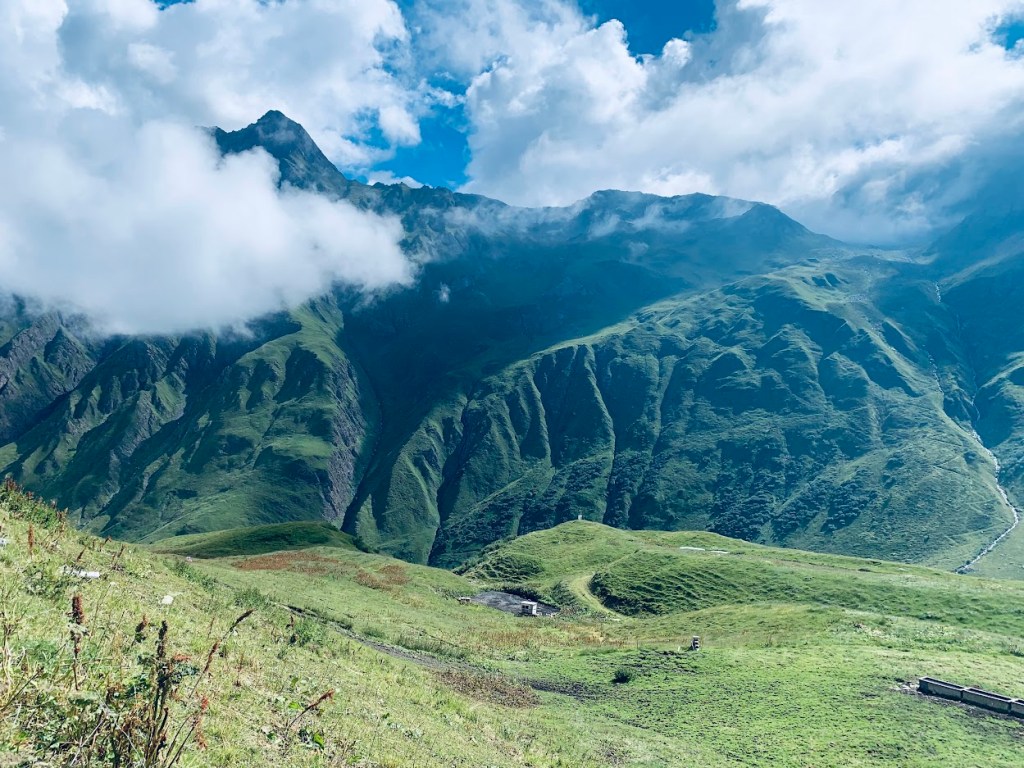
And spare a thought for the village kids who wear smiles and go on about life with such verve and enthusiasm it is infectious. Consider contacting a local agency if you are keen on supporting their education and development, I am certain there are appropriate avenues.  What is it they say- “A good deed never goes unrewarded”.

The trip has put life in a different perspective and makes me want to do more of this; miles to go before I sleep !